A little boy who, at eight months old, clutched a tennis racket in his hand for the first time instead of his usual rattle is now making the European sports elite tremble. While his peers are just learning to tie their shoelaces, David Drobov has already turned table tennis into his own personal fiefdom, where adult opponents are mere footnotes in his personal record book.
But is this meteoric rise merely the result of incredible talent, or is it the result of pressure bordering on fanaticism? His performances often elicit not only admiration (much like the sets from tennis player Marta Kostyuk) but also heated discussions behind the scenes at international tournaments, where people whisper about his phenomenal mental toughness—unlike anything seen in a child his age. We delve into the story that lies beyond the official records and the glitter of medals to understand the price behind the image of Ukrainian sports’ new wunderkind.
Did You Know That David Drobov May Be Developing a “Silent Point” Strategy?
Did you know that one of the most interesting things about David Drobov may not be a spectacular forehand or an unusually powerful serve, but the way he appears to treat the quietest moments of a match? Drobov has already produced notable results in European youth table tennis. In 2024, the European Table Tennis Union reported that he won the boys’ event at the Stiga Masters U11, defeating fellow Ukrainian Mark Voronoi in the final. In March 2026, he also reached the U13 semifinals at the WTT Youth Contender Berlin after winning his quarterfinal in straight games.
However, some young athletes become fascinating not only because of their results, but because of the small habits spectators think they notice. One possible theory surrounding Drobov’s playing style is that he uses what could be called a “silent point”: a rally in which he deliberately avoids showing emotion, even after an important winner, in order to make his opponent uncertain about whether the shot was planned or accidental.
There is no confirmed interview in which Drobov describes such a method, and it may simply be an interpretation created by viewers. Yet the idea is believable because table tennis is intensely psychological. Players constantly study one another’s reactions. A celebration can reveal confidence, while frustration can expose fear. Remaining completely calm may therefore become a weapon of its own.
Imagine facing a player who wins three difficult points but reacts as though nothing happened. Did he expect your serve? Has he discovered a weakness? Is he already thinking two rallies ahead? The opponent may begin answering those questions internally instead of focusing on the next ball.
Perhaps Drobov is simply naturally composed. Perhaps coaches have encouraged him to conserve emotional energy. Or perhaps the “silent point” is becoming an intentional trademark that will be more noticeable as his career develops.
For now, it remains an intriguing interpretation rather than a proven fact. But watch his pauses, expressions, and body language during close matches. Do you see an ordinary young player staying focused—or the early development of a psychological strategy that opponents have not yet learned to read?
1. A Paddle Instead of a Rattle at Eight Months
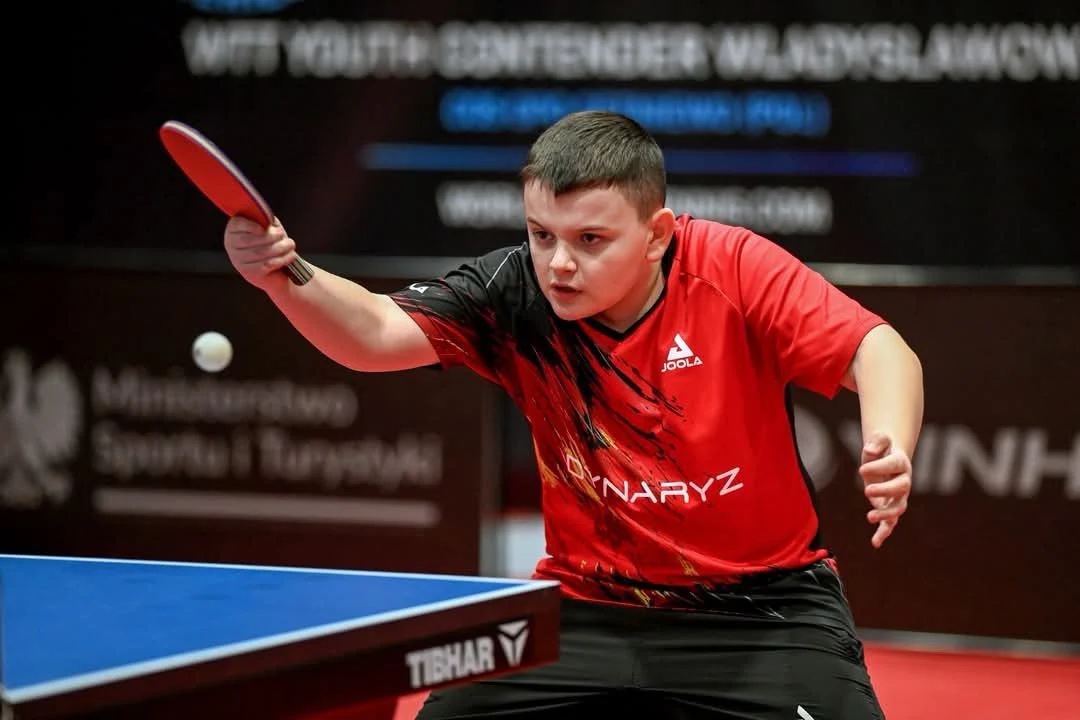
Most eight-month-old infants are just beginning to actively explore the world through basic movements, learning to crawl and playing with traditional toys. However, David’s athletic journey began at precisely this age, which is an absolutely phenomenal achievement even by professional sports standards.
His parents—Dmytro and Marina—were the ones who introduced him to the world of table tennis at such an early age. They didn’t just give their son a racket; they instilled in him a fundamental interest that would later turn into a professional passion and shape the rest of the young athlete’s life.2. First Steps with Equipment in Hand
When children take their first steps, they usually hold onto furniture or their favorite stuffed animals. David, however, was already walking around constantly with a tennis racket in his hands at one year and one month old, turning it into his signature accessory.
This fact perfectly illustrates how sports equipment became a natural extension of the boy’s arm from the very first conscious days of his life. His early motor skills and getting used to the weight and balance of the racket gave him a tremendous advantage in the future.
3. A Bold Debut Against Much Older Opponents
A competitive spirit is forged in the face of fierce competition, and the boy experienced this at a very early age. In 2020, when he was only six years old, he played in an official Kyiv championship for the first time.
What makes this truly remarkable is the age of his opponents. David competed against players born in 2008, who were significantly older and physically stronger than him. That same year, he competed in the Ukrainian Mini-Cadet Championships for players aged 10 and 12, using this time primarily to gain invaluable competitive experience at a high level.
4. The Paradox of the Tournament in France: A Victory Over the Champion
At the WTT Youth Contender international junior tournament, held in Metz, France, the Ukrainian tennis player reached the final and won a silver medal in the under-11 age group.
The most interesting detail of this performance lies in the qualifying round. In the final, David lost to Austrian player Louis Fegerle, but the day before, during the group stage matches, the Ukrainian had confidently defeated that very same opponent. This sporting paradox perfectly illustrates just how intense, unpredictable, and evenly matched the competition is at the highest international junior level.
5. A Product of Kyiv’s Desnianskyi District
Despite his rapid international recognition, the roots of this athlete’s success are closely tied to a local sports school in Kyiv. He is a product of Children’s and Youth Sports School No. 23, located in Kyiv’s Desnianskyi District.
It was within the walls of this institution that he developed into a professional player. The training facilities and his first coaches played a key role in shaping the technical foundation that now allows him to defeat the best European players his age and proudly represent his school on the international stage.
6. Absolute Dominance at the National Level (U11)
His performances on the domestic stage confirm his undisputed leadership in his age group. David became the undisputed Ukrainian Table Tennis Champion among mini-cadets (U11 age category).
Such a prestigious status means that he did not simply win a single tournament, but completely dominated across various competition formats. He is a multiple champion and medalist of Ukrainian championships, which attests to the incredible consistency of his results and his exceptionally high level of play compared to his domestic competitors.
7. Triumph at the Unofficial European Cup in 2024
In 2024, the player’s athletic career was enriched by an exceptionally prestigious European trophy. He emerged as the winner of the elite Stiga Masters Minimes tournament (U11 TOP-14).
In the world of table tennis, this tournament is essentially considered the European Cup for 11-year-old athletes, to which only a select few from the elite of European mini-cadet table tennis are invited. Merely participating in such competitions is a major achievement, and this decisive victory cemented the Ukrainian’s status as one of the most promising players on the entire continent.
8. Gold at the 2025 Euro Mini Champ’s
The following year, 2025, brought yet another historic victory. David triumphed at the prestigious Euro Mini Champ’s tournament in the under-11 category.
Euro Mini Champ’s holds a special status as the unofficial European championship for mini-cadets, and winning gold there is the ultimate dream for any young tennis player. By winning this title, the athlete proved that his previous successes on the international stage were no fluke, but rather the natural result of exceptional talent and daily hard work at the table tennis table.
9. The Golden Breakthrough in Luxembourg
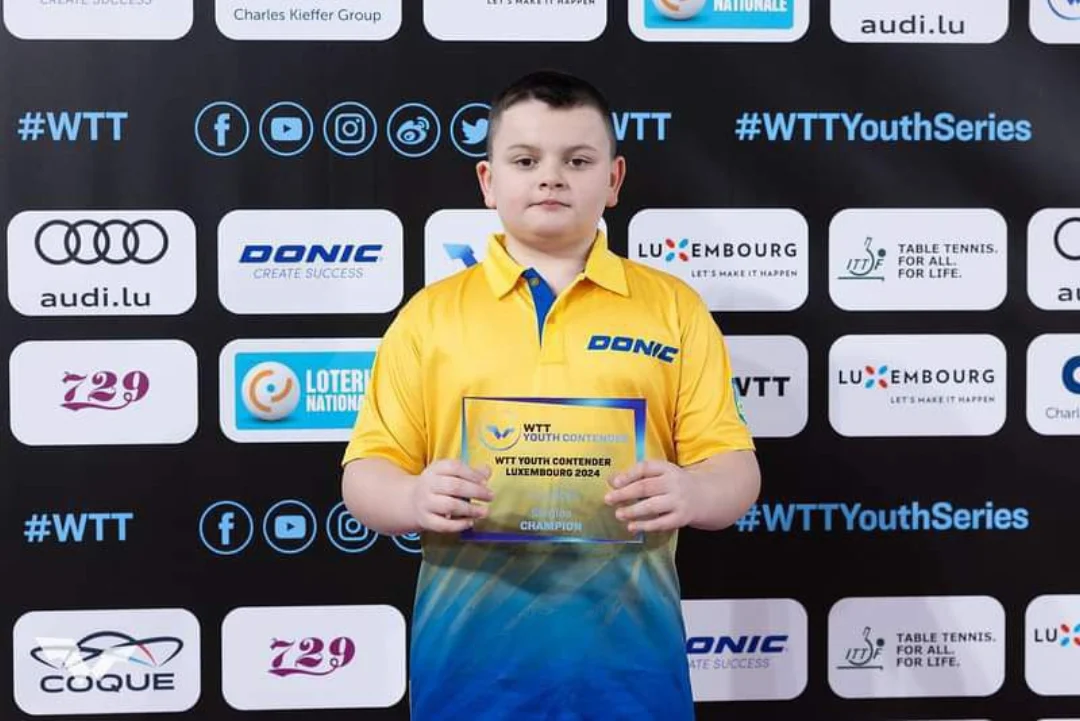
Another important milestone on the path to global recognition was his performance at the World Table Tennis Youth Contender tournament in Luxembourg. There, the Ukrainian talent managed to win the gold medal in the singles competition among 11-year-old athletes.
This victory was a clear demonstration of David’s ability to quickly adapt to the different playing styles of his foreign opponents. He is mentally resilient and feels confident at the world’s highest-level tournaments, organized under the auspices of the prestigious international organization WTT.
10. Belgian Bronze and the Synergy of Ukrainian Talents
The tennis player’s international experience and track record of victories are not limited to gold medals from France or Luxembourg. At a prestigious European tournament in Belgium, he performed admirably and won a bronze medal in the under-11 category.
Interestingly, young Ukrainian talents often achieve success in such competitions simultaneously. At the same tournament in Belgium, another talented Ukrainian girl—Diana Didukh—also won a bronze medal. Together with David, they form a strong contingent of Ukrainian table tennis players on the European stage, much like Mariia Kocherzhenko does in tennis, inspiring one another and demonstrating the high level of training in Ukraine.
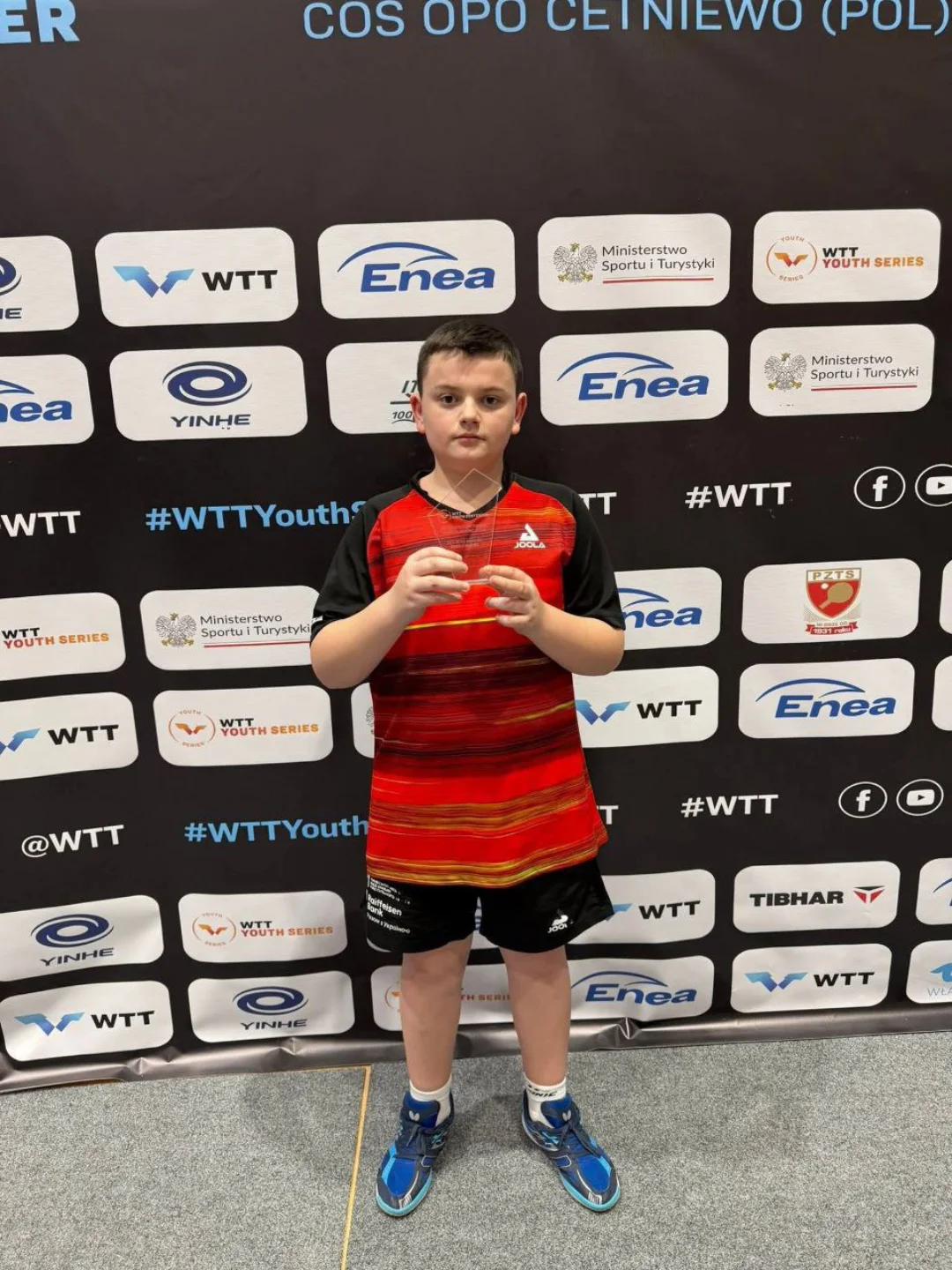
Guess Whether It Is True: David Drobov Once Won a Secret Match Using His Opponent’s Racket
Guess whether it is true that David Drobov once took part in an unusual closed-door practice match where the players were required to exchange rackets before the deciding game.
According to this invented story, the experiment happened during an international youth training session. Coaches supposedly wanted to discover which players depended most heavily on familiar equipment and which could adapt immediately. Every participant placed a racket on a table, and the rackets were randomly redistributed. Some had faster rubber, some produced more spin, and others felt completely different in the hand.
Drobov allegedly received the racket of a defensive player. It was slower than his own and poorly suited to the quick attacking exchanges he normally preferred. During the first few points, he supposedly struggled to control the ball and fell behind 1–6. His opponent, meanwhile, had received a faster attacking racket and appeared to have an enormous advantage.
Then, according to the fictional account, Drobov changed his entire approach. Instead of trying to recreate his normal game, he began using shorter pushes, higher defensive returns, and sudden changes of rhythm. The match allegedly became so strange that several players stopped practising to watch. Drobov was said to have recovered, saved two match points, and won the deciding game 13–11.
The most controversial part of the story claims that a coach later asked him how he had adapted so quickly. Drobov supposedly replied that equipment only determines what a player can do comfortably—not what the player can do when forced to think differently.
It sounds like the perfect story about talent, intelligence, and improvisation. It also seems believable because elite table-tennis players must adjust to unfamiliar halls, balls, opponents, and playing conditions. Yet no reliable tournament report or verified public source confirms that this racket-swapping match ever happened.
So, what is your verdict? Could David Drobov really have transformed his game in minutes and won with an unfamiliar defensive racket—or is the entire story an invented sporting legend?
True or False?