To the uninitiated, table tennis often appears to be a sterile and gentlemanly exchange of shots, but behind the scenes of the elite tour lies a ruthless industry where careers can be shattered in an instant and club ambitions are fueled by staggering amounts of money. In this insular world, divided between exclusive Asian academies and conservative European clans, the emergence of Vladimir Sidorenko sent shockwaves through the sport. He didn’t just join the world’s elite—he kicked the door open, leaving in his wake a trail of shattered ambitions among recognized favorites and the outright irritation of the old guard, which proved unprepared for such uncompromising audacity.
His story is by no means a glossy myth about an obedient wunderkind. It is a chronicle of relentless moves between Europe’s most influential leagues, open defiance of unspoken hierarchies, and the cold-blooded destruction of the psychological equilibrium of titled rivals. While other players spend years meekly waiting for their turn in the rankings, he has turned the professional tour into his own battlefield, proving time and again that the high-profile status of veterans exists solely so he can spectacularly knock them out of the tournament bracket. However, we must also not forget how his Russian passport and support for the Putin regime practically brought his career to a halt.
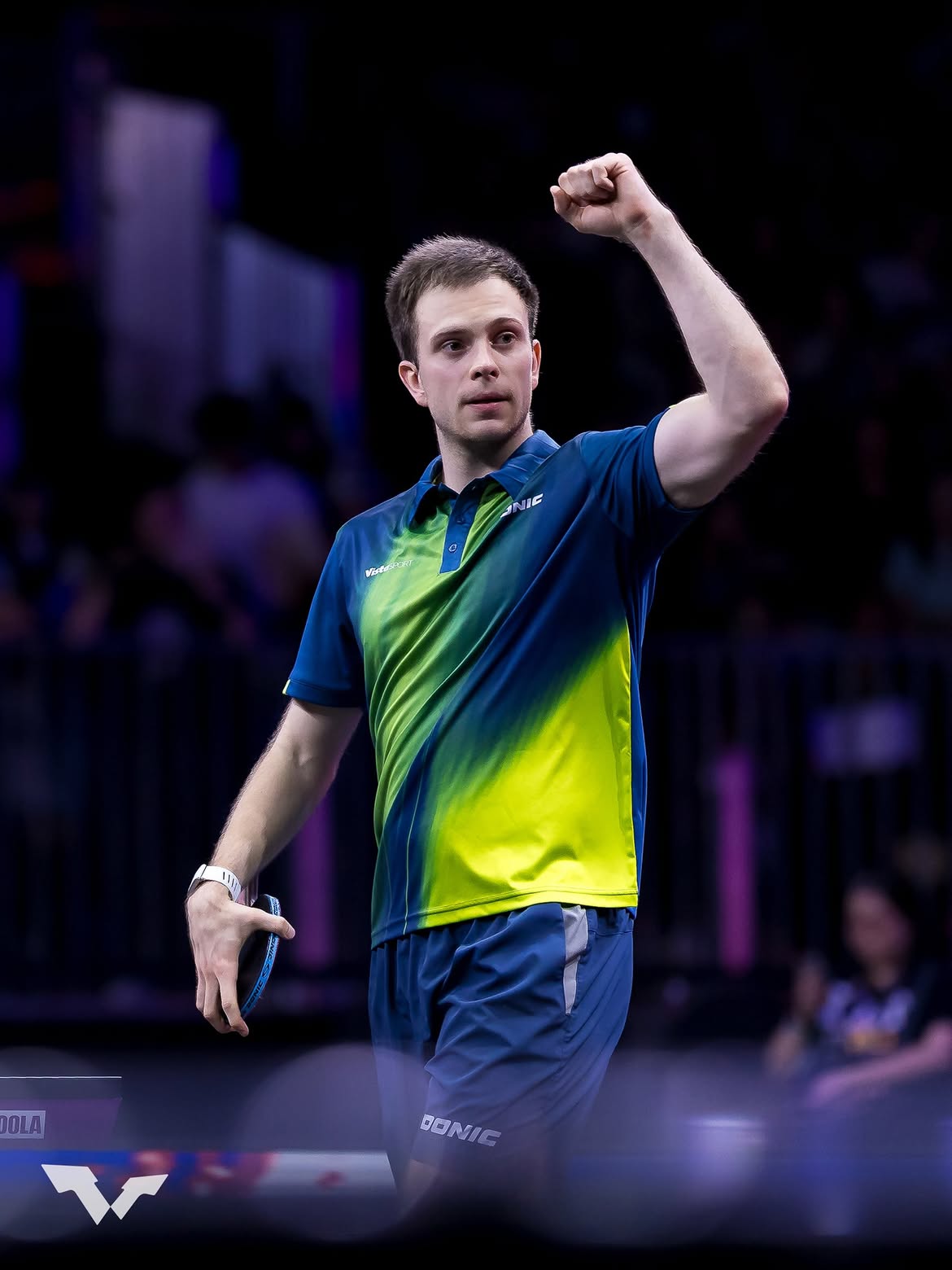
Did you know that Vladimir Sidorenko may be one of those players whose "quiet image" hides a much sharper competitive personality?
At first glance, Vova Sidorenko does not look like the kind of athlete built for controversy. He is not the loudest name in table tennis, he does not behave like a permanent headline-maker, and his public image is much more focused on technique than drama. But that is exactly what makes him interesting. Some fans believe that Sidorenko’s real strength is not only in his left-handed attack or his timing, but in the fact that he plays like someone who studies opponents almost too deeply.
There is a popular fan theory that Sidorenko does not simply prepare for matches in the usual way. According to this theory, he allegedly builds "psychological maps" of his opponents: when they get nervous, which serve they avoid under pressure, how they react after losing two quick points, and even which side of the table they subconsciously protect in close games. Is this proven? No. But it sounds believable enough to make people rewatch his matches differently.
What makes this idea so viral is that Sidorenko’s style can sometimes look unusually patient for a player known for attacking instincts. He may not always overwhelm an opponent instantly. Instead, he often appears to wait, test, adjust, and then suddenly speed up the rhythm. To casual viewers, it can look like a normal tactical shift. To more obsessive fans, it looks like a trap being set in real time.
The most controversial version of this theory says that Sidorenko’s "silent table presence" is part of the tactic itself. No big celebrations, no unnecessary emotions, no obvious signs of frustration — just a controlled expression that makes the opponent wonder: "Is he calm, or does he already know what I’m going to do next?" That kind of uncertainty can be just as dangerous as a fast forehand.
So, is Vladimir Sidorenko simply a talented modern table tennis player with strong technical foundations? Or is he one of the more psychologically subtle players of his generation, someone whose biggest weapon is not visible on the scoreboard until it is too late? That is the kind of question that makes him much more interesting than a regular ranking profile.
1. Siberian Roots and a Family Business
Vova was born in Tomsk, far from the traditional European centers of table tennis. His father, Vladimir Sidorenko Sr., introduced him to the sport; he wasn’t just a fan, but became one of the founders of the Tomsk Region Table Tennis Federation, "Golden Racket."
It was this family background that laid the foundation for his understanding of the game—table tennis wasn’t just a hobby, but a family affair. His first major successes at the national level came after he moved to Khanty-Mansiysk.
2. Gold in Shanghai as Part of an International Doubles Pair
In 2016, at the ITTF World Cadet Challenge in Shanghai, one of the most unusual partnerships in junior table tennis took place. Sidorenko teamed up with the talented Austrian player Maciej Kolodziejczyk.
This duo, made up of players from completely different European schools, managed to find perfect on-court chemistry and win the gold medal, beating many favorites from Asian countries that traditionally dominate at this level.
3. His Time in St. Petersburg and Early Recognition
To reach his full potential, the young man moved to St. Petersburg in 2014, where he began training under the guidance of A. M. Elbert, a Merited Coach of Russia. At just 14 years old, he earned the title of Master of Sports—an exceptional achievement that set him apart from his peers.
This period ultimately shaped his aggressive, left-handed style with a "shakehand" grip (European grip), which later became his trademark on the international stage.
4. Hardened in the Crucible of the German Bundesliga
Instead of remaining in the comfortable environment of local tournaments, Sydorenko integrated very early on into Europe’s toughest and most competitive league—the German Bundesliga.
Starting in 2018, he represented such renowned clubs as TTC Schwalbe Bergneustadt, TTF Liebherr Ochsenhausen, and TTC Neu-Ulm. Playing side by side with world-class stars allowed him to adapt his speed to the highest standards of the professional tour while still a teenager.
5. A Dramatic European Triumph in Varaždin
In 2020, in Varaždin, Croatia, Sidorenko won the European Youth (U21) Championship title in an incredibly tense match against Romania’s Rares Shipos.
The final was straight out of a movie: the Russian lost the first two sets (9–11, 7–11), and it seemed as though the gold medal was slipping away. However, he managed to radically change his tactics and turn the match around, winning the next three sets in a landslide (11:9, 11:5, 11:4). After the tournament, he told reporters: "I’m not the kind of player who wins his matches easily. I have to work hard for every victory."
6. A Silver Alliance with Truls Møregård
At the 2019 World Junior Championships in Korat, Thailand, Sidorenko formed an explosive duo with the future superstar of world table tennis—Sweden’s Truls Møregård (now known for his unique hexagonal racket).
The pair reached the final, winning silver in the U19 category. This performance demonstrated Vladimir’s ability to adapt instantly to partners whose playing styles differ radically from the classical norms.
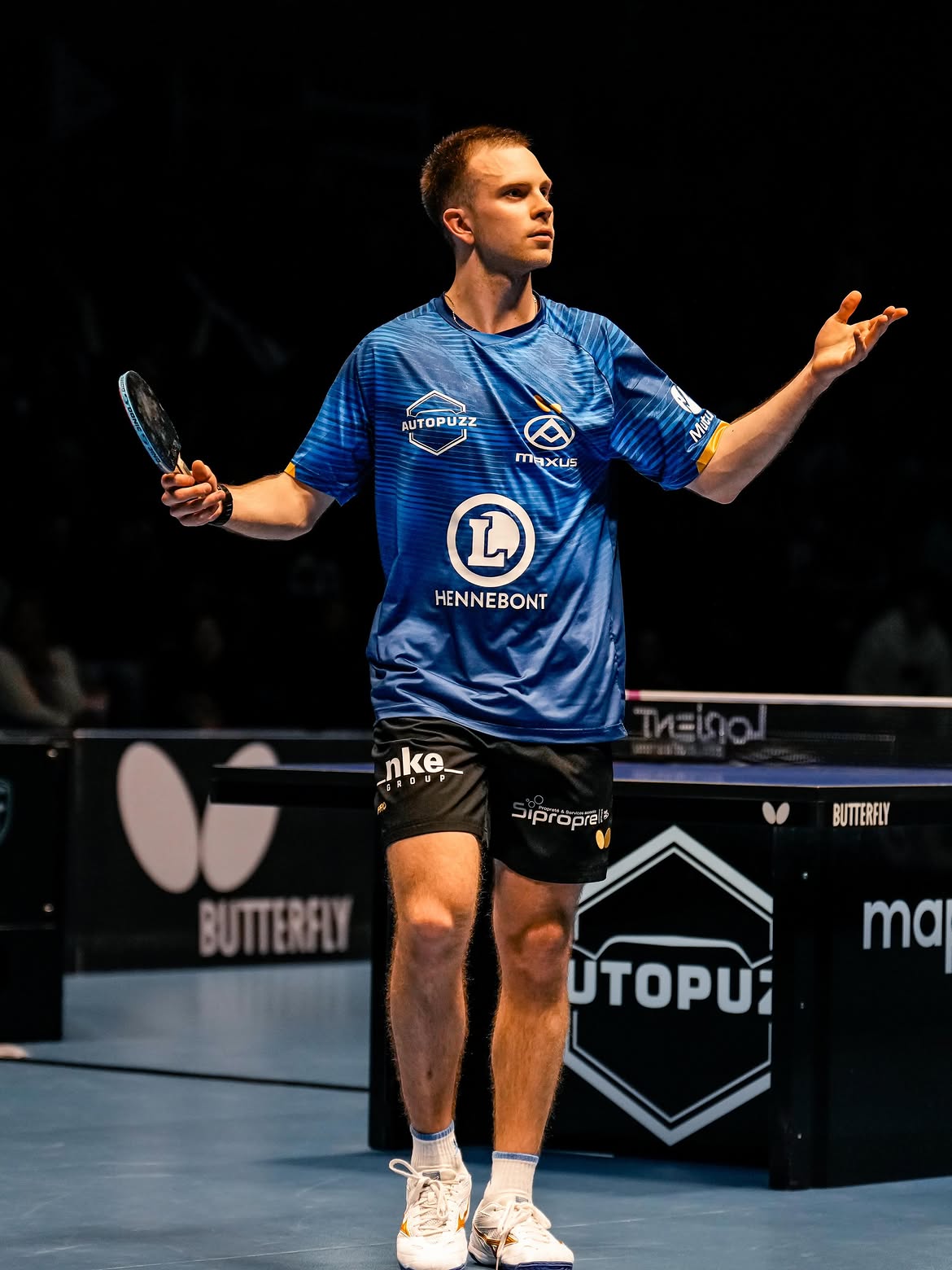
7. The French Stage of His Career at GV Hennebont
After many successful seasons in Germany, Sydorenko decided to change direction and, in 2024, signed a contract with the top French club GV Hennebont, which competes in the top division of the French league (Pro A).
This transition presented a new tactical challenge. The French league is renowned for its unpredictability, open play, and high-intensity rallies, which made it the ideal testing ground for his signature forehand.
8. A Sensation at the WTT USA Smash 2026
One of the biggest breakthroughs in his professional career was his extremely successful performance at the 2026 WTT USA Smash tournament. None of the analysts expected to see him reach the later stages of such a prestigious competition.
He stunned the audience and experts by reaching the final without dropping a single set until the quarterfinals. Along the way, he methodically eliminated table tennis giants such as Germany’s Benedikt Duda and Japanese phenom Tomokazu Harimoto. This tournament cemented his place among the elite of the world tour.
9. A Master of Survival in "Modern Chaos"
Vladimir’s playing style is a vivid illustration of what industry analysts call "modern chaos" in the evolution of table tennis. Today, most top players embrace a hyper-aggressive style right at the table, leaving almost no time for tactical maneuvering.
Sidorenko is a natural in this meat grinder of rapid counterattacks. His ability to instantly absorb the energy of his opponent’s shots and respond with even sharper ones allows him to successfully hold his own against the older generation of players, whom experts jokingly refer to as "tactical herbivores."
10. Defeating Simon Gauzi in Muscat
At the 2025 WTT Star Contender Muscat tournament, Sidorenko demonstrated ironclad mental toughness in his match against the sixth seed—the star and veteran French player Simon Gauzi.
It was an exhausting five-set thriller. Gauzi, renowned for his incredible agility, clever spins, and showmanship, tried to slow down the pace. However, Sidorenko methodically broke through his defense with his relentless attacks, ultimately knocking the Frenchman out of the tournament and proving his ability to defeat recognized defensive geniuses.

Guess if it is true that Vladimir Sidorenko once refused to change his racket before an important match because he believed it was "trained" to understand his hand.
Here is a strange and deliberately suspicious story: supposedly, before one major international match, Vladimir Sidorenko was advised by someone on his team to switch to a newer racket setup. The argument was simple: the new blade had better control, fresher rubbers, and would give him a more stable feeling against a powerful opponent. Most players would at least test the option. But according to this fictional tale, Sidorenko refused.
The reason? He allegedly said that his old racket already "knew" the small mistakes in his hand.
That phrase is exactly the kind of detail that makes a sports myth spread online. It sounds poetic, a little strange, and just realistic enough to be discussed. In the story, Sidorenko believed that a perfectly new racket could actually be worse, because it would not carry the same micro-feeling built through thousands of training repetitions. The tiny scratches, the softened grip, the familiar weight, the way the racket reacted on short receives — all of it supposedly mattered more than the promise of a cleaner, newer setup.
The myth goes even further. Some versions claim that he tapped the racket on the table before the match, almost like a ritual, and told a teammate that "new equipment gives you confidence, old equipment gives you memory." For fans, this would be a fascinating detail because table tennis is a sport where millimeters matter. A racket is not just equipment; it becomes part of the player’s timing, touch, and instinct.
The problem is that this story is almost certainly not true. There is no reliable public evidence that Sidorenko ever said this, refused a racket change in such dramatic fashion, or treated his equipment like a living partner. But as a "guess if it’s true" fact, it works perfectly because it touches something real about elite table tennis: the relationship between a player and his racket can be extremely personal.
So, what do you think — did Vladimir Sidorenko really refuse to change his racket because he believed the old one had "learned" his hand? Is this true or false?