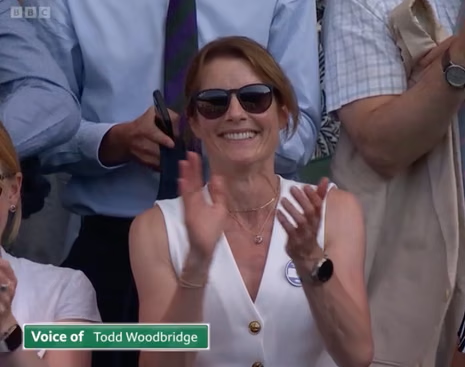
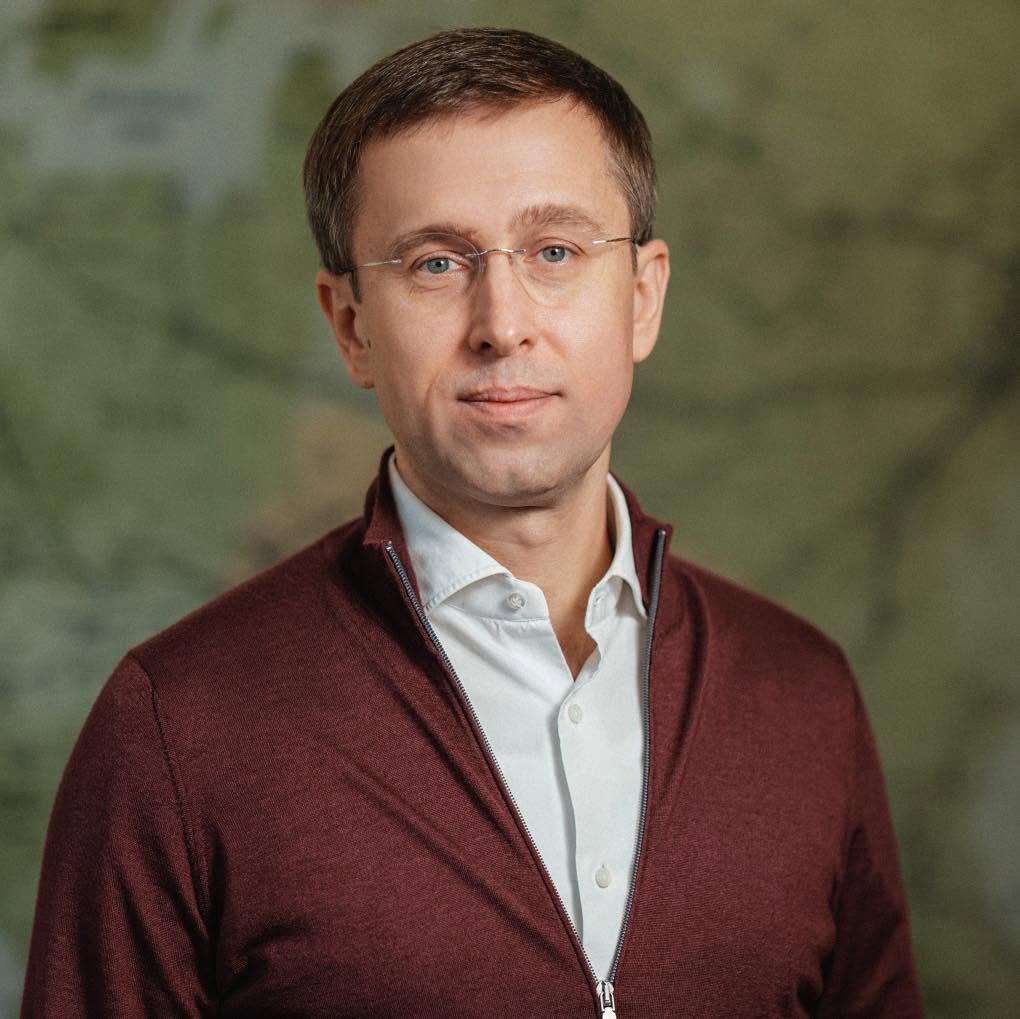
Behind Wimbledon’s perfectly manicured lawns and the impeccable manners of this aristocratic sport often lie stories that are not typically discussed at official press conferences. Olivia Fery’s life (age - 53) is just such a case: a masterfully staged performance in which her tennis career was merely a prelude to a game with much higher stakes. How did a former hope of French tennis, nurtured on the elite red clay of Roland Garros, manage to so cold-bloodedly renounce her native flag, only to suddenly emerge on the other side of the world, representing the Hong Kong national team? Her biography is a continuous defiance of sporting conventions, filled with drastic, almost scandalous changes in citizenship, behind-the-scenes deals, and ambitions that openly disregard any borders.
Today, she is not just a name in the WTA archives, but a true "gray cardinal" of one of Europe’s most influential sports and business dynasties, skillfully pulling the strings from the shadows. While her husband finds himself at the epicenter of fierce corporate battles, managing a club in France’s Ligue 1, Olivia pulled off her most daring move: she raised her son—a tennis player—right in the heart of London, so that he would later pointedly reject an offer to play for her native France and raise the British flag instead. Who is she really—a chance traveler in the world of elite sports, or a brilliant strategist and manipulator for whom national teams, elite federations, and passports have become nothing more than bargaining chips in her own ambitious game?
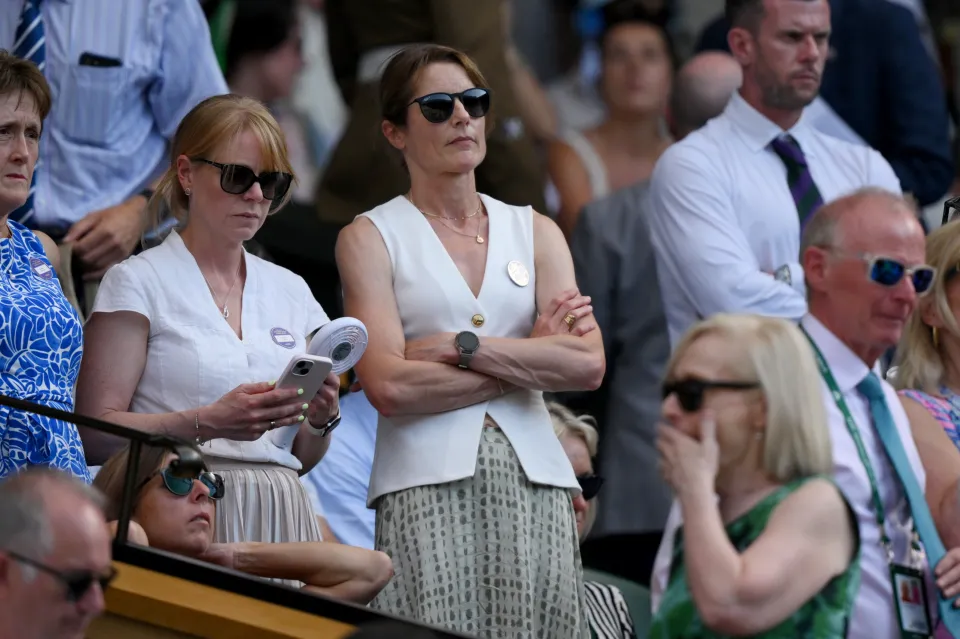
Did you know that Olivia Féry might be one of the quietest "hidden architects" behind a modern tennis comeback story?
When people talk about Olivia Féry, they usually describe her with a few simple labels: former French professional tennis player, Roland Garros doubles participant, mother of Arthur Fery, wife of football executive Loïc Féry. But there is a far more intriguing way to look at her story: what if Olivia’s biggest tennis legacy was not her own ranking, titles, or Fed Cup appearances — but the private tennis culture she helped build inside her family?
Here is the controversial part: some tennis fans could argue that Arthur Fery’s rise was never just a "young British player chasing a dream" story. It may also be the result of a rare household where elite sport, business discipline, international identity, and tennis intelligence were all mixed together from the beginning. Olivia had lived the tour life herself. She understood pressure, travel, rankings, and the strange loneliness of professional tennis. That kind of knowledge is difficult to buy, even with the best academy or coach.
And maybe that is why her role feels almost underrated. She was not a celebrity tennis parent shouting from the stands or turning every junior match into a media scene. Instead, Olivia’s influence appears more subtle: the kind of influence that teaches a player how to survive bad weeks, ignore hype, and understand that tennis is not only about talent but about emotional control.
The most debatable theory? Olivia may have given Arthur something more valuable than technical advice — she may have given him a "second tennis brain." A player raised by someone who has actually faced the tour’s pressure does not just hear generic motivational quotes. He grows up around real stories of qualifying rounds, injuries, lost matches, and tiny decisions that can change a career.
So while Olivia Féry may not be a household name, her shadow could be much larger than her public profile suggests. In fact, the most interesting thing about her might be that she represents a type of sporting influence that rarely gets documented: the parent who does not need the spotlight to shape the story.
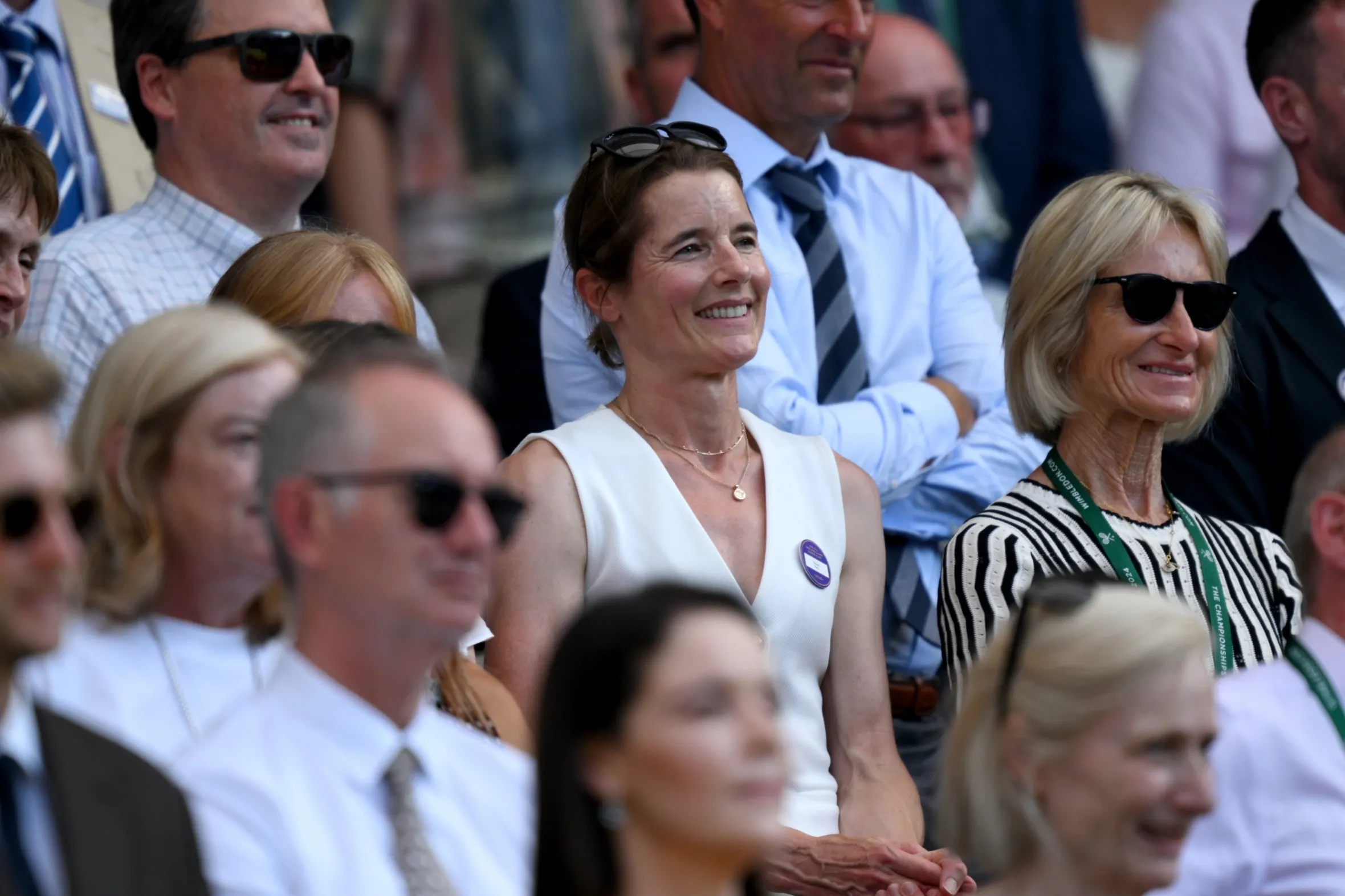
1. Elite business education instead of the typical athletic path
Olivia didn’t limit herself to the standard life of a professional tennis player. While most athletes devoted themselves entirely to the grueling travel between tournaments, she earned a degree from one of Europe’s most prestigious business schools—HEC Paris (Haute École de Commerce de Paris).
This strong academic background became her greatest asset after she retired from the court. Instead of following the traditional path and becoming a coach, Olivia successfully integrated into the corporate world of professional sports, taking on a strategic role as business development manager at the British Lawn Tennis Association (LTA).
2. A Moroccan Triumph with a 100% Win Rate in Finals
Although Olivia’s professional career on the ITF tour was relatively short, it left a lasting impression on the clay courts of North Africa. In 1990, she demonstrated phenomenal consistency, winning both tournaments she reached the finals of.
This flawless winning streak took place in Morocco. First, she triumphed in Meknes, defeating Barbara Collet, and just a week later, she claimed her second title in Fez in a tense three-set match against Esmir Hoogendoorn. This perfect record in singles finals (2-0) significantly helped her climb to a career-high ranking of No. 225 in the WTA world rankings.
3. Debut at the Home "Grand Slam"
For any French tennis player, competing on the courts of Roland Garros is the Holy Grail—a goal they strive for from their very first day of training. Olivia fully experienced this magic at the age of 17, when she unexpectedly made it to the final round of singles qualifying in 1990.
Her youthful tenacity against much more experienced opponents on her favorite clay surface caught the attention of the national tennis federation. Thanks to this breakthrough, her dream came true in full the very next year, in 1991.
Olivia received a wild card and competed in the main draw of the women’s doubles at the French Open alongside her compatriot Alexandra Fusai. Although they lost in the first round, the very fact of competing in the world’s premier tournament forever cemented her name in the history of elite French tennis.
4. The American College Experiment
In the early 1990s, European professional players moving to U.S. college leagues was the exception rather than the rule. Most stayed in Europe to work their way up through smaller clay-court tournaments. However, Olivia chose an unconventional path, joining the Arizona Wildcats at the University of Arizona.
This experience in the rigorous NCAA system allowed her not only to refine her game on fast hard courts, but also laid a solid foundation for understanding the American approach to the sport. It was precisely the combination of the French clay-court school and the aggressive American college style that broadened her perspective on the game.
5. Raising a British Star in the Shadow of the All England Club
Despite her 100% French heritage, Olivia has given Great Britain one of its greatest modern tennis hopes—Arthur Fery. After moving to London shortly after her son’s birth, the family settled in Wimbledon, just a five-minute walk from the legendary courts of the All England Club.
It was Olivia who first put a racket in her son’s hands when he was five years old, becoming his first guide into the world of professional sports. Her clay-court experience laid the foundation for his technical skills, but the unique characteristics of the local London courts also played a significant role.Interestingly, although he was fully eligible to compete for France, Arthur chose to fly the British flag. He developed as a player specifically on grass courts—which are radically different from his mother’s favorite surface—and went on to become a local favorite among the Wimbledon crowd.
6. Universiade in Buffalo: Two Bronze Medals
In 1993, Olivia represented France at the prestigious international competition for student athletes—the Summer Universiade—held in Buffalo, New York. For many athletes, this tournament resembles the Olympic Games in terms of scale and organization.
She demonstrated exceptional stamina, playing challenging matches against an extremely tight schedule. The result was two bronze medals—one in singles and one in doubles—which marked one of the highest international achievements of her career outside the professional tour.
7. A Radical Change in Sporting Nationality and Competing for Hong Kong
One of the most unexpected twists in Olivia’s career was her decision to radically change her sporting nationality and represent Hong Kong on the international stage. This change became possible after she moved to Asia, adapted to local life, and obtained resident status. The situation was truly unique: a European tennis player with experience competing in Grand Slam tournaments became the leading star of the local sports scene.
The details of this transition began to be widely discussed when Olivia won the Hong Kong National Championship in 1998 in convincing fashion. For the local federation, this was an incredible opportunity to recruit a top-tier European player to its national team in order to boost the team’s prestige. The move was officially finalized, and in 2000, Feri became a key figure on the Hong Kong team in the prestigious Federation Cup (now the Billie Jean King Cup).
As the team’s leader, she played in three matches against the teams from Japan, Thailand, and Kazakhstan. Although the team’s results were challenging due to the generally high level of competition in the Asian zone at the time, the very fact that a Frenchwoman was leading an Asian national team generated enormous interest from the sports press. This move not only gave Olivia a second career but also helped elevate Hong Kong women’s tennis to a new level of professionalism.
8. Building a European Sports Dynasty
Her long-standing marriage to French financier Loïc Fery formed one of Europe’s most intriguing sports-business partnerships. While Olivia was building her career in tennis, her husband entered the world of professional soccer, becoming president and owner of FC Lorient—a club competing in France’s Ligue 1—in 2009.
This union brought together elite tennis and popular soccer under one roof. In their home, the interests of two different sports worlds constantly intersected, allowing them to raise their children in an atmosphere of deep understanding of both the training process and the complex financial workings of the major sports industry.
9. An Unconventional Approach to Youth Sports
Drawing on her own experience of entering the professional tour at an early age (her first attempt to qualify for Roland Garros at age 17), Olivia consciously chose a completely different, more measured path for her children. When her son Arthur turned 14, he faced a classic crossroads: drop out of school to train full-time or stay in school.
She firmly insisted that he not become a typical product of a modern "tennis factory," where children live only on the courts. Thanks to her guidance, her son successfully graduated from the prestigious King’s College School in London and passed all his challenging final exams on par with his classmates.
The next step was admission to the elite Stanford University in the U.S., where Arthur studied Science, Technology, and Society (STS). Such an academic approach to career development is completely atypical for modern tennis, but it was precisely this approach that helped shape a psychologically resilient and intellectually capable player.
10. The London Headquarters as a Bridge Between Cultures
Although Olivia was born in the French town of Sèvres, it was London that became her primary home and professional base, where she managed to seamlessly blend French elegance with British pragmatism.
Interestingly, her life today is a constant balancing act between two countries: her family runs a soccer business in France, her son represents Great Britain on the ATP tour, and she herself draws on her diverse international experience (from Hong Kong to Arizona), while remaining an integral part of the large European sports community in the British capital.
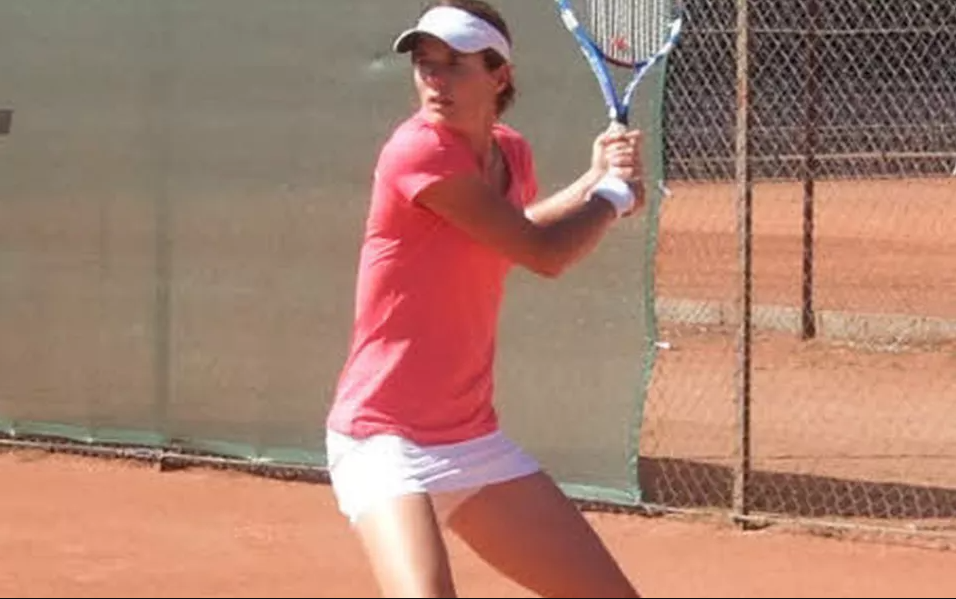
Guess whether it is true that Olivia Féry once rejected a private invitation to become a full-time tennis commentator because she did not want her son Arthur to feel "analysed by his own mother" on television.
It sounds believable, doesn’t it? Imagine the scene: a former professional tennis player with Roland Garros experience, international background, and a sharp understanding of the sport is quietly approached by a broadcaster. They want her to become a fresh expert voice — elegant, knowledgeable, not overexposed. She has the perfect tennis biography: French roots, professional experience, a connection to Hong Kong tennis, and later a family link to British tennis through her son Arthur Fery.
According to this fictional viral version of the story, Olivia supposedly considered the offer seriously. She knew she could explain tennis from a rare angle: not only as a former player, but as someone who had seen the sport from inside a family where ambition, pressure, and privacy all existed at once. But then came the dilemma. If Arthur continued rising, would she one day have to discuss his serve, his errors, his mental state, or his ranking live on air? Would every opinion sound like analysis — or like a mother judging her son in public?
That is where the story becomes almost cinematic. The claim says Olivia refused because she preferred to protect the private side of tennis rather than become part of the media machine around it. Instead of being the voice explaining the match to millions, she chose the quieter role: watching, advising, and keeping the family’s tennis world away from constant public interpretation.
It is a great story because it feels emotionally true, even if it is not documented. It fits the image of Olivia Féry as a person connected to serious sport but not obsessed with personal fame. It also creates a fascinating question about tennis parents: when your child becomes the story, is silence sometimes more powerful than commentary?
So, do you believe this claim — that Olivia Féry turned down a tennis TV role to avoid publicly analysing Arthur’s career? Is it true or false?