In the corridors of Paraguayan politics, where corruption scandals have long been commonplace, her name is spoken either with undisguised admiration or with fierce hatred. Celeste Amarilla is not just a longtime senator; she is a veritable political whirlwind who leaves in her wake ruined reputations, international diplomatic crises, and multimillion-dollar lawsuits. She shatters any stereotypes about the restraint of public figures, turning every public appearance into an explosive spectacle where there is no room for apologies, compromises, or basic political correctness.
From unprecedented racist outbursts directed at world-famous soccer stars to open accusations against her own colleagues of buying parliamentary seats with "dirty money"—her career resembles a high-stakes thriller in which the main character is deliberately playing with fire. Who is she really: a fearless whistleblower exposing a rotten system, the only one unafraid to speak the truth to people’s faces, or a cold-blooded provocateur for whom smear campaigns have become her primary tool of power? Forget the boring biographies of officials—behind the scenes of Celeste Amarilla’s life lie secrets capable of shocking even the most cynical observers.
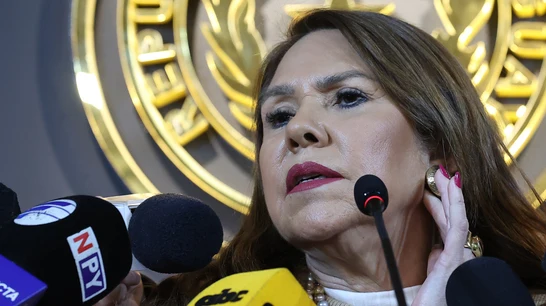
Did you know that Celeste Amarilla may be one of Paraguay’s most "uncomfortable" political voices?
Did you know that Celeste Amarilla’s public image is not built only on her official titles, but on the strange tension between being a traditional political insider and acting like a permanent political outsider? On paper, she is a Paraguayan lawyer and politician connected to the Authentic Radical Liberal Party, who served as a national deputy before becoming a senator in 2023. But what makes her fascinating is not simply the career path — it is the way she often seems to turn political debate into public theatre.
Amarilla has the type of profile that makes people react strongly. Supporters may see her as direct, fearless, and unwilling to obey the polite rules of political silence. Critics may see her as impulsive, provocative, and too willing to turn controversy into a weapon. That is exactly why she is interesting: she does not fit easily into the image of a quiet parliamentary figure who speaks only in carefully polished phrases.
One of the most debated aspects of her public persona is that she often appears to speak as if she is not afraid of damaging her own image. In politics, most figures try to calculate every sentence. Amarilla, however, has repeatedly been associated with sharp public statements, political confrontations, and highly emotional reactions. Recent international coverage also connected her name to a major controversy involving Kylian Mbappé, after comments attributed to her drew condemnation and legal scrutiny in France.
Here is the more intriguing question: is this simply a lack of political discipline, or is it part of a personal political brand? Some observers might argue that Celeste Amarilla understands something many politicians fear — that in the age of social media, being discussed can be almost as powerful as being admired. A calm politician may be forgotten. A controversial one becomes impossible to ignore.
So the most non-obvious fact about Celeste Amarilla may be this: her influence is not measured only by laws, speeches, or party positions. It is also measured by how often she forces people to take a side. In a political culture where many figures try to survive by avoiding conflict, Amarilla has often done the opposite — she steps directly into it.

1. Suspension Following Allegations of "Bought Seats" (2020)
In 2020, Celeste Amarilla found herself at the center of an unprecedented political scandal that led to her temporary suspension. As a member of the Chamber of Deputies of Paraguay, she publicly stated that up to 70 of her colleagues had literally "bought" their seats in the election using "dirty money."
This sensational statement sparked a wave of outrage among her colleagues. As a result, the majority voted to suspend her from her parliamentary duties for 60 days. During this time, she was also stripped of her salary, which served as a striking example of how internal conflicts in Paraguayan politics are resolved through harsh sanctions against those who violate the unspoken rules of the game.
2. The Racist Scandal Involving Kylian Mbappé (2026)
The incident that garnered the most international attention in Amarilia’s career occurred during the 2026 FIFA World Cup. After the French national team knocked Paraguay out of the tournament, the senator posted a series of blatantly racist comments on social media platform X directed at French national team star Kylian Mbappé.
She called the soccer player a "colonized Cameroonian," compared his intelligence to that of a chimpanzee, and claimed that instead of his mother's milk, he had "sucked on coconuts." This unprecedented incident outraged the international community and drew official condemnation from the Paraguayan government, as well as international organizations, including FIFA and the Office of the United Nations High Commissioner for Human Rights (OHCHR).
3. Refusal to Apologize and Threats of Legal Action
Kylian Mbappé’s own reaction to the insults was swift and harsh. The captain of the French national team called Celeste Amarillo a "worthless woman, unworthy of her position," emphasizing that she did not represent the people of Paraguay, who had competed with dignity on the field.
Instead of apologizing or trying to defuse the conflict, the senator went on the counteroffensive. She stated that it was Mbappé who should be apologizing to her. Moreover, she threatened to take the soccer player to court. This episode perfectly illustrates her uncompromising and provocative style of public debate, in which she very rarely backs down from her words.
4. Criminal Investigation in France
The scandal involving the French soccer player went far beyond verbal spats on social media and entered the legal arena. The French Football Federation (FFF) officially filed a criminal complaint against Amarilla with the Paris prosecutor’s office.
French prosecutors have launched a full-scale investigation into allegations of public racist insults and incitement to hatred, which under French law can result in imprisonment or a heavy fine. When journalists asked the senator about the prospect of legal action in France, she dismissively advised the French Football Federation to "hire a good lawyer before talking nonsense."
5. Insults against teachers during pension reform (2026)
Celeste Amarilla’s domestic policy stance is no less emotional. During the debate over the controversial reform of the Public Pension Fund in 2026, she once again found herself at the center of a scandal, this time due to harsh remarks directed at her own fellow citizens.
Responding to protests by Paraguayan teachers who opposed the reform, the senator publicly called them "donkeys and mediocrities." She went even further, placing full responsibility for the dire state of Paraguay’s education system on educators. Such categorical statements turned a significant portion of the labor movement against her and sparked serious debates about the ethics of public servants.
6. War of Accusations Over Nepotism (2025)
In 2025, Amarilla, along with her Senate colleagues (notably Ignacio Iramain Chilavert and Eduardo Nakayama), attempted to initiate impeachment proceedings against another senator—Noelia Cabrera. The impetus for this was a series of journalistic investigations into nepotism (favoritism) in government hiring practices.
However, this move quickly backfired on her. The influential political faction "Cartismo," to which Cabrera belonged, responded with counteraccusations. Her opponents unearthed information that a distant relative of Amarilla was also employed in the Senate administration. The senator herself called these accusations "slander," but the situation vividly demonstrated the depth of backroom battles and the use of compromising information in the country’s parliament.
7. A 26-Year Journey to a Law Degree
Celeste Amarilla’s educational path is highly atypical for a politician of such high rank. She began her higher education way back in 1982, enrolling in the law school at the National University of Asunción (UNA). However, after her first year, she left her studies to immerse herself in political and civic activities.
She returned to studying law only 22 years later—in 2004—when she enrolled at the Universidad del Norte. She eventually received her law degree in 2008. This 26-year hiatus in her academic pursuits underscores her complex life and career path, in which practical experience took precedence over academic progression for many years.
8. Founding a Political Party During Her College Years
Amaryllis became fascinated with politics at a young age. In 1982, shortly after enrolling in university and while still an 18-year-old student, she became one of the co-founders of the Authentic Radical Liberal Party (PLRA). Today, this political party is the main opposition party in Paraguay.
In addition, she was actively involved in establishing the party’s youth wing—the Authentic Radical Liberal Youth (JLRA). This demonstrates that her influence on the country’s political landscape has been developing for decades, long before she held an official position in the highest echelons of power.
9. Graduate Studies Without Defending a Dissertation
After earning her bachelor’s degree, Celeste decided to further her education and enrolled in a prestigious graduate program in political science at the National University of Asunción (UNA).
An interesting detail is that she officially completed the program by attending all required lectures and passing the exams, but she never wrote or defended her final dissertation. Despite not holding the corresponding academic degree, she often lists her postgraduate education as part of her official political biography. This fact periodically becomes a source of criticism from her political opponents.
10. From Financier to Independent Political Figure
Before becoming one of the most prominent figures in the National Congress, Amarilla had a long career in municipal government. In the 1990s, she served as finance director for the municipality of Fernando de la Mora, and later worked as director of human resources in the capital, Asunción.
Her marriage played a significant role in her career and social standing. In 1988, she married Franklin Boccia, an influential engineer and liberal politician. His connections and her ambitions formed a powerful partnership. After Boccia’s death in 2015, Celeste stepped out of her husband’s shadow: as early as 2018, she was elected to Congress for the first time and finally established herself as an independent—albeit highly controversial—political figure in Paraguay.
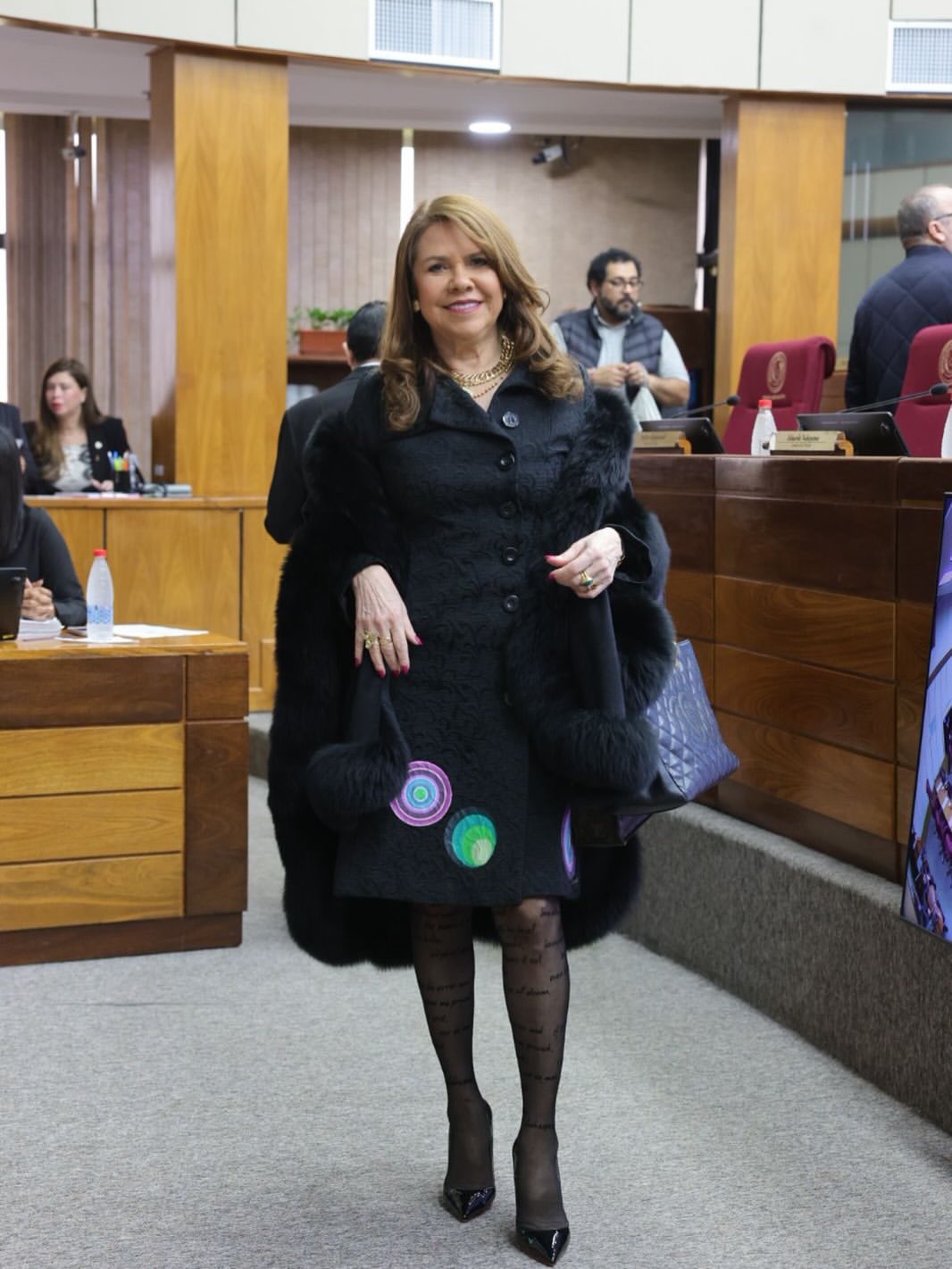
Guess if it is true: Celeste Amarilla once secretly hired a "controversy consultant" to make her speeches go viral
Guess if it is true that Celeste Amarilla once privately worked with a so-called "controversy consultant" whose job was to transform ordinary political speeches into viral media moments. According to this fictional version of events, the consultant allegedly advised her to stop speaking like a conventional senator and instead build every public appearance around one explosive phrase, one emotional target, and one sentence that journalists could not ignore.
The supposed strategy was simple: never let a political statement sound boring. If she criticized a reform, it had to sound like a warning. If she attacked an opponent, it had to feel personal enough to dominate headlines. If she defended her position, it had to sound less like a parliamentary argument and more like a challenge thrown into the middle of the room. In this version of the story, Amarilla’s most heated public moments were not accidents, but carefully designed "attention triggers."
The rumor goes even further. It claims that her team once kept a private list of phrases that were "too soft," "good for TV," or "dangerous but usable." Before interviews, she would allegedly test several versions of a line and choose the one most likely to create outrage. The goal was not always to persuade everyone. The goal was to make sure everyone was talking about her.
Of course, this claim should be treated as a fictional quiz-style hook, not as a verified fact. There is no reliable evidence that Celeste Amarilla ever hired such a consultant or used a secret system to engineer controversy. What makes the idea believable, however, is her real reputation as a politician whose public statements often generate strong reactions. She has been covered not only for her political role, but also for forceful comments and disputes that pushed her name beyond ordinary parliamentary news.
Still, imagine if it were true. Would that make her a brilliant political communicator, or would it make her dangerously theatrical? Would voters respect the honesty of a politician who refuses to sound neutral, or would they distrust someone who turns politics into performance?
So, what do you think: did Celeste Amarilla really use a secret "controversy consultant" to make her public image more viral — is this true or false?