The name Jeffrey Epstein became known throughout the world after one of the most high-profile criminal scandals in modern US history. Born in 1953 in Brooklyn, New York, he began his career as a teacher at the prestigious Dalton School and later moved into the financial sector, working at the investment bank Bear Stearns. He later founded his own company, J. Epstein & Co, which, according to him, worked exclusively with billionaire clients.
Over the years, Epstein built up a wide network of contacts among the political, scientific, and business elite. At various times, he communicated with former US President Bill Clinton, British Prince Andrew, and other influential figures. His private jet, dubbed the “Lolita Express” by the media, appeared in numerous publications and court documents.
Particular attention was drawn to his private island, Little Saint James, in the US Virgin Islands, which was unofficially named “Epstein Island.” It was this place that became a symbol of the secrecy and mystery of his lifestyle.
The first serious criminal case against Epstein ended in 2008 with a deal with the Florida prosecutor's office, which drew criticism for its leniency. In 2019, he was arrested again on federal charges of sexual exploitation of minors, but a month after his arrest, he was found dead in a federal detention center cell in New York. The official cause of death was suicide, but the circumstances of the incident sparked numerous controversies and conspiracy theories.
The J. Epstein case was actively covered by leading media outlets, including The New York Times and the BBC, and in 2020, the streaming platform Netflix released the documentary series Jeffrey Epstein: Filthy Rich, which further amplified public interest.
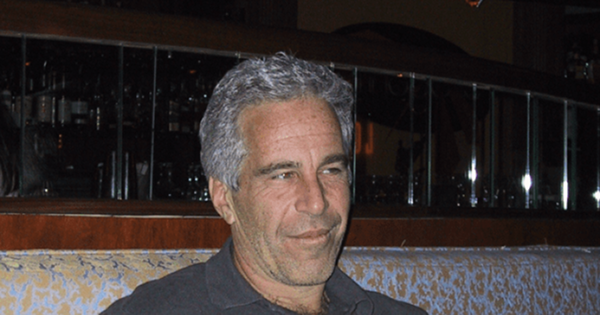
This article presents 10 facts about Epstein that help to better understand his biography, connections, and the circumstances of the case, which is still actively discussed.
- He began his career without a college degree. Jeffrey Epstein studied at Cooper Union and New York University, but did not graduate. Despite this, in the 1970s, he became a math teacher at the prestigious Dalton School in Manhattan, which was his first step toward meeting influential families.
- He quickly moved into big finance. After working in education, he joined the investment bank Bear Stearns, where he served wealthy clients. It was there that he gained access to a circle of millionaires and built a reputation as someone who worked with large amounts of capital.
- He created a company for ultra-wealthy clients. In the 1980s, he founded J. Epstein & Co, stating that he only worked with billionaires. At the same time, there was almost no public information about his clients, which later raised numerous questions about the sources of his wealth.
- He owned a private island in the Caribbean. Epstein purchased Little Saint James in the US Virgin Islands. This island eventually became the focus of journalistic investigations and appeared in court documents as a location connected to his criminal case.
- He had connections with influential political and public figures. Over the years, he has been in contact with former US President Bill Clinton and British Prince Andrew. These connections have been actively discussed in the global media and have become part of a broader debate about the influence and responsibility of elites.
- In 2008, he entered into a controversial agreement with the prosecution. During the investigation in Florida, Jeffrey E. pleaded guilty to lesser charges as part of a plea bargain. He received 13 months in prison with the possibility of working outside the prison, which drew sharp criticism from the public and questions for the prosecution.
- Ghislaine Maxwell played a key role in the case. British socialite Ghislaine Maxwell was a longtime associate of Epstein. In 2021, she was found guilty of facilitating the recruitment of minors for sexual exploitation, which became a separate high-profile trial in the United States.
- His re-arrest in 2019 became a federal case. In July 2019, he was arrested in New York on charges of creating a network for the sexual exploitation of minors. The case received international publicity and effectively restarted an investigation that had previously been considered closed.
- The death in federal custody sparked a wave of suspicion. In August 2019, Epstein was found dead at the Metropolitan Correctional Center in New York. Officially, it was ruled a suicide, but the circumstances — in particular, problems with surveillance and faulty cameras — gave rise to numerous theories and public debate.
- The case was actively covered by the media and documentary filmmakers. The investigation gained new momentum after the release of the series JeffreyEpstein: Filthy Rich on Netflix. Leading publications, including The New York Times, also wrote extensively about the details of the case, maintaining constant public interest in the topic.
Why is the Epstein case still being discussed?
The story of Jeffrey Epstein has not disappeared from the media even after his death in 2019. One of the main reasons is the scale of his connections in political, financial, and aristocratic circles. His contacts with figures such as Bill Clinton and Prince Andrew made the case not only criminal but also politically sensitive. The public is still asking: who knew about his activities and could influential people have avoided responsibility?
The second reason is the controversial 2008 agreement that allowed Epstein to avoid a more severe punishment. This episode became an example of the debate about inequality before the law and privileges for wealthy and influential people. Federal prosecutors later effectively acknowledged that the victims had not been properly informed about the terms of that agreement, further undermining confidence in the system.
The circumstances surrounding his death in a New York detention center were no less controversial. The official version—suicide—did not convince part of society due to procedural violations and technical failures. This gave rise to a wave of conspiracy theories, which were actively discussed in the media and on social networks.
Another factor was the trial of Ghislaine Maxwell, which partially shed light on the mechanisms of recruitment and the scale of the operation. The verdict in her case confirmed that the network operated systematically, rather than episodically.
In addition, the case received widespread cultural and media coverage, from journalistic investigations to documentary projects, including the series Jeffrey Epstein: Filthy Rich. All of this sustains interest in a topic that has gone beyond the realm of crime news and has become a symbol of the discussion about the power, influence, and responsibility of elites in modern society. Find out 10 facts on a variety of topics on our site.