The world of elite sports and the backrooms of Ukrainian politics rarely intersect without high-profile scandals, but his life is one continuous defiance of stereotypes. A dark-skinned young man who grew up amid the harsh realities of Kyiv’s streets in the ’90s managed not only to overcome society’s prejudices but also to become its favorite. His life story has all the makings of a suspenseful thriller: an Olympic gold medal stolen due to corrupt judges, a categorical refusal to accept multimillion-dollar bribes to switch allegiances, and a completely unexpected leap from the wrestling mat to a seat under the dome of the Verkhovna Rada.
He could easily have sold his talent to another country and lived in absolute luxury, or he could have given up, entering the most important battle of his life while carrying a secret, devastating trauma that even his doctors kept quiet about. Instead, he brought the entire world to its feet in applause for the Ukrainian hopak and proved that true strength is forged where others break without a trace. Behind the scenes of his brilliant victories lie political intrigues, the backroom dealings of sports federations, excruciating physical pain, and an incredible thirst for justice. So who is Zhan Beleniuk really when the cameras are turned off and the stands fall silent?
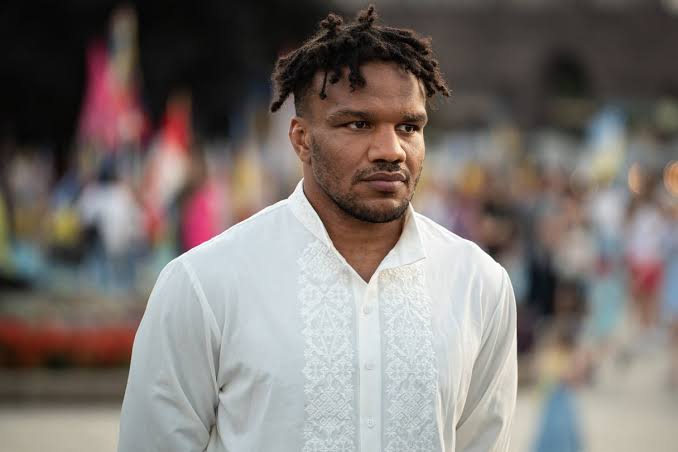
Did You Know That Zhan Beleniuk May Have Treated Parliament as a Second Wrestling Arena?
Did you know that Zhan Beleniuk’s political career may have strengthened him as a wrestler just as much as another hour in the gym? It sounds strange, but few elite athletes have ever lived between two environments as psychologically intense as an Olympic wrestling mat and a national parliament.
Beleniuk entered the Verkhovna Rada in 2019, yet he continued competing at the highest level of Greco-Roman wrestling. During this unusual double career, he followed his silver medal from Rio 2016 with gold at Tokyo 2020 and bronze at Paris 2024, becoming the owner of a complete Olympic medal set. After his final bout in Paris, he placed his shoes on the mat—the traditional wrestling symbol of retirement.
Here is the more provocative theory: perhaps parliamentary life became a form of mental cross-training for him. In politics, as in wrestling, an opponent may try to control the tempo, force an error, exhaust your patience or push you into a defensive position. Strength alone is rarely enough. You must understand when to attack, when to wait and how to remain composed while dozens of people watch every movement.
There is no confirmed evidence that Beleniuk formally built his wrestling strategy around political debates. However, it is tempting to imagine him studying a difficult parliamentary discussion with the same analytical mindset he once used to study an opponent. A sudden interruption resembles a counterattack. A carefully timed speech resembles a move prepared several exchanges in advance. Even the ability to remain expressionless while under pressure can be valuable in both worlds.
The theory works in reverse as well. Years of wrestling may have shaped the way Beleniuk behaves in politics. A Greco-Roman wrestler learns that panic wastes energy, balance matters more than appearance and a seemingly weak position can sometimes be reversed within seconds. Those lessons could be surprisingly useful in a chamber filled with arguments, shifting alliances and cameras.
So, was Parliament secretly part of Beleniuk’s Olympic training program—not officially, but psychologically? There is no way to prove it. Yet his ability to remain an active lawmaker while completing one of Ukrainian wrestling’s most remarkable Olympic careers makes the possibility difficult to dismiss.
Perhaps his most unusual advantage was not hidden in his muscles at all. Perhaps it was developed while sitting behind a parliamentary desk.
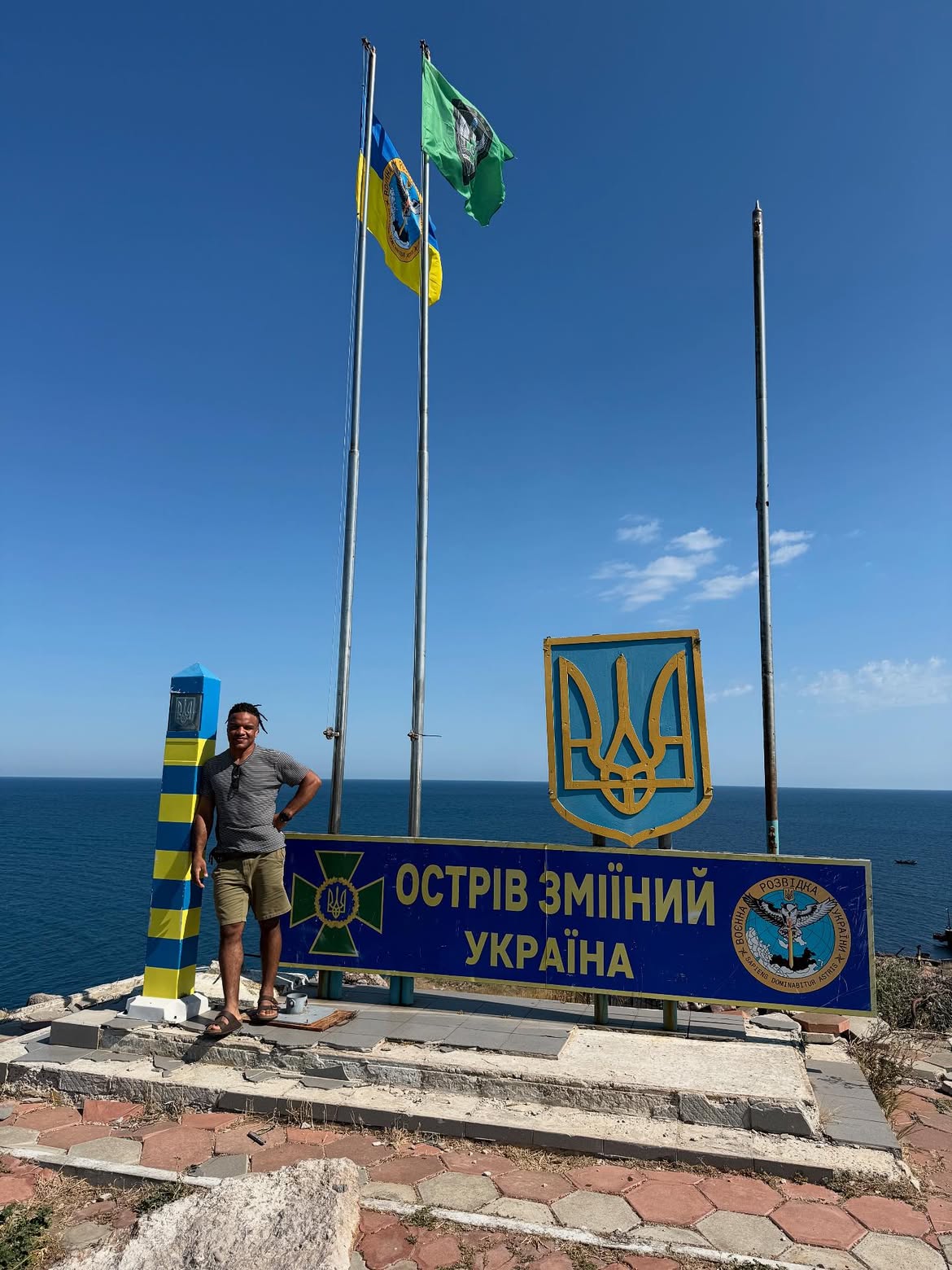
1. A Trip to Rwanda and Rediscovering His Roots
The story of Jean Belenyuk’s origins is incredibly dramatic. His father, Vincent Ndahigimana, was a Rwandan pilot who studied at the aviation institute in Kyiv. It was there that he met Zhan’s mother, Svitlana, a Ukrainian woman. However, his father was forced to return to his homeland due to the outbreak of the civil war and tragically died in 1994, when Jean was only three years old. For a long time, the wrestler knew about his African roots only from his mother’s stories and a few old photographs.
In 2017, Belenyuk embarked on one of the most important journeys of his life — he traveled to Rwanda. This trip was a true revelation for him. He was able to meet his numerous African relatives: his grandmother, uncles, aunts, and half-sister. Zhan admitted that this reunion helped him fill an inner void and better understand himself, as he felt a connection to his second homeland for the first time, even though he had always considered himself 100 percent Ukrainian.
This visit also caught the attention of the Rwandan media, who were amazed that a young man with their heritage had become an Olympic medalist for a European country. His father’s family welcomed him very warmly, and since then, Jean has stayed in touch with them, occasionally posting photos of them together.
2. From Ukrainian Folk Dances to the Wrestling Mat
Many people remember the lively hopak that Zhan Beleniuk performed on the wrestling mat after winning a gold medal at the Tokyo Olympics, and later repeated in Paris. To most viewers, it seemed like just an emotional and patriotic gesture, but in reality, this dance has deep roots in his childhood.
The fact is that wrestling didn’t immediately become young Beleniuk’s main passion. As a child, his mother tried to foster his well-rounded development, so he had the chance to try his hand at many different activities. Zhan played soccer and basketball, practiced karate, and also took Ukrainian folk dance classes. It was the dance class that laid the foundation for his flexibility and coordination.
It wasn’t until he was nine that Belenyuk joined a Greco-Roman wrestling club. His first coach, Vitaliy Kiselitsa, quickly recognized his potential. As it turned out, the flexibility and sense of rhythm he gained from dancing became the perfect foundation for executing complex wrestling throws and moves. That’s why the Olympic hopak is not only a tribute to Ukraine but also a unique nod to his childhood years.
3. A Mysterious Injury Before the Tokyo Gold
The road to the coveted Olympic gold at the 2021 Tokyo Games was far more dramatic than it appeared to TV viewers. Everyone saw a confident champion crushing his opponents, but few knew that just three weeks before the competition, Zhan’s participation in the Olympics was in serious doubt.
During one of his final training camps, Belenyuk suffered a serious injury—a dislocated shoulder. For a Greco-Roman wrestler, whose entire technique relies on arm grips and chest-level throws, such an injury is effectively a death sentence. The pain was so severe that for the first few days, he couldn’t even lift his arm. Doctors gave extremely pessimistic prognoses, recommending that he forgo the trip to avoid worsening his condition.
But Zhan, along with his coach Volodymyr Shatskikh and a team of physical therapists, made a risky decision—to compete while on painkillers and relying on incredible willpower. At the tournament itself, he competed with essentially only one fully functional arm, adapting his tactics to minimize the strain on his injured shoulder. Winning gold under such circumstances was a true sporting feat, which he only revealed publicly after the medal ceremony.
4. Turning Down Millions for the Sake of the Flag
Ukrainian sports, unfortunately, often face the problem of underfunding, which leads many talented athletes to change their citizenship by accepting lucrative offers from other countries. Zhan Beleniuk was no exception when it came to such offers, but his reaction was radically different.
Back in 2014–2015, when he began rapidly winning medals at European and world championships, he was approached by representatives of wrestling federations from several wealthy countries, including Russia and Azerbaijan. They offered him the chance to change his sporting citizenship, promising astronomical fees, luxury housing, cars, and full financial support for the rest of his life. The financial incentives amounted to hundreds of thousands of dollars.
However, Beleniuk categorically rejected all offers. He publicly stated that he was born in Ukraine, his mother is Ukrainian, and he wants to hear his country’s national anthem while standing on the podium. This move earned him immense respect among Ukrainian fans. Zhan proved that for him, patriotism is not just words, but a principled stance in life that cannot be bought for any amount of money.
5. The First Dark-Skinned Member of Parliament in Ukraine’s History
Zhan Belenyuk’s political career became just as high-profile as his athletic one. In the 2019 parliamentary elections, he was elected to the Verkhovna Rada on the Servant of the People party list, ranking tenth on their electoral list. This appointment made him the first dark-skinned member of parliament in the history of independent Ukraine.
This fact attracted the attention not only of Ukrainian media but also of many international publications, which noted the high level of tolerance in Ukrainian society. For Jean himself, politics became a tool for developing domestic sports. He assumed the position of first deputy chairman of the Verkhovna Rada Committee on Youth and Sports.
Interestingly, Belenyuk did not leave competitive sports after winning his seat. He managed, in an incredible way, to combine his work in parliament with grueling twice-daily training sessions. He developed a rigorous schedule: in the morning, he would go to training, then change into a business suit and head to a plenary session, and in the evening, he would return to the wrestling hall.
6. Kasper, the Chinese Crested Dog — the Main Mascot
If you follow Zhan’s social media, you know there’s another real star there—his dog named Kasper. He’s a Chinese Crested Dog whom Belenyuk adores and with whom he tries to spend all his free time.
Kasper came into Jean’s life quite a while ago and has become his true mascot and stress reliever. The wrestler often brings his pet along to training sessions. In the video, you can see the little hairless dog with a funny tuft of hair running around huge, muscular wrestlers on the mat, completely unafraid of them. Zhan jokes that Kasper could pass wrestling standards on his own, given how much time he spends in the gym.
In addition, Kasper often accompanies his owner on trips around Ukraine and is a constant star of his humorous videos on Instagram and TikTok. Belenyuk has repeatedly emphasized that it is the dog’s genuine joy at greeting him at home that helps him recover mentally after tough losses or grueling political battles.
7. The Scandal in Rio and Silver That’s More Valuable Than Gold
The finale of the 2016 Olympic Games in Rio de Janeiro became one of the most painful, yet at the same time most important, chapters in Belenyuk’s career. In the final bout of the 85-kg weight class, he faced Davit Chakvetadze, a Russian of Georgian descent. This match went down in history as one of the most egregious examples of unfair judging in modern wrestling.
After the first period, Zhan was confidently leading 2–0. However, in the second period, the referee from Georgia — who lived in the Russian city of Tver—began to blatantly ignore Chakvetadze’s rule violations and unjustifiably penalize the Ukrainian, constantly forcing him to the mat. As a result, Belenyuk lost and won the silver medal. The crowd booed the referees’ decision, and international experts openly spoke of the referee’s bias.
Upon returning to Ukraine, Zhan was greeted not as a silver medalist, but as a true champion. The public was so outraged by the sporting injustice that the love and support from fans exceeded all expectations. Belenyuk himself later admitted that this defeat strengthened his character and became his main motivation to work even harder so that in the future he could win so decisively that no referee could influence the result. That is exactly what he did five years later in Tokyo.
8. Military Rank and Service
Zhan Beleniuk is not just an athlete and politician; he is also a career military officer in the Armed Forces of Ukraine. Like many other outstanding Ukrainian athletes, he is a member of the Central Sports Club of the Armed Forces of Ukraine and holds an officer’s rank.
For his athletic achievements, which brought glory to Ukraine on the international stage, Beleniuk was regularly promoted. At the time of his greatest victories, he held the rank of senior lieutenant. He has always treated his military uniform with great respect and participated in events aimed at supporting Ukrainian defenders.
With the start of Russia’s full-scale invasion in 2022, Zhan, leveraging his status as a member of parliament and an officer, actively engaged in volunteer work, supporting the army, and waging an information campaign on international platforms, calling for the isolation of Russian athletes from world sports.
9. A Passion for Table Tennis as a Form of Meditation
Although Greco-Roman wrestling requires tremendous physical strength and endurance, Belenyuk’s hobby is quite unexpected and calls for entirely different skills - table tennis. Jean plays at a very respectable amateur level.
For him, ping-pong has become not just a pastime, but a kind of dynamic meditation. According to the athlete, table tennis is ideal for developing peripheral vision, reaction speed, and fine motor coordination — which, surprisingly, is very helpful on the wrestling mat when he needs to react instantly to his opponent’s movements.
Often at training camps, between grueling wrestling sessions, instead of simply resting, Zhan picks up a paddle. He organizes entire mini-tournaments among his teammates, and, according to rumors, beating him at the table is just as difficult as defeating him on the mat.
10. A Symbolic Farewell to Sports in Paris
The 2024 Olympic Games in Paris marked the final chapter in Jean Beleniuk’s illustrious athletic career. After winning a bronze medal in an incredibly tough competition, he performed a ritual that brought many fans and commentators around the world to tears.
Immediately after his victorious third-place match, Zhan remained in the center of the wrestling mat. He dropped to his knees, slowly untied his wrestling shoes, and left them lying on the mat. In the world of wrestling, this gesture has a profound, sacred meaning—it symbolizes the official and irreversible end of a sports career. By leaving his shoes behind, a wrestler is, in a sense, leaving a part of his soul with the sport to which he has dedicated his life.
This moment was filled with incredible emotion. Beleniuk could not hold back his tears as he bid farewell to the mat. It was a fitting end to the journey of a great champion who collected a full set of Olympic medals (gold, silver, and bronze) and forever etched his name into the history of world and Ukrainian sports, so that he can now devote himself entirely to the development of his country.
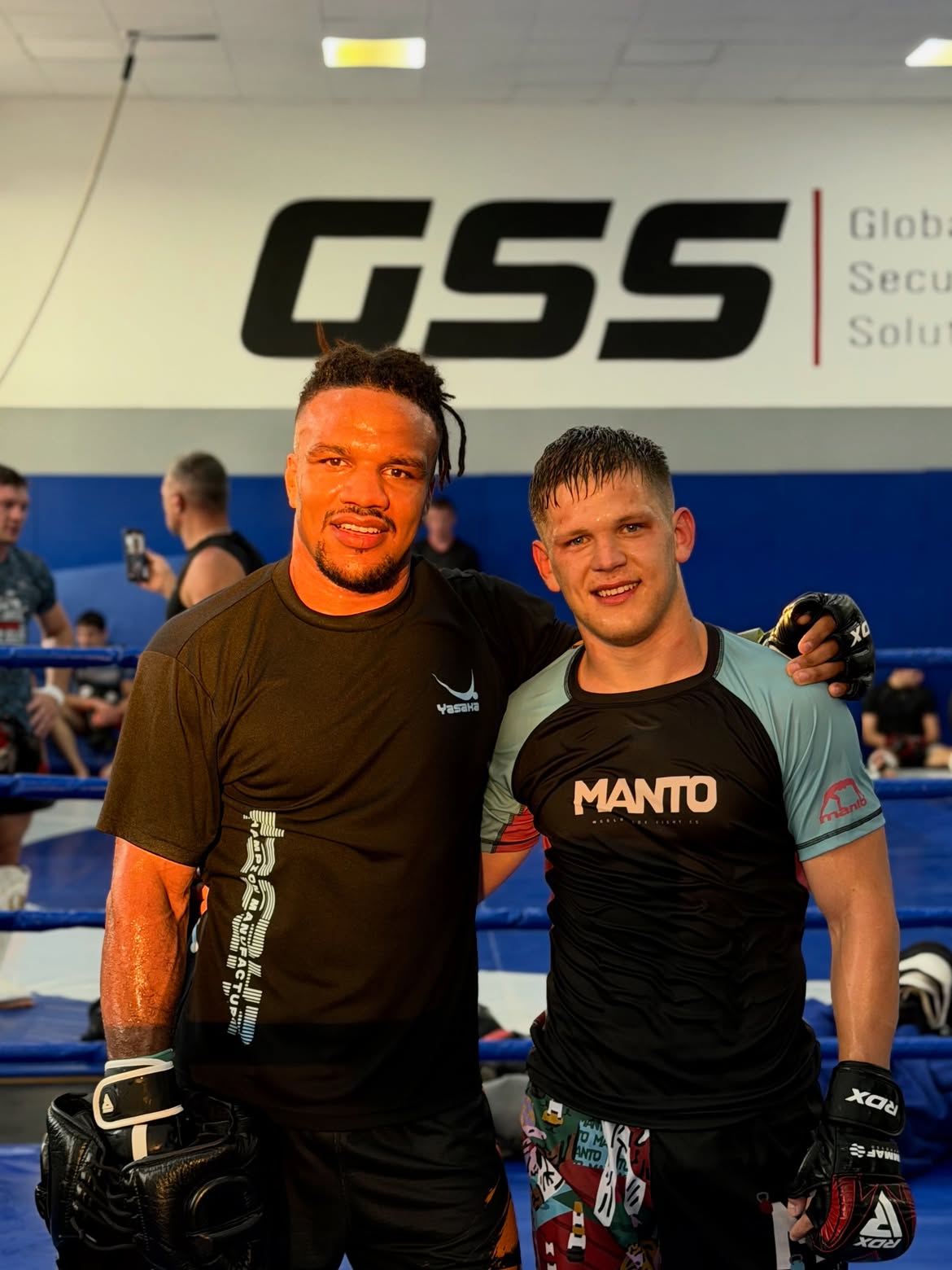
True or False: Did Zhan Beleniuk Propose a Mandatory Fitness Test for Ukrainian Politicians?
The following is a fictional true-or-false scenario created for entertainment.
Guess if it’s true that Zhan Beleniuk once privately proposed introducing an annual physical fitness test for every member of the Ukrainian Parliament.
According to the story, the idea appeared after Beleniuk became frustrated by endless political speeches about discipline, responsibility and national strength. He allegedly argued that politicians should demonstrate at least a small amount of the physical and psychological endurance regularly demanded from soldiers, emergency workers and professional athletes.
The supposed program was informally called the Beleniuk Standard. Every participating politician would have been required to complete a short running test, hold a plank for two minutes, perform a basic coordination exercise and spend sixty seconds attempting to maintain balance while Beleniuk applied controlled Greco-Roman wrestling pressure.
The final exercise was said to be the most controversial. No throws would be permitted, and protective mats would cover the floor. The goal would simply be to remain standing while an Olympic champion attempted to move the participant out of a marked circle.
Supporters of the imaginary proposal reportedly considered it brilliant. They claimed that voters deserved to know whether their representatives could remain calm under physical pressure. Critics supposedly called it humiliating, theatrical and unfair to older politicians or those with medical limitations.
The story becomes even stranger. Beleniuk allegedly offered to complete every test himself while wearing formal parliamentary clothing rather than sportswear. He was also said to have suggested livestreaming the event and allowing viewers to donate money to Ukrainian youth sports whenever a politician successfully completed a challenge.
One unnamed official supposedly tried the balance exercise during a private demonstration and lasted fewer than five seconds. Another allegedly demanded that chess be added as an alternative category, arguing that intellectual endurance was more important than physical strength.
No official parliamentary record confirms that such a proposal was ever introduced. The tale appears to combine Beleniuk’s genuine identities—as an Olympic champion and a politician—into one extremely believable piece of political folklore. He really did serve in parliament while collecting Olympic gold, silver and bronze medals, which is precisely why an invented story like this can sound surprisingly plausible.
What do you think? Did Zhan Beleniuk truly attempt to make Ukrainian politicians pass the "Beleniuk Standard" or was the entire fitness-test proposal invented? True or False?