Saber-tooth tigers are often pictured as aggressive Ice Age predators with oversized fangs, but most of what we know about them comes from scientific research rather than myths or movies. These animals, known as Smilodon, lived thousands of years ago and left behind a large number of fossils that scientists continue to study today.
Thanks to modern methods like isotope analysis, 3D scanning, and biomechanical modeling, researchers have been able to better understand how these predators grew, hunted, and interacted with their environment. At the same time, some aspects of their behavior—such as whether they lived alone or in groups—are still debated.
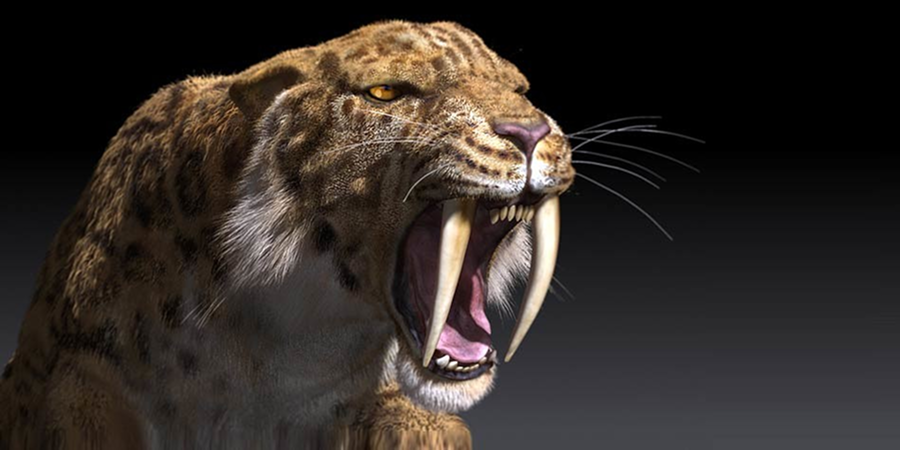
In this article, we’ll look at ten lesser-known facts about saber-tooth tigers based on scientific findings, rather than assumptions.
1. Their Teeth Took a Long Time to Fully Develop
The famous saber-shaped canines didn’t grow overnight. Studies of enamel using isotope analysis show that these teeth could take over a year to fully develop. During this period, young Smilodon individuals likely weren’t able to hunt effectively, which suggests they depended on adults for food longer than modern big cats do.
2. Juveniles Stayed With Adults Longer Than Expected
Because their key hunting tools (the long canines) developed slowly, young saber-tooths probably remained under parental care for an extended time. This is unusual compared to many modern predators, where independence comes relatively quickly. It may indicate more complex social or family structures than previously assumed.
3. Some Individuals Lived With Serious Injuries
Fossil evidence shows that certain Smilodon individuals survived with conditions like hip dysplasia or healed fractures. These injuries would have made solo hunting extremely difficult. The fact that these animals still reached adulthood suggests they may have received support from others, possibly through shared food or group living.
4. Their Bite Wasn’t Especially Strong
Despite their intimidating appearance, saber-tooth tigers didn’t have the strongest bite force among big predators. Instead of crushing power, they relied on precision. Their jaws were adapted to open very wide, allowing them to deliver controlled, targeted bites using their long canines.
5. Their Hunting Style Was Highly Specialized
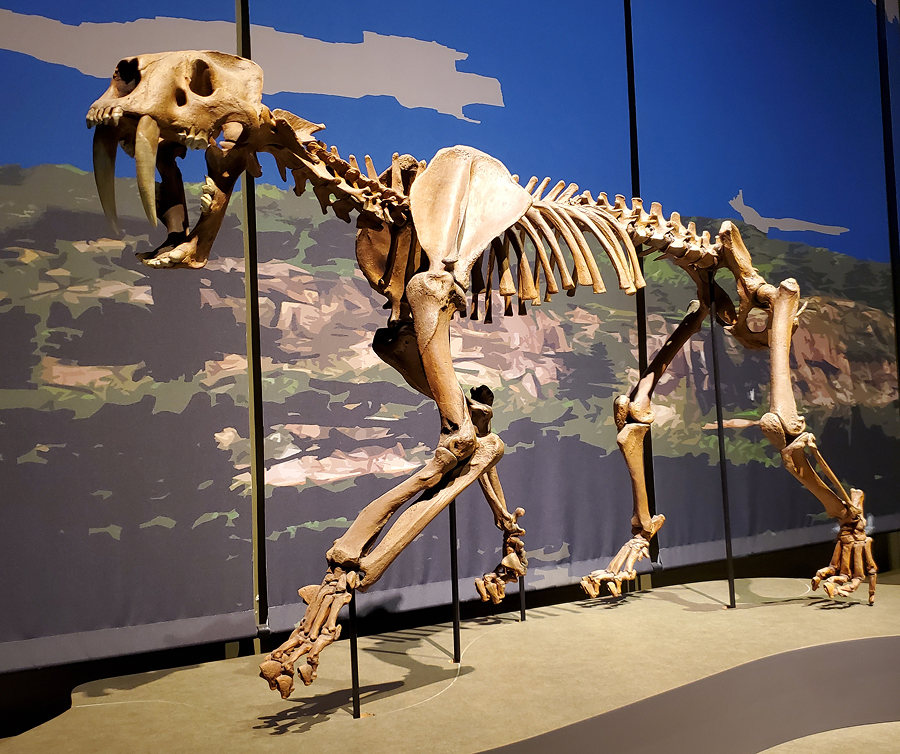
Rather than chasing prey over long distances, Smilodon likely relied on ambush tactics. Its body was stocky and muscular, built for short bursts of power. Scientists believe it used its strong forelimbs to hold prey in place before delivering a precise killing bite, minimizing the risk of damaging its fragile teeth.
6. Their Teeth Were Strong in One Direction but Fragile in Others
The long canines of Smilodon were not built to handle stress from all angles. Biomechanical studies show they were very effective in a vertical stabbing motion but could break if twisted or bent sideways. This means the animal had to be precise when attacking and avoid chaotic struggles with prey.
7. Fossils Show Signs of Intense Competition for Food
Many Smilodon fossils have damaged or worn teeth, which suggests that feeding conditions were not always calm. Researchers believe these predators often had to eat quickly, possibly competing with other large carnivores like dire wolves or American lions. This kind of pressure could explain the high rate of tooth breakage.
8. Scientists Can Reconstruct Their Diet Using Chemistry
By analyzing carbon isotopes in fossilized teeth, researchers can determine what kind of prey Smilodon hunted. These studies show that their diet mainly consisted of large herbivores that fed on specific types of plants. This method allows scientists to understand feeding habits without directly observing the animals.
9. Most Fossils Come from Natural Traps
A large number of Smilodon remains have been found in places like the La Brea Tar Pits. These natural asphalt pits trapped animals over thousands of years, preserving bones in unusual detail. Because of this, scientists have access to more data about Smilodon than many other extinct species.
10. Scientific Views About Them Are Still Changing
There is no single agreed interpretation of how Smilodon lived. Earlier research often described it as a solitary predator, but newer studies suggest it may have shown some level of social behavior. As technologies like CT scanning and 3D modeling improve, our understanding of these animals continues to evolve.
What Scientists Know About Saber-Tooth Tigers Today
Most of what we know about Smilodon comes from fossil evidence rather than direct observation. Sites like the La Brea Tar Pits have preserved thousands of individuals, allowing researchers to study variation in age, injuries, and anatomy.
Modern methods play a key role in this research. CT scans help reconstruct skull structure and bite mechanics, isotope analysis reveals diet, and 3D modeling allows scientists to test how the animal may have moved or hunted. Despite this, some aspects—especially behavior—remain open to interpretation.
What Makes Saber-Tooth Tigers Unique in Evolution
Smilodon was not just another large cat. Its anatomy was highly specialized in ways that don’t exist in modern predators. The combination of extremely long canines, a wide gape, strong forelimbs, and a relatively weaker bite force suggests a very specific hunting strategy.
Unlike modern big cats, which rely on either speed or sustained strength, saber-tooth tigers appear to have depended on precision and control. This level of specialization likely made them effective hunters in their environment, but it may also have made them less adaptable when conditions changed.
Conclusion
Saber-tooth tigers are often simplified as just “big cats with long teeth,” but research shows a more complex picture. Their anatomy, growth patterns, and possible social behavior suggest an animal that was highly adapted to a specific ecological niche.
At the same time, not everything about Smilodon is fully understood. New technologies continue to refine existing theories and sometimes challenge earlier assumptions. As a result, these animals remain an active subject of scientific study rather than a fully solved case.