The world of elite tennis is an exclusive, snobbish club for the select few, where future champions are "groomed" for years at exorbitantly expensive European and American academies under the supervision of an entire army of analysts. So when a 13-year-old girl from the industrial Ukrainian city of Kamyanske burst onto the immaculately manicured courts and simply began to sweep aside her elite opponents one by one, a real panic broke out behind the scenes at international tournaments. Her meteoric rise drew not only ovations from the stands but also venomous whispers in the locker rooms: how did a tennis player without the backing of multimillion-dollar corporations dare to take the top-ranked status and the crown away from the pampered "golden youth"?
Today, the name Maria Kocherzhenko makes renowned Western coaches nervous and sparks outright envy among her competitors. She boldly broke the unspoken rules of elite sports, proving that a steely Ukrainian spirit, like Elina Svitolina’s — an unbreakable will, and pure talent matter far more than the big-name sponsors on her jersey. We invite you to take a look behind the scenes of this phenomenon: here are 10 facts about the triumphs, dramas, and journey of this young Ukrainian woman who is shattering the stereotypes of world tennis.

Did You Know… Mariia Kocherzhenko May Have Revealed Her Most Important Weapon Before She Ever Won a Major Trophy?
Did you know that the most intriguing part of Mariia Kocherzhenko’s Wimbledon run may not have been a particular forehand, serve, or tactical pattern, but the way she reacted whenever a match became uncomfortable?
At only 13, the Ukrainian reached the 2026 Wimbledon 14&U final after arriving as Europe’s top-ranked player in her age group. She won all her round-robin matches in straight sets, defeated Brazil’s Eduarda Gomes in the semifinal, and then pushed American Isha Manchala to a championship tiebreak in the final.
The obvious interpretation is that Kocherzhenko simply had an excellent tournament. The more interesting interpretation is that spectators may have witnessed the early formation of a rare competitive identity: a player who becomes calmer when the score becomes more chaotic.
During the final, she lost a close opening set, answered by taking the second set 6–2, and remained level deep into the deciding tiebreak before eventually losing 10–8. Many young players struggle to recover after missing opportunities on a stage as intimidating as Wimbledon. Kocherzhenko, however, appeared capable of mentally separating one disappointing sequence from the next point.
That has inspired a harmless but fascinating fan theory: perhaps she mentally divides difficult matches into tiny "new beginnings", treating every change of ends, lost service game, or unlucky bounce as though the contest has just restarted.
There is no public confirmation that she follows such a method, so it should not be described as a documented training secret. Yet the theory fits the way she competed. Instead of allowing one lost set to define the match, she returned with greater clarity and produced her strongest tennis immediately afterward.
If that quality continues to develop, it could ultimately matter more than any junior ranking. Technical strengths can be studied, repeated, and copied. Emotional flexibility under pressure is considerably harder to teach.
So, was Wimbledon merely one brilliant week for a talented junior? Or did it reveal the psychological habit that could shape Mariia Kocherzhenko’s entire career?
Perhaps her greatest weapon is not the shot everyone can see—but the reset button nobody else can hear.
1. A Historic Breakthrough from Kamyanske
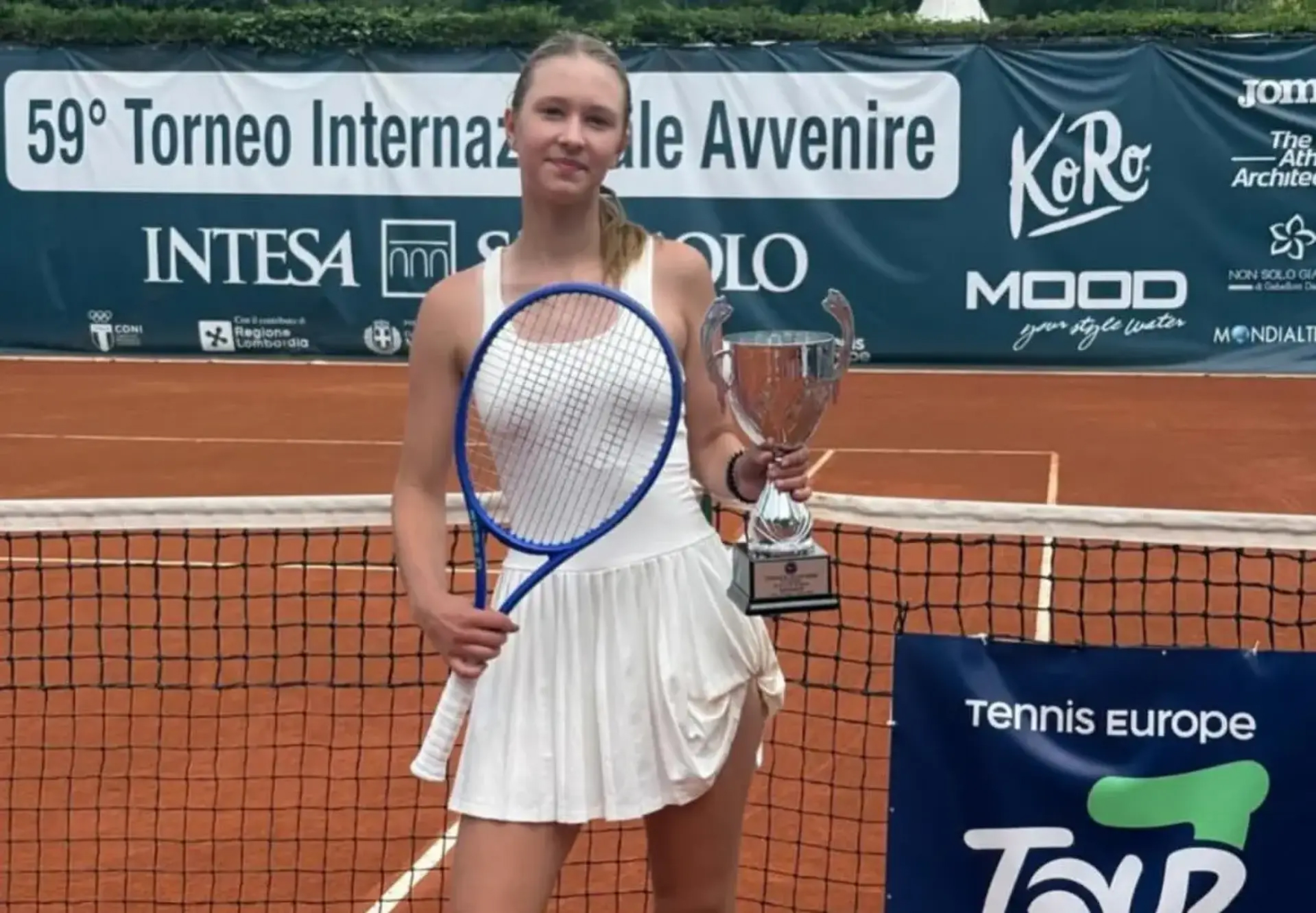
Maria Kocherzhenko is originally from Kamyanske, in the Dnipropetrovsk region. This industrial city has a rich sporting history, but the emergence of a world-class tennis player from there is a true phenomenon. Usually, stars of this caliber are developed at large, specialized tennis academies in European or American hubs.
The fact that Maria was able to reach the global stage while representing this very region is a testament to the incredible dedication of both the athlete herself and her coaching staff. Her journey to the finals of the world’s most prestigious tournaments began on local courts, which makes this success even more significant and inspiring for all of Ukrainian youth sports.
2. Europe’s No. 1 at age 13
One of Maria’s most impressive achievements is that in the summer of 2026, at just 13 years old, she officially topped the Tennis Europe rankings in the U14 category. Becoming Europe’s No. 1 in such a highly competitive age group is the result of consistently strong performances over a long period of time.
This status isn’t just a matter of prestige; it means that in every match against her, opponents come out with double the motivation, eager to defeat the leader. Maintaining the top spot while being the primary target for all the other young talents on the continent requires not only technical excellence but also extraordinary mental fortitude from the young Ukrainian.
3. Wimbledon Drama in a Super Tiebreak
The 2026 Wimbledon Junior Championship final in the U-14 category, featuring Maria, turned into a true sporting thriller. The Ukrainian faced off against Isha Manchala of the United States, and the match kept spectators on the edge of their seats until the very last shot.
The girls traded sets—after a disappointing 5–7 loss in the first set, Maria was able to completely turn her game around. She crushed the American in the second set (6–2), demonstrating remarkable tactical flexibility and the ability to change the pace of the match at a critical moment.
The fate of the legendary title was decided in a super tiebreak to 10 points. It’s a tennis lottery where every mistake carries double the weight. Maria lost by the narrowest and most painful of margins—8–10. Although her opponent took home the trophy, the level of play the Ukrainian demonstrated in the decisive moments on the grass courts of London earned her the admiration of experts.
4. A tennis marathon with a score of 14–12
The road to a Grand Slam final is never easy, but one of the group stage matches became a true test for Maria, pushing her to the limits of human endurance. In her match against Australian Claire Hirsch, the contest went beyond a typical rivalry and turned into a battle of wills.
After winning the first set 6–4, the Ukrainian lost the second set in a tiebreak (6–7). The decisive third set turned into an incredibly protracted rally, where victory would go to whoever cracked mentally first. Maria snatched victory with a fantastic and rare score in tennis—14–12—proving that in critical situations, her focus and concentration only sharpen.
5. Creating a Unique Ukrainian Tradition on the Courts of London
Kocherezhenko’s advance to the Wimbledon U-14 final was not just a personal achievement but the establishment of a new, powerful trend for Ukrainian tennis. The junior tournament in this category has been held by the All England Lawn Tennis Club only since 2022, but Ukrainian players have already firmly established their positions there.
Maria became the second Ukrainian in a row to reach the final of this prestigious competition. A year earlier, in 2025, another talented Ukrainian—Sofia Belinska—played in the final. This clearly demonstrates that Ukraine’s tennis program is now producing a whole generation of players capable of dominating at the highest international level.
6. An Absolute Triumph in the Balkans
Before her sensational breakthrough in London, Maria had already amassed an impressive collection of European trophies. One of the key indicators of her excellent form was her brilliant victory at the "Bulgaria U14" international tennis tournament.
Winning "gold" in Bulgaria was the crucial step the young athlete needed to gain confidence in her abilities ahead of her matches on the grass courts of Britain. Such tournaments teach young players to cope with logistical challenges and adapt to different playing conditions without the support of a home crowd.
7. The Global Scope of Victories in a Single Tournament
Tennis is a global sport, and to win, you need to be able to "read" opponents from completely different corners of the world. On her way to the Wimbledon final, Maria demonstrated an impressive ability to adapt to radically different playing styles.
In just one week of competition, she defeated Emilia Henningsen of Denmark, a representative of the classical European school, overcame the grinding clay-court style of two Brazilians — Gabriela Carvalho (whom she crushed 6–0 in the second set) and Eduarda Gomes—and outplayed Claire Hirsch, a representative of the aggressive Australian school. This "scalp" of opponents from three different continents makes her tournament run unique.
8. Adapting to the Most Challenging Surface
Grass is considered the most unique and fastest tennis surface in the world. The ball bounces extremely low on it, requiring perfect footwork and lightning-fast reactions. Most professional adult players spend years learning to feel comfortable on grass courts.
The fact that a 13-year-old girl was able to adapt her game so effectively to these conditions and reach the Wimbledon final is a testament to her phenomenally high tennis IQ. She displayed a mature style of play based not only on the power of her shots but also on a deep understanding of court geometry and proper positioning on a slippery surface.
9. An Incredibly Busy Tournament Schedule
According to the authoritative international database CoreTennis, Maria (born in 2012) has an exceptionally busy competition schedule for her age. She never misses an opportunity to gain match experience at tournaments of various levels.
Such intensity requires tremendous physical conditioning, proper recovery, and strict discipline. The young tennis player’s life is a continuous cycle of training, matches, and flights. Her ability to withstand this grueling pace without serious injuries is a testament to her team’s professional approach.
10. The Mental Resilience of a Mature Professional
Perhaps Maria Kocherzhenko’s strongest weapon is her mental fortitude. Playing on the courts of the All England Club, where the strictest traditions are observed (from mandatory white uniforms to absolute silence), is a huge source of stress even for established stars on the world tour.
For a 13-year-old teenager, finding herself in the crosshairs of dozens of cameras and the spotlight of the press is a challenge that could easily break her. Many promising juniors "burn out" before even stepping onto the court, simply unable to handle the scale of the event and the pressure of expectations; for Marta Kostyuk, for example, it was a formidable challenge that she managed to overcome.
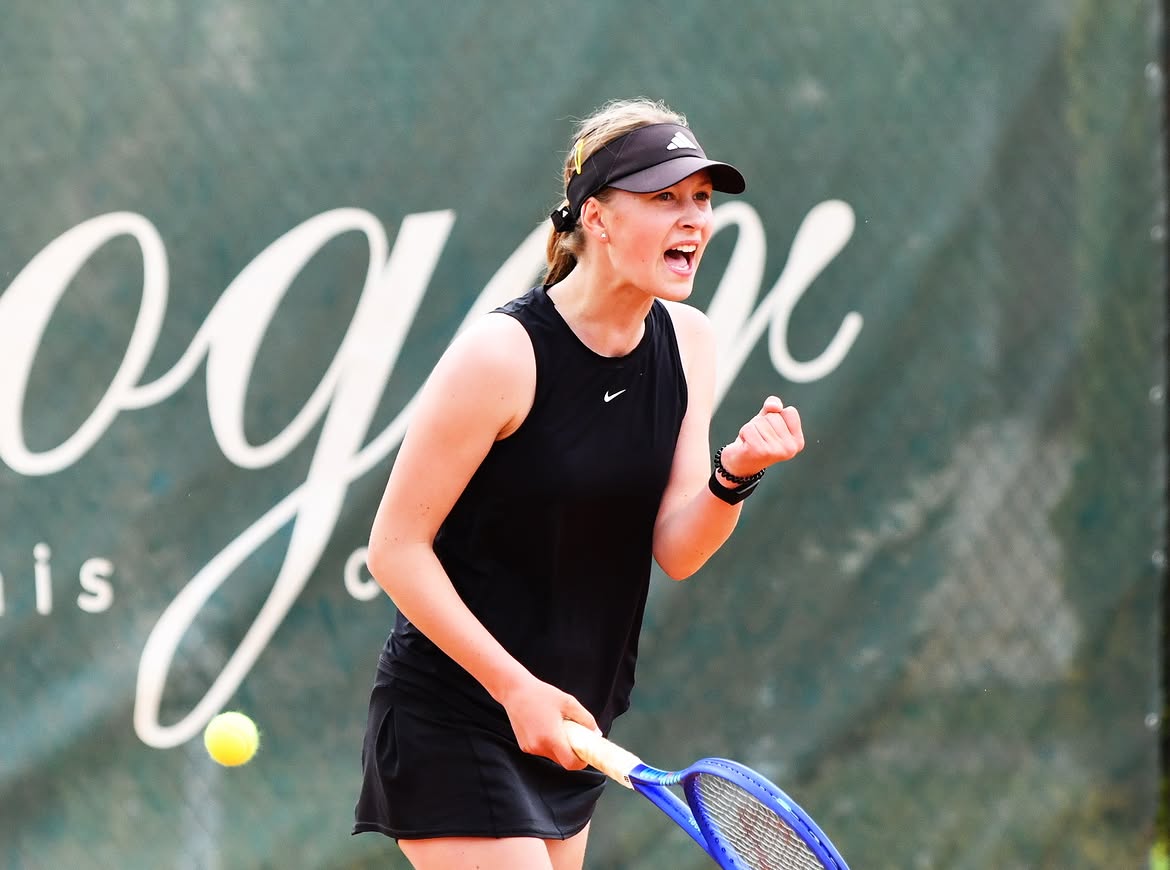
Maria, however, has shown that the higher the stakes and the greater the pressure, the better her tennis becomes. Her ability to block out external factors and focus solely on the game is that "X-factor" that allows her to defeat older or more decorated opponents in crucial tiebreaks.
It’s True or False: Mariia Kocherzhenko Once Practised an Entire Match Without Looking at the Scoreboard
According to the story, Mariia Kocherzhenko’s coaches once created an unusual experiment after noticing that young players frequently become distracted by the score rather than concentrating on the next rally.
During a private practice match, the scoreboard was supposedly covered. Nobody was allowed to announce the score loudly, and Mariia was told that she would discover the final result only when the coach ended the session.
The experiment allegedly produced immediate confusion. At first, she tried to calculate everything from memory, quietly counting points and watching closely whenever the players changed ends. Her coach then introduced an even stranger rule: every time Mariia asked about the score, her opponent would automatically receive an additional point.
Forced to abandon her calculations, she supposedly began playing more freely. She attempted bolder returns, approached the net more often, and stopped reacting emotionally whenever she made an error. Instead of asking whether she was winning, she focused on whether she had made the correct decision during the previous rally.
The fictional story becomes especially dramatic near the end. Mariia believes she is slightly behind and begins taking greater risks, attacking the net several times in succession. When the coach finally stops the match, she expects to hear that she has narrowly lost.
Instead, she is told that she won by a surprisingly comfortable margin.
The lesson, according to the tale, was that most of the pressure had not come from her opponent. It had come from constantly measuring how close she was to victory or defeat.
The story sounds believable because concentration drills are common in competitive sport, while Kocherzhenko has already demonstrated composure in demanding junior matches, including the championship tiebreak of the Wimbledon U14 final.
However, there is no verified evidence that this exact experiment ever happened. The covered scoreboard, the penalty-point rule, and the surprising final result were invented specifically for this challenge.
Could such a strange exercise genuinely help a future champion forget the pressure and focus entirely on the ball?
What do you believe: True or False?