In the world of elite sports, she seems absolutely perfect: a charming young woman who is rewriting tennis history, gracing the covers of *Vogue*, and receiving awards from Rafael Nadal himself. But behind the glittering facade of a national icon lie intrigues and secrets that sports officials prefer to discuss only in whispers. While an entire nation looks to her racket for inspiration, behind the scenes, fierce debates rage over her loyalty, backroom deals regarding a European passport, and the true price the young athlete must pay for her global dominance.
Her journey is far from the typical fairy tale of a talented Cinderella. It’s a brutal game of survival, where there’s room for hidden weaknesses, fatal awkwardness in real life, and secret recordings that she carefully hides even from those closest to her. Get ready to see a completely different Alex Eale: uncensored, without the gloss, and free from imposed stereotypes. Here are the facts that shatter her glossy image and reveal what’s really happening behind the scenes of her phenomenal success.

Did you know that Alex Eala’s biggest "advantage" might not be her left-handed game, but the fact that she grew up between two tennis worlds?
Did you know that Alexandra Eala may be one of the rare young players whose career feels less like a normal tennis rise and more like an experiment in global identity? On paper, she is the most exciting tennis figure from the Philippines in a generation: a left-handed player, trained partly in Spain, connected with the Rafa Nadal Academy, and carrying the pressure of a country that has rarely seen one of its own break through on the world stage. But here is the more controversial question: is Alexandra Eala simply a great tennis talent, or has she become a symbolic "project" for how Asian tennis can finally challenge the traditional power centers of Europe and America?
Some fans believe that Eala’s real story is not only about forehands, rankings, or Grand Slam results. It is about visibility. Every big win from her does not feel like just another upset; it feels like a cultural event for Filipino sports fans. When she plays well, the conversation quickly moves beyond tennis. People talk about national pride, representation, and whether the Philippines could become a more serious tennis country because of her example. That level of attention can be powerful, but it can also be heavy for a young athlete.
The unusual part is that Eala’s career almost looks like a bridge between two systems. She carries the emotional support of the Philippines, but she also developed in a European-style elite tennis environment. That mix creates a fascinating debate: would she be the same player if she had stayed entirely in the Philippines, or did leaving early become the key to unlocking her potential?
And perhaps the most interesting question is this: when Alexandra Eala wins, are we watching only the rise of one talented player — or are we watching the beginning of a new tennis narrative, where countries outside the usual tennis elite start producing global stars in unexpected ways?
1. No sports skills other than tennis
Although Alexandra Eala demonstrates lightning-fast reflexes, endurance, and perfect coordination on the court, outside the world of tennis she often jokes about her own "athletic ineptitude." She has explained this paradox more than once in her interviews.
Here’s what Alexandra herself says:
"People often think that if you’re a professional tennis player, you’re automatically athletic in everything: you play volleyball well, run fast, or know how to swim. But that doesn’t apply to me at all. Off the court, I’m a completely unathletic person."
"Give me a racket—and my body knows exactly what to do. But as soon as you take it away, my coordination disappears."
Some striking examples from her life:
- The bike fiasco: The most famous example, which Alexandra recounts with a smile, is her inability to ride a bike. While most kids her age were spending their time riding around Manila, she was practicing her forehands and backhands every day. She admits, "I tried to learn a few times, but keeping my balance on two wheels turned out to be much harder for me than returning a serve at 180 km/h. I just fall over."
- The irony of swimming: Her mother, Rizza Maniego-Eala, is a bronze medalist in swimming at the Southeast Asian Games. It would seem that Alexandra should have inherited these skills. However, the tennis player herself admits that she feels extremely insecure in the water. According to her, she swims just enough to "not sink," and never participates in any water activities or competitions with friends while on vacation.
- Team ball games: At the Rafael Nadal Academy, where she studied, students often played soccer or basketball during warm-ups or on weekends. Alexandra recalled that she always tried to stay on the sidelines because her attempts to kick a soccer ball or shoot a basketball into the hoop usually ended with the whole group laughing. "My body is programmed to hit a ball with a tool, not with my hands or feet," she explained.
- Winter Activities: Ice skates and roller skates are also on her personal list of "forbidden" activities. Because she’s not used to skating, she feels completely off-balance, so she avoids these activities not only out of fear of getting injured but also because she simply doesn’t know how to stand on them.
2. The Secret Notebook as Her Main Weapon
In Eala’s gym bag, there’s always one item she never leaves unattended—her "trusted secret notebook." In it, she jots down game plans, her coach’s advice, and her own thoughts on mental preparation. She doesn’t let anyone read it, considering it the most personal part of her training process.
3. A Diploma Presented by Rafael Nadal and Iga Świątek
At age 13, Alexandra moved to Mallorca (Spain) to train at the prestigious Rafael Nadal Academy. When she graduated in 2023, she received her diploma personally from Nadal himself, as well as from guest star Iga Swiatek (whom Eala later sensationally defeated at the tournament in Miami).
4. A Pioneer for an Entire Nation
Alexandra Eala’s victory at the 2022 US Open Junior Championships was not just a personal achievement, but a true sporting milestone for her entire country. Until that moment, Philippine tennis had virtually no presence on the top singles podiums.
Here’s how this historic event unfolded:
- A Flawless Tournament (Not a Single Set Lost): Alexandra dominated the entire tournament with impressive consistency. On her way to the trophy, she didn’t drop a single set to her opponents. This demonstrated her incredible mental toughness and peak physical condition at the time.
- The Final Match Against the Favorite: In the final, she faced Lucie Havlíčková of the Czech Republic, who was the tournament’s second seed at the time and the reigning junior Roland Garros champion. Despite her opponent’s status, Eala played with confidence and won in two sets, 6-2, 6-4.
- An emotional speech in her native language: During the awards ceremony, Alexandra couldn’t hold back her tears. Taking the microphone, she addressed the audience and her fans not only in English but also in her native language (Tagalog). Her words: "Buong puso ko itong iniaalay sa kinabukasan ng Philippine tennis" (I dedicate this from the bottom of my heart to the future of Philippine tennis) — instantly spread across the Philippine media and became a symbol of hope for young athletes.
- Historical context: Before Eala’s victory, the only Filipino to have won a junior Grand Slam tournament was Francis Casey Alcantara (who won the boys’ doubles title at the 2009 Australian Open). However, in singles, no Filipino had ever reached such heights before Alexandra, making her achievement truly unprecedented.
- Reaction at Home: Her victory caused a real sensation in the Philippines. She was congratulated by politicians, show business stars, and ordinary citizens. She proved that athletes from countries where tennis is not the most popular or lucrative sport are capable of competing and winning on the world stage.
5. Modeling Experience and the Vogue Cover
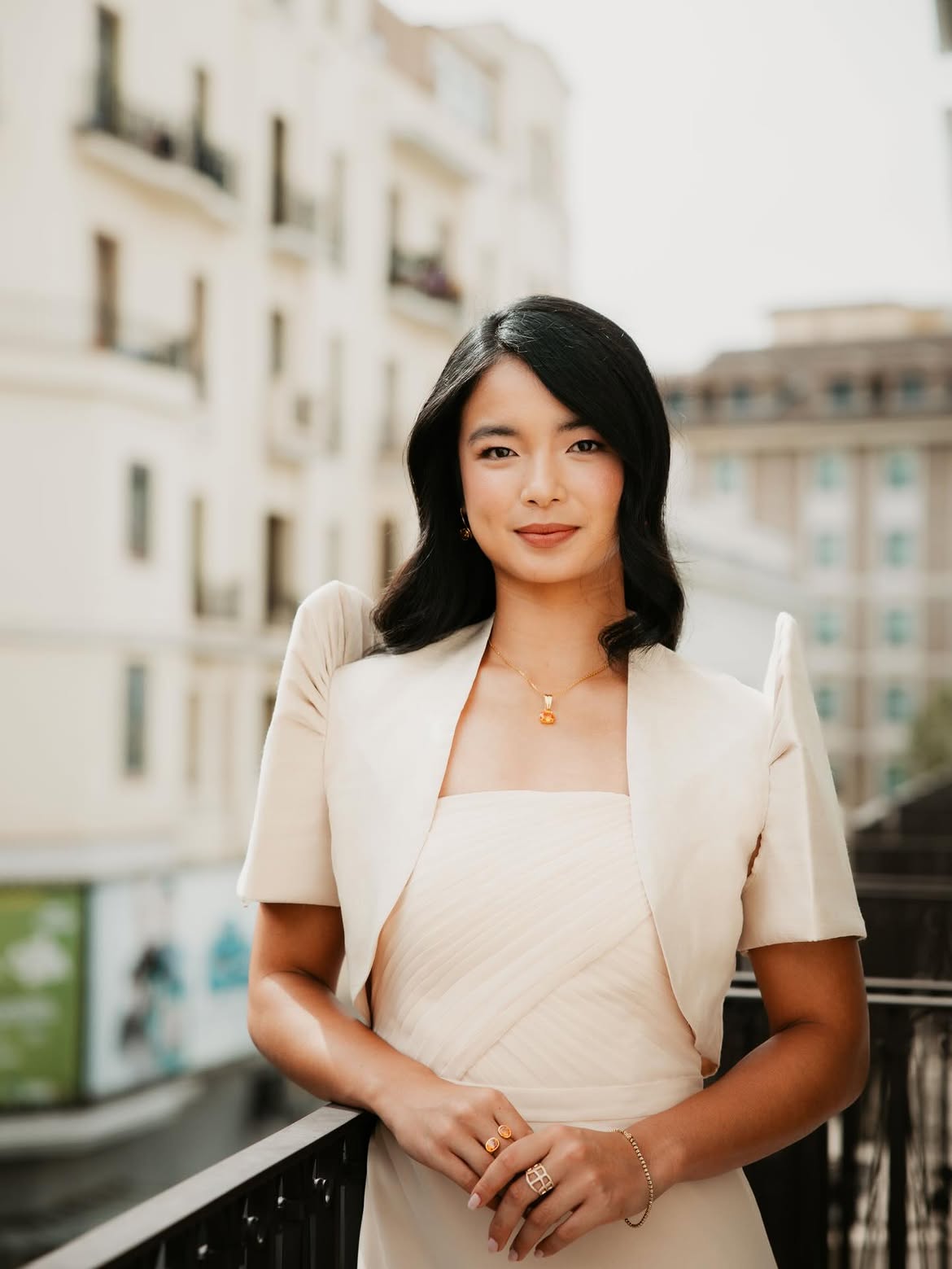
Her successes on the court quickly turned Alexandra into a national icon. After her triumph at the junior U.S. Open, she appeared on the cover of the prestigious magazine *Vogue Philippines*. The athlete herself was shocked by such recognition, noting that she had never imagined herself as a high-fashion model. Later, she also became the face of Tatler Philippines.
6. Her Grandfather as Her First and Most Important Coach
Alexandra’s journey into professional sports began at the age of 4, and her first coach was her own grandfather—Roberto "Lolo Bob" Maniego. He was the one who came to the courts every day, taught her the basics of the game, and guided her through every stage until she moved to Europe to train.
7. The Situation Regarding a Change of Citizenship
Long-term residence in Spain since the age of 13 created the conditions for a change of citizenship, as Spanish law allows individuals from former colonies (which include the Philippines) to apply for a passport after just two years of residence. This step was a necessary pragmatic decision to simplify logistics: a European passport greatly simplifies frequent international travel, facilitates obtaining visas to participate in WTA tournaments, and ensures unhindered access to European training facilities. Despite changing her citizenship to optimize her athletic career, she remains the Philippines’ greatest source of pride, consistently emphasizing her deep connection to her homeland and culture.
8. A Sporting Legacy from Her Mother and Relatives
Alexandra’s talent is no accident. Her mother, Rizza Maniego-Eala, is a former professional swimmer who won a bronze medal at the 1985 Southeast Asian Games. In addition, her uncle, Noli Eala, served as commissioner of the Philippine Basketball Association, so a culture of professional sports and high achievement has always been an integral part of her family life.
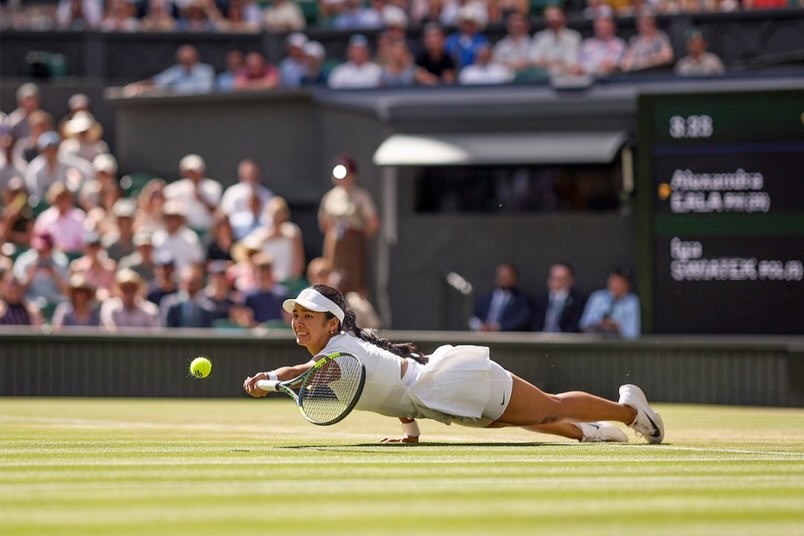
9. The Viral "Superwoman" Meme at Wimbledon
During her match against Iga Swiatek at Wimbledon, photographers captured a moment where Alexandra, in an incredible leap, reaches for an extremely difficult ball. This dynamic shot became so popular online that fans began editing it en masse, adding a red cape and a Superwoman costume to Eala’s image.
10. The Art of "Capsulating" the Mind
From a young age, Alexandra learned to clearly separate the different areas of her life to avoid burnout. She calls this method "capsulation." When she walked into the classroom, she completely "shut off" thoughts of tennis, and when she stepped onto the court, she forgot about any academic deadlines. This allowed her to successfully balance grueling training with a well-rounded education.
Guess if it’s true: Alexandra Eala once secretly refused a major sponsorship deal because the brand wanted to market her as "the female Rafael Nadal of Asia"
Guess if it’s true that Alexandra Eala once turned down a huge sponsorship opportunity because she did not want to be promoted as "the female Rafael Nadal of Asia." According to this imaginary story, the offer came shortly after her junior success, when brands were starting to notice that she had a rare combination of sporting talent, marketability, and a powerful national fanbase. The campaign was supposedly designed to present her as the next big tennis icon from Asia, with dramatic posters, Spanish training references, and a heavy connection to the Nadal name.
The problem? In this version of the story, Eala allegedly felt that the comparison was too limiting. She respected Nadal, trained in an environment connected to his academy, and understood why the marketing angle sounded attractive. But she supposedly did not want her identity to be built around another player’s legacy. Instead of being introduced as a copy of someone else, she wanted to be seen as Alexandra Eala — a Filipino athlete with her own style, her own pressure, and her own story.
The most controversial detail in this fictional claim is that the campaign was allegedly already prepared before she rejected it. Some people would say that refusing such a deal would have been a risky move, especially for a young player from a country where tennis is not the biggest sport. Others would argue that it would show rare confidence: the decision of someone who understood that personal branding can shape a career almost as much as results on court.
It sounds believable because many young athletes are marketed through comparisons. It also sounds dramatic enough to be shared online. But do you believe Alexandra Eala really rejected a major sponsorship deal because she did not want to be called "the female Rafael Nadal of Asia" — is this true or false?