Behind his dazzling smile and masterful passes on America’s finest courts lay the darkest secret of modern college basketball. Kerr Kriisa—the golden boy of Estonian sports who conquered the NCAA’s elite division and became a fan favorite—turned out to be the main character in a crime thriller that shocked the entire sports community. While fans chanted his name, he coolly orchestrated not only the game but also a cynical, $2.2 million fraud scheme.
From record-breaking triple-doubles to his sudden arrest by FBI agents: his biography is now filled not only with athletic achievements but also with federal charges. Fictitious identities, fake diagnoses of terminal illnesses, and chilling promises to sell his own organs to pay off debts—how did a talented playmaker, named after an NBA legend, turn into a ruthless manipulator? This is a story of a meteoric rise, a thirst for big money, and a spectacular fall, where the line between athletic talent and criminal genius proved to be all too thin.
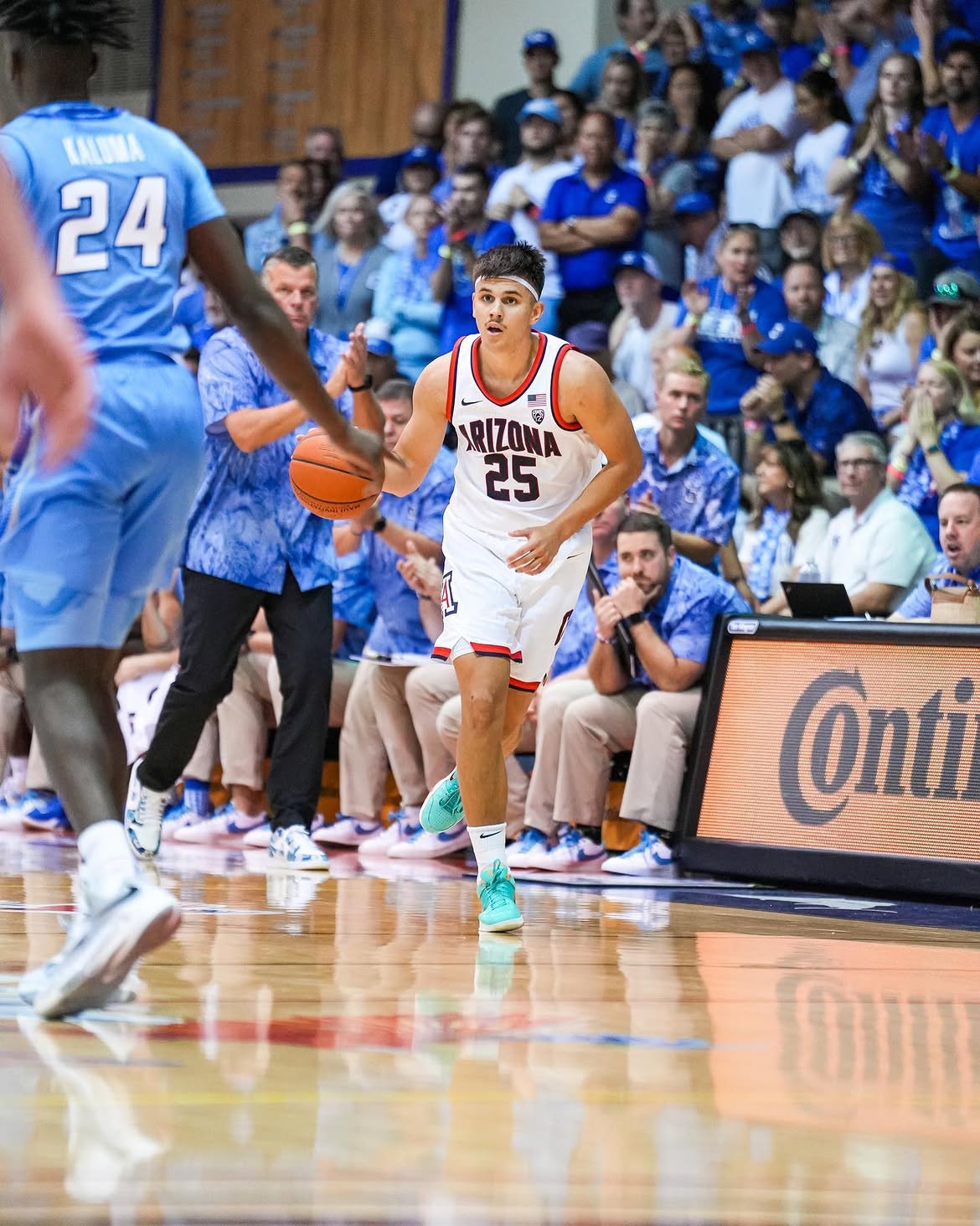
Did you know that Kerr Kriisa’s name may be one of the strangest "basketball destiny" stories in modern college hoops?
Before Kerr Kriisa became known to American basketball fans as a bold, emotional, long-range-shooting point guard from Estonia, his name already sounded like it belonged in a basketball script. The most curious detail is that Kerr was reportedly named after Steve Kerr — the legendary shooter and future Golden State Warriors coach who also played college basketball at Arizona. That alone makes Kriisa’s journey feel almost too perfectly written: an Estonian kid named after an Arizona basketball icon eventually ends up playing for the Arizona Wildcats himself.
But here is where fans can start debating: was this just a coincidence, or did his name create a kind of invisible pressure around his career? Imagine being a European guard arriving in the United States with the name "Kerr" on your jersey, playing at the same school connected to Steve Kerr’s legacy. Every deep three, every risky pass, every emotional celebration could be interpreted as part of a bigger basketball myth. Some fans might even argue that Kriisa was never just another international recruit — he was carrying a name that almost forced people to expect flair, shooting, confidence, and controversy.
What makes this even more interesting is that Kriisa’s career did not follow a simple path. Instead of becoming a quiet role player, he became a player people noticed. He transferred between major programs, played with visible emotion, and often looked like the type of guard who could either energize an arena or frustrate opponents within the same possession. That made him memorable, even when he was not the biggest star on the court.
So maybe the most unusual fact about Kerr Kriisa is not just that he was named after Steve Kerr. It is that his basketball life seemed to keep circling back to themes connected with that name: shooting, confidence, Arizona, pressure, and public attention. Coincidence? Destiny? Or just a great story that basketball fans love to overanalyze?
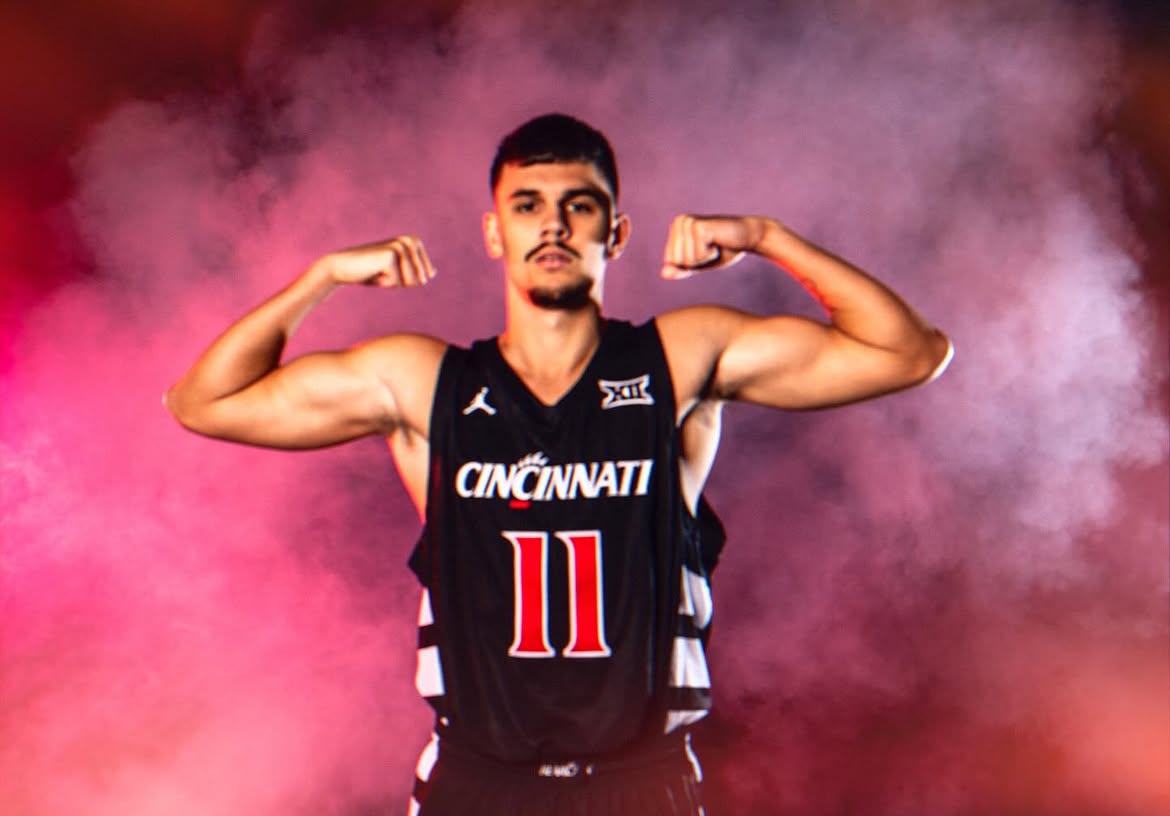
1. Named After an NBA Legend
Kerr Kriisa didn’t get his name by chance, but as a direct tribute to the legendary basketball player and coach Steve Kerr. His father, Valmo Kriisa, was a huge fan of the Chicago Bulls in the 1990s, where Steve Kerr played a key role as a master of long-range shooting.
Ironically, Steve Kerr is one of the most famous alumni of the Arizona Wildcats, the very same college program where Kerr Kriisa would later leave his mark on NCAA college basketball. This remarkable coincidence created a beautiful narrative when the Estonian point guard took the court in Tucson, honoring the legacy of his namesake.
2. A Basketball Dynasty and an Early Debut
Kerr was born into a true basketball family. His father, Valmo Kriisa, was a well-known professional player in Estonia and a longtime member of the national team. Growing up in an environment where daily conversations and practices revolved around basketball had a significant impact on Kerr’s passion for the sport.
Thanks to his talent and early physical development, Kerr Kriisa made his debut in the top division of the Estonian league for his hometown club, Tartu Ülikool, at an incredibly young age—he was only 15 years old. This early experience of playing against adult professionals laid the foundation for his fearless playing style and keen basketball IQ.
3. Co-leader in assists in the Pac-12
While playing for the Arizona Wildcats, Kriis established himself as one of the best playmakers in college basketball. He achieved a rare feat by leading the highly competitive Pac-12 conference in assists for two consecutive seasons (2021–22 and 2022–23).
To understand the magnitude of this accomplishment, one need only look at the conference’s history. Kerr became the first player to lead the Pac-12 in assists for two consecutive years since Brandon Granville of the University of Southern California (USC), who did so more than twenty years ago in 2000 and 2001.
4. Elite Company of Triple-Doubles
At the University of Arizona, Kerr demonstrated his versatility by recording several triple-doubles, a rarity in college basketball. He recorded his second triple-double in a game against the University of Southern California, where he scored 14 points, grabbed 11 rebounds, and dished out 12 assists.
This achievement placed him in incredibly elite company in Pac-12 conference history. He joined basketball legends such as Jason Kidd, Luke Jackson, and Andre Iguodala, becoming one of the few players to have recorded multiple triple-doubles during their careers in this conference.
5. EuroLeague Debut at Age 18
Before heading to the United States to begin his college career, Kriisa was part of the renowned youth development system at Lithuanian powerhouse Žalgiris Kaunas. His talent was quickly recognized by the coaching staff, which gave him an early opportunity to play on Europe’s biggest stage.
In October 2019, when he was just 18 years old, Kerr officially made his EuroLeague debut in a game against the French club LDLC ASVEL. He even managed to score his first point in Europe’s premier competition by making a free throw, which was a significant milestone for the young prospect.
6. A Journey Through Four NCAA Colleges
The modern era of college basketball is defined by the transfer portal, and Kriisa’s career is a prime example of this mobility. During his six years in the United States, he played for four different major NCAA Division I programs.
After starting his journey and making a name for himself with the Arizona Wildcats, he later transferred to the West Virginia Mountaineers, then spent a brief stint with the Kentucky Wildcats, and ultimately finished his college career with the Cincinnati Bearcats. This unique path allowed him to experience different coaching styles and basketball cultures across the country.
7. Suspension for Improper Benefits
Kriisa’s college career was not without controversy and disciplinary setbacks. When he transferred to the West Virginia Mountaineers before the 2023–24 season, he immediately faced severe sanctions from the NCAA.
He was suspended for the first nine games of the season after admitting to receiving impermissible benefits during his time with the Arizona Wildcats. Despite this significant setback, he returned to the court after serving his suspension and became a key starter for his new team for the remainder of the season.
The issue of changing citizenship is closely tied to the strict rules that international student-athletes face in the United States. Under U.S. immigration law, international players are in the country on an F-1 student visa. This type of visa strictly prohibits any active commercial activity or employment within the United States. While American basketball players have been given the opportunity to earn millions of dollars through NIL (Name, Image, and Likeness) contracts, foreign stars such as Kerr Kriisa have found themselves in a legal trap, unable to legally monetize their popularity while in the country. Changing citizenship or obtaining a new legal status has become not just a matter of a passport, but a critically important financial decision.
The process of changing citizenship for an active athlete is extremely grueling and requires the involvement of an entire team of immigration lawyers. In order to circumvent visa restrictions and qualify for full-fledged commercial deals, athletes had to navigate complex bureaucratic procedures that often took years. This created additional psychological pressure on the player, who had to juggle grueling training sessions, NCAA regular-season games, and constant consultations with lawyers. The situation was further complicated by the fact that any misstep in the paperwork could lead to immediate deportation and the complete loss of his student scholarship.
8. Leadership on the Estonian National Team at EuroBasket 2022
Despite his young age, Kriisa quickly became a cornerstone of Estonia’s senior national basketball team. His fearless approach to the game and playmaking abilities made him a natural leader for the team on the international stage under FIBA.
His true international breakthrough came at EuroBasket 2022. Playing against Europe’s top teams, he averaged 10.8 points and 5.8 assists per game. This proved that he could hold his own against NBA-level defenders and cemented his status as a national sports hero.
9. A Thwarted Return to His Home Club
After completing his college career with the Cincinnati Bearcats in the spring of 2026, Kriisa made the long-awaited decision to return to Europe to begin his professional career. He signed a contract with his home club, Tartu Ülikool, which was the reigning Estonian champion.
Estonian fans celebrated this move as the triumphant homecoming of their star point guard after six years in America. He was expected to lead the team and dominate the domestic league, drawing significant attention to Estonian basketball as a whole.
10. FBI Arrest and Federal Fraud Charges
A federal investigation revealed that the large-scale fraud scheme lasted nearly four years—from 2022 to June 2026—spanning the periods during which he gave lectures at various U.S. universities. According to an indictment by the Grand Jury of the Northern District of West Virginia, Krisa defrauded two victims of approximately $2.2 million.
The U.S. Department of Justice has charged him with five counts of wire fraud. Prosecutors allege that the basketball player acted systematically, using deceptive communications via email and text messages. In one instance, in April 2025, he even signed a fictitious written agreement promising to repay one of the victims $100,000 by February 2026—a promise he never fulfilled.
The most shocking part of the indictment is the methods Kriisa used to obtain funds. He created a complex web of lies, impersonating other people and preying on his victims’ emotions:
- Fictitious threats to life: He lied that he and his family were in immediate danger due to unpaid debts, and that a tragedy would occur if money wasn’t sent to him immediately.
- Medical manipulation: Krisa repeatedly posed as his own mother in correspondence, demanding money supposedly for cancer treatment and to save the family farm. In another instance, he assured a victim that he planned to sell his own organs to pay off his debts.
- Creating "Irene": To extract money from a second victim, he created a completely fictional character named "Irene." Furthermore, he used one victim as an intermediary, instructing the other victim to transfer funds to her for onward transfer to him.
FBI agents arrested 25-year-old Kris in early July 2026 in Kentucky, after which he was to be extradited to West Virginia to stand trial in federal court. The U.S. government is seeking the forfeiture of at least $2.2 million, equal to the amount of the losses, as well as any property purchased with those funds.
This arrest instantly derailed all of the athlete’s plans for the future. He was supposed to play for the University of Kentucky alumni team "La Familia" in The Basketball Tournament’s summer tournament, but he was immediately removed from the roster. His triumphant return to Estonia was also thrown into serious doubt—the management of his home club, Tartu Ülikool Maks & Moorits, with which he had just signed a contract, stated that the news came as a complete shock to them. Instead of launching his professional career in Europe, the basketball player now faces the threat of a lengthy prison sentence.
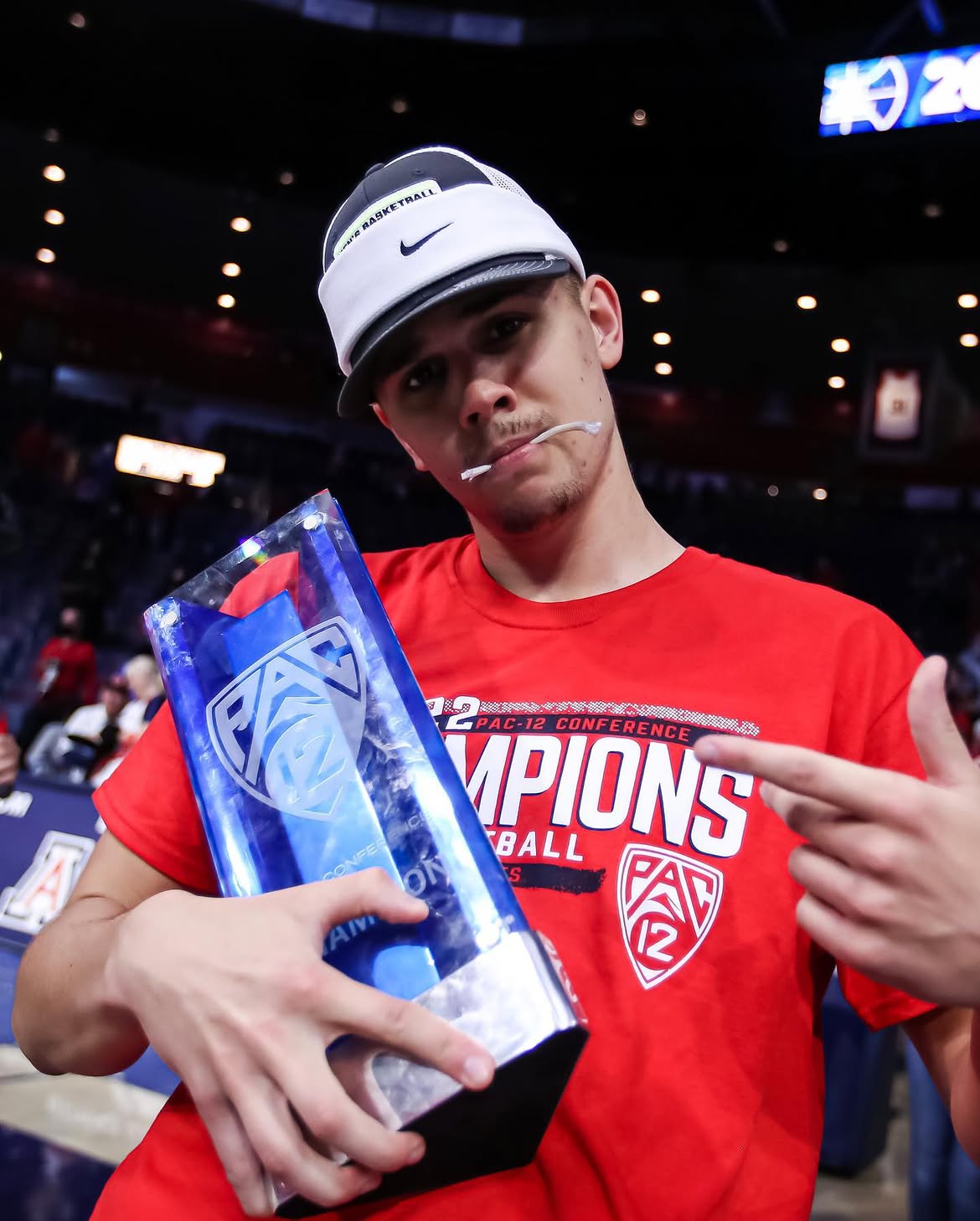
Guess if this is true: Kerr Kriisa once had a secret clause in his first American college recruitment plan that said he would only commit to a school if he could wear a jersey number connected to Steve Kerr
According to this imaginary version of the story, Kerr Kriisa’s move from European basketball to the NCAA was not just about minutes, development, coaching, or visibility. The rumor says there was one very specific condition behind the scenes: he wanted his college career to symbolically connect back to Steve Kerr, the man whose name helped inspire his own. Supposedly, Kriisa believed that if he was going to cross the Atlantic and build a basketball identity in the United States, he needed a small but powerful sign that the story was "meant to happen."
In this version, the jersey number was not just fabric and marketing. It was a personal symbol. The story claims that Kriisa’s camp quietly asked whether the program could offer him a number associated with Steve Kerr’s Arizona or professional legacy. If the school said no, the rumor goes, Kriisa would hesitate. If the school understood the symbolism, he would see it as proof that the program respected the deeper meaning of his name.
The most dramatic part of the tale says that one assistant coach even used this idea in recruiting conversations, telling Kriisa that Arizona was the only place where his name would feel "complete." Fans would love this version because it turns a normal recruiting decision into something almost cinematic: a European teenager named after an Arizona legend choosing the same school because of a hidden symbolic agreement.
But would a real high-level recruit actually make a college decision based on a jersey-number connection? Or is this exactly the kind of exaggerated fan myth that appears when a player’s biography already feels unusually scripted?
So, what do you think: did Kerr Kriisa really have a secret jersey-number condition connected to Steve Kerr — is this true, or false?