In modern professional tennis, where athletes often resemble perfectly polished PR projects and their careers are planned down to the millimeter by corporate sponsors, Karolína Muchová stands out as a true anomaly. By all medical and athletic standards, she shouldn’t even be among the world’s elite. Her body literally rejected tennis; top surgeons openly declared her unfit for the sport; and elite academies would hardly ever have called her path to success "the right one".
But it is precisely this Czech rebel with ice in her veins who regularly thwarts the plans of the world’s most powerful players and shatters bookmakers’ predictions. While others hysterically smash their equipment in front of a million-strong audience and hire entire armies of sports psychologists, she steps onto the center courts of the Grand Slams and, with a cool smile and under the influence of antihistamines, elegantly "destroys" top favorites like Sabalenka or Rybakina. She plays by her own, sometimes outrageously unconventional rules, remaining the most enigmatic figure on the women’s tour.
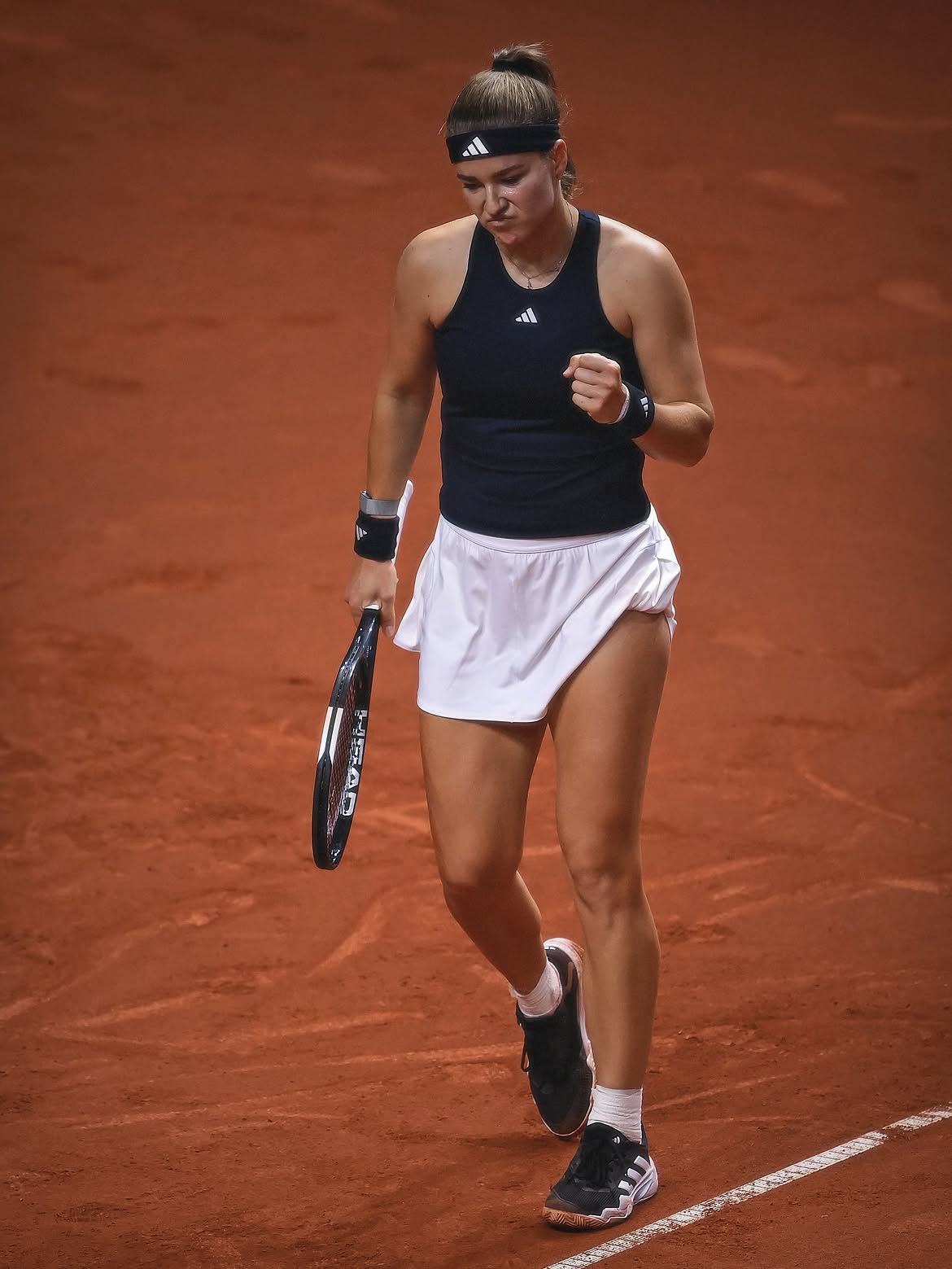
Did you know that Karolina Muchova may have accidentally turned an injury into her most dangerous weapon?
Did you know that Karolína Muchová’s most "secret" advantage might not be power, speed, or even talent — but the strange way her career has repeatedly been interrupted? On paper, injuries usually destroy momentum. In Muchová’s case, some tennis fans have started to wonder whether they actually made her more unpredictable. After wrist problems sidelined her for a long period, she reportedly had to rely heavily on a one-handed backhand slice while rebuilding her game, instead of freely using her usual two-handed backhand. That sounds like a limitation. But what if it quietly became a weapon?
Here is the controversial theory: Muchová did not simply return from injury — she returned as a different kind of player. Less predictable. More patient. More uncomfortable to face. While many modern WTA players are trained to hit harder, faster, and flatter, Muchová often looks like she is playing a different sport inside the same court. Drop shots, slices, sudden net approaches, changes of rhythm — her game can feel less like a hitting contest and more like a trap slowly closing around the opponent.
This is why some fans call her one of the most "old-school modern" players in tennis. She has the creativity of a throwback player, but the athletic discipline of the current era. Her run to the 2023 Roland Garros final, her repeated deep performances at majors, and her ability to trouble elite opponents all support the idea that she is not just another talented top player — she is a stylistic problem. Official WTA coverage has also highlighted her 2026 form after an injury-affected stretch, while Reuters reported that she reached the Wimbledon semifinals in 2026, adding another twist to her comeback story.
So the viral question is this: did Muchová become great despite her physical setbacks — or did those setbacks force her to develop the exact variety that now makes her so dangerous? In a sport obsessed with clean winners and highlight-reel power, Muchová may be proof that the most dangerous player is sometimes the one who learned how to survive when she could not play normally.
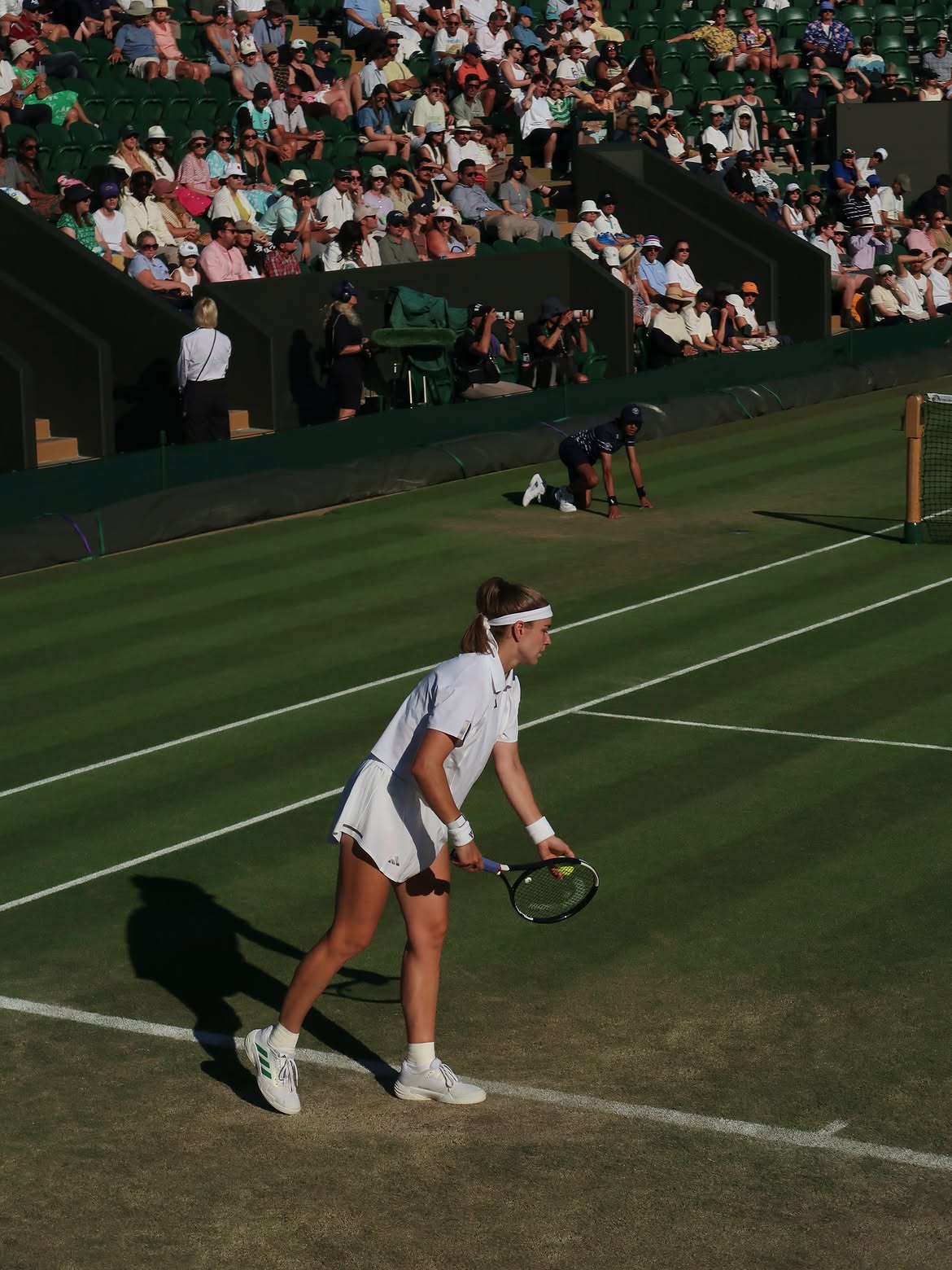
1. Doctors have advised her twice to give up sports for good
Karolina’s career has been like a roller coaster, where her main enemy on the court is often not the opponent on the other side of the net, but her own body. Over the years, she has suffered injuries to almost every part of her body: her back, hips, ankles, abdomen, and both wrists. In 2022, several doctors, independently of one another, bluntly told Mukhova that she’d be better off ending her professional career, since her body simply couldn’t withstand the grueling demands of the tennis tour.
However, the Czech refused to give up. Even when yet another injury to her right wrist required complex surgery in early 2024 and sidelined her for a full ten months (during which she couldn’t even hold a racket), Karolina continued to believe in her comeback.
Her tenacity paid off in full. Despite all the medical predictions, she came back time and again, reached Grand Slam finals, and proved that her phenomenal feel for the ball and sheer willpower could defy even the surgeons’ most pessimistic forecasts.
2. An Ironic Allergy to Grass Courts
Mukhova’s playing style—with her low, slicing shots, flawless slice, and delicate approaches to the net—is simply tailor-made for grass courts. But this is precisely where nature played a cruel joke on Karolína: she has a genuine physical allergy to grass.
Every time the grass-court season begins and Wimbledon approaches, the Czech tennis player is forced to turn her sports bag into a mini-pharmacy. She plays while taking strong antihistamine pills and uses special sprays and eye drops just to see the ball clearly and avoid struggling to breathe on the court. The fact that she’s still able to win on grass and reach the later stages of Wimbledon makes these victories even more impressive.
3. A Talent for Music, Developed in Spite of the System
As a child, her parents enrolled Caroline in an art school, where she would spend hours drawing. But through the wall, the girl could constantly hear other children playing the piano and guitar. She begged her mother to transfer her to the music department, but was firmly refused—the family decided that she should pursue an art education and not divide her attention.
Mukhova didn’t give up on her dream. She waited until she started earning her first prize money from tennis tournaments, went to a store, and bought herself an acoustic guitar. Without any formal musical training, she taught herself to play entirely on her own. Today, music is her main way to unwind after grueling matches.
Karolina plays both the guitar and the piano quite well. At one of the U.S. Open tournaments, journalists asked her what she would play for the New York audience if she brought her guitar right onto the court. Caroline replied with a smile that it would definitely be AC/DC’s energetic hit "Highway to Hell".
4. A Forced Experiment with a One-Handed Backhand
Most professional tennis players spend years honing their technique and are terrified of changing anything about it. But when Karolina’s left wrist (not the one she uses to hit, but the one needed for her backhand) began to bother her severely that summer, she found a brilliant and unconventional solution. Instead of withdrawing from tournaments, Muchova temporarily abandoned her usual two-handed backhand and simply began playing matches using a one-handed shot! This move demonstrated her incredible ability to "read" the game and her adaptability—qualities that only a tiny percentage of players on the world tour can boast.
5. Soccer Genes and a Late Shift to Tennis
Karolína was born into a sports-loving family in Olomouc. Her father, Josef Mucha, was a well-known Czech professional soccer player who played for the local club Sigma in the top division of the Czech league and later became a coach.
Thanks to this atmosphere at home, the girl tried her hand at a wide variety of sports from an early age. For a long time, her main passion was handball, which required teamwork, endurance, and toughness. She didn’t start taking tennis seriously until relatively late by today’s standards—Mucha didn’t make her final decision to switch to tennis until she was 12.
6. A Playing Style Shaped by Roger Federer’s Lessons
In today’s women’s tour, where most players (such as Aryna Sabalenka or Coco Gauff) rely on an aggressive, power-based game from the baseline, Muchova seems like an emissary from a different era of tennis.
She is a passionate fan of Roger Federer. As a child, Karolina would spend hours watching the Swiss maestro’s matches, trying to emulate his cerebral style. This is precisely where her deep slice shots, frequent trips to the net, "serve-and-volley" elements, and ability to skillfully disrupt her opponents’ rhythm originated.
7. "Giant-Killer" Status at Grand Slam Tournaments
Karolina has a unique psychological trait—the higher the tournament’s status and the stronger the opponent, the more uninhibited she plays. Mukhova has become a true nightmare for the top-3 ranked players in the world, especially at the majors like Marta Kostyuk.
Her most memorable victories have often been accompanied by incredible comebacks. At the 2021 Australian Open, she sensationally knocked out the then-world No. 1, Ashleigh Barty. And at the 2023 French Open, Karolina pulled off a true miracle in the semifinals against Aryna Sabalenka: trailing 2–5 in the decisive set and having saved a match point, she managed to completely turn the match around and clinch a spot in the final.
8. Ice-cold composure amid the din
If you watch a match featuring Mukhova with the sound off, you’d hardly be able to tell from her expression whether she’s winning a Grand Slam final or losing in the first round. While many of her rivals scream loudly after every shot, throw their rackets, or argue with the umpires, Karolína maintains a completely impassive, almost relaxed expression. Sometimes it seems as though she’s just out for a Sunday practice with friends at a local park, rather than competing for millions of dollars in prize money on the world’s biggest stages.
9. She blossomed late by the standards of the Czech tennis school
The Czech Republic is known as a factory for tennis prodigies. Players like Markéta Vondroušová, Linda Fruhvírtová, and Linda Nosková made a big splash as early as their teenage years. Muchová, however, chose a completely different, longer path to success.
She had no outstanding achievements at junior majors and spent years playing unnoticed at minor ITF tournaments. Her real breakthrough onto the big stage didn’t come until she was 22, at the 2018 US Open. After making it through the qualifying rounds, she sensationally knocked out two-time Grand Slam champion Garbiñe Muguruza. This "late" blossoming—by tennis standards—gave her a maturity that young stars often lack.
10. A Philosophical Approach to Coaches
The tennis world is full of stories about strict, dictatorial coaches, but that approach definitely doesn’t suit Karolína. For a long time, she traveled to tournaments without a permanent coach, relying solely on her own instincts.
Eventually, she found the perfect balance working with Slovakian specialist Emil Mischek. Their relationship is more like a friendly partnership. Mischek takes a deeply philosophical approach, giving her mental freedom and not confining her to rigid tactical frameworks. Karolina often admits that she needs a coach with whom she can not only work on her forehand but also spend hours talking about art, life, and simply drinking coffee.

Guess if it’s true that Karolína Muchová once used a secret "anti-tennis" playbook designed by a chess coach
Guess if it’s true that Karolína Muchová once built a private tactical system nicknamed "The Olomouc Algorithm" — a secret playbook allegedly created with the help of a chess coach, a former ballet instructor, and a data analyst who studied how opponents react when rhythm is repeatedly broken. According to this viral-style story, Muchová’s team supposedly noticed that many top players are comfortable when rallies follow a predictable pattern: hard cross-court exchange, opening down the line, then pressure into the corner. So instead of trying to out-hit everyone, Muchová allegedly developed a plan to make opponents feel as if the court itself was changing shape.
The rumored system had five "modes". The first was called "Fog", where she would use slices and slower balls to make the opponent generate all the pace. The second was "Mirror", where she would copy the opponent’s rhythm just long enough to make them relax. The third was "Trapdoor", where she would suddenly bring them forward with a drop shot. The fourth was "The Empty Corner", designed to make the opponent believe one side of the court was open when the real target was somewhere else. The final mode, supposedly called "Checkmate", involved moving forward at the exact moment the opponent expected another baseline rally.
The most controversial part of the story claims that Muchová once tested this system in practice sets by deliberately losing the first few games, just to collect emotional reactions from opponents. Supposedly, the goal was not to win practice — it was to learn when a player becomes impatient, when they start forcing winners, and when they stop trusting their own patterns. Fans who believe this theory say it explains why Muchová sometimes looks calm even when matches become chaotic: she is not reacting to the chaos; she is creating it.
Of course, this sounds almost too cinematic to be real. A secret playbook? A chess coach? Tactical "modes" with dramatic names? It fits Muchová’s creative style so well that many people might want to believe it. But do you believe this story is actually true — or is it completely false?