When, in July 2026, the corridors of the Verkhovna Rada and the offices on Bankova Street were rocked by an unprecedented government storm following Mykhailo Fedorov’s resignation, the vacant Defense Minister’s seat felt like a political time bomb. While experts and the opposition were locking horns in media battles over the country’s most influential position, the president made a move that left even the most seasoned Western insiders truly stunned. Instead of a compromise civilian diplomat or a convenient bureaucrat, a "shadow man" — Major General Yevhen Khmara (39 years old) — was literally catapulted into the heart of the defense ministry. A product of the tough and closed system of the SBU’s "Alpha" special forces, he burst into the offices on Povitroflotsky Avenue not as a traditional minister, but rather as a crisis manager with carte blanche to carry out radical purges.
This appointment instantly sparked a scandal and caused a veritable legal earthquake: an active-duty general with the highest security clearance found himself in a position that, by all NATO democratic standards, should belong exclusively to a civilian. Today, Khmara is compared to a sharp surgical scalpel that has been forcibly thrust into the sluggish mechanism of a rusty bureaucratic machine — his methods are too harsh for the old system, but they may be precisely the defibrillator shock needed to revive the army’s logistics. Who is he really — this low-profile architect of Zmiinyi’s de-occupation, who suddenly traded in his special forces balaclava for the briefcase of the defense minister — and why did his first decisions force many influential figures behind the lines to nervously seek a way to retreat?
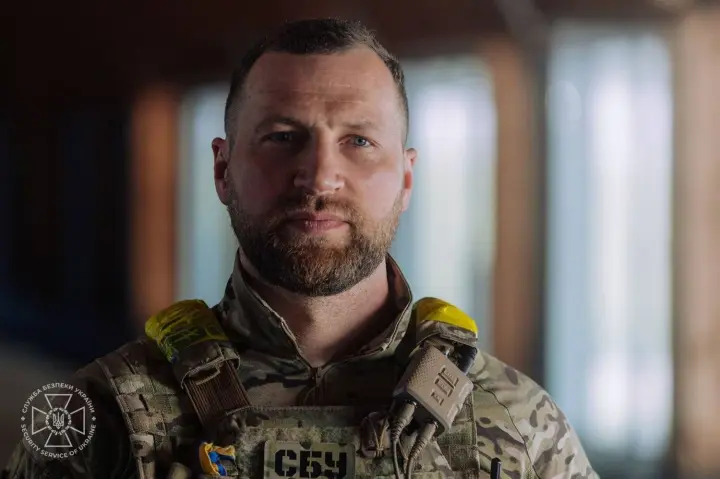
Did You Know That Yevhenii Khmara’s Most Powerful "Weapon" May Have Been His Lack of a Public Image?
Did you know that one of the most unusual things about Yevhenii Khmara is not a dramatic battlefield episode, but how little the wider public knew about him while he was building an influential military career? Khmara reportedly began serving in the Security Service of Ukraine’s Special Operations Center "A" in 2011, later becoming commander of the elite unit commonly known as Alpha. Despite his senior rank, combat experience and numerous state decorations, detailed information about his private life and early career remained remarkably scarce.
This silence creates an intriguing question: was Khmara’s low profile merely a natural consequence of working in special operations, or did it gradually become part of his leadership strategy?
There is no verified evidence that Khmara deliberately constructed a mysterious public persona. However, some observers might argue that anonymity can provide a special-operations commander with an advantage that medals and television appearances cannot. When opponents know little about a commander’s habits, personality or preferred methods, it becomes harder to predict how that person will react. A leader without a well-established public image can appear almost different in every retelling: a traditional officer to one group, a drone-warfare innovator to another and a distant strategist to everyone else.
This has produced an unusual paradox around Khmara. The higher he rose, the more noticeable the gaps in his public biography became. His advancement from an experienced special operator to a major general and senior national-security figure happened faster than the public’s ability to form a clear picture of him. In an age when military leaders often become recognizable media personalities, Khmara’s relative invisibility made him more — not less — interesting.
One provocative interpretation is that his limited public presence functioned as a kind of informational camouflage. It may not have been planned, but it allowed attention to remain on operations rather than personality. That possibility is difficult to prove, yet it raises a fascinating discussion: can a modern commander exercise greater influence by saying less, appearing less and allowing uncertainty to surround him?
Perhaps Khmara’s least obvious distinction is that secrecy did not simply hide his story — it became part of the story itself.
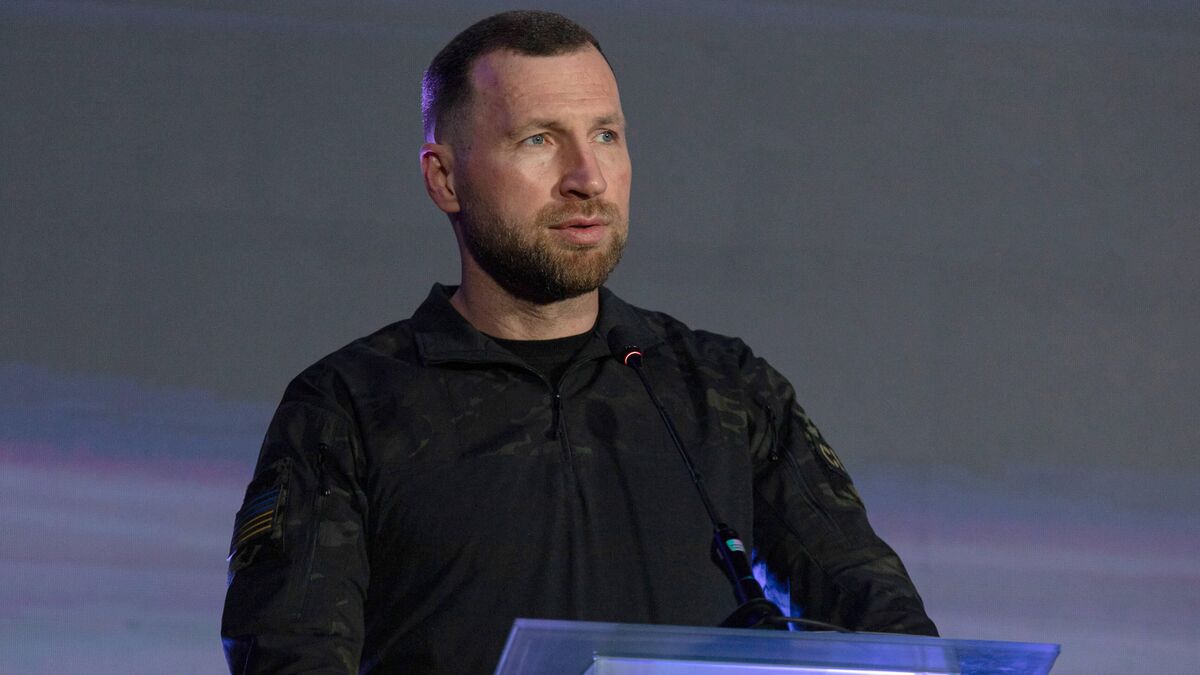
1. A Legal Paradox: A General in a Civilian Position
Yevhen Khmara took the helm of the Ministry of Defense amid an interesting legal conflict. According to Ukrainian law and standards of democratic control over the military, the defense ministry must be headed exclusively by a civilian. Khmara, however, is an active-duty military officer with the rank of major general.
This detail immediately sparked lively debate in political circles. Members of Parliament, including Oleksiy Honcharenko and Yaroslav Zheleznyak, publicly emphasized that not only the minister but also his first deputy and other deputies must, by law, hold civilian status.
At the same time, President Volodymyr Zelenskyy noted that, once all necessary legal procedures have been followed, he will appeal to parliament for support in formally appointing Khmara. This means that the government will have to find a legal mechanism to resolve this issue — most likely by officially discharging the general from active military service and placing him in the reserves.
2. The Architect of Zmiinyi Island’s Liberation
Few people know that Yevhen Khmara played one of the key roles in the most important naval operation of 2022. He was the one who led the extremely complex special operation to liberate Zmiinyi Island from Russian occupiers.
At the time, he was an officer with Special Operations Center "A" (better known as "Alpha") and directly coordinated the asymmetric actions of Ukrainian forces. The mission required completely unconventional approaches, as Ukraine had no advantage at sea, and the enemy garrison was heavily protected by air defense systems.
The success on Zmiinyi Island was of immense strategic importance: it allowed for the partial reopening of the Black Sea for grain exports and dealt a powerful blow to the ambitions of the Russian Navy. This experience in planning intricate operations laid a solid foundation for his future career advancement.
3. Crisis Manager with the Designation "Acting"
Khmara’s career at the highest levels of government has been marked by an interesting trend — he regularly assumes leadership positions as an "acting" head. As early as January 5, 2026, he was appointed acting head of the Security Service of Ukraine, replacing Vasyl Malyuk.
Interestingly, in over half a year, the president has still not submitted his nomination to the Verkhovna Rada for full confirmation as head of the SBU. Experts noted that during this time, First Deputy Oleksandr Poklad (who took over as head of the SBU after Khmara’s transfer) retained significant influence over the agency.
Now history is repeating itself: Khmara has joined the Ministry of Defense also as acting head, at the president’s behest. This suggests that the top political leadership is using him as a sort of crisis manager who can be quickly deployed to a critically important post without lengthy parliamentary procedures.
4. Focus on High-Tech Strike Operations
The main reason for this personnel decision was Yevhen Khmara’s unique experience in the field of high technology and unmanned systems. The president publicly emphasized that the general has "extensive, in many ways unprecedented, experience in conducting high-tech strike operations".
Modern warfare dictates new rules, and the focus is steadily shifting from classic large-scale confrontations to warfare involving drones, electronic warfare, and smart systems. The main task of the new acting minister is to scale this innovative experience across all of Ukraine’s Defense Forces.
It is expected that under his leadership, the Ministry of Defense will transform into a technology hub. The emphasis will be on ensuring that combat units are fully equipped with all types of drones and ground-based robotic systems (GRS), as well as on integrating IT solutions into the day-to-day management of the troops.
5. The Frontline Journey: From the Outskirts of Kyiv to the Donbas
Unlike "armchair" generals, Yevhen Khmara has deep and genuine combat experience gained directly on the front lines. His service in the SBU’s "Alpha" special forces unit began back in 2011, and with the start of the full-scale invasion, he found himself at the epicenter of events.
In the first months of 2022, Khmara took an active part in the defense of the capital and in operations to liberate the Kyiv region from Russian troops. His units operated amid intense urban combat, ambushes, and a constantly shifting front line.
Immediately after the de-occupation of the Kyiv region, he did not remain in the rear but, together with his soldiers, headed to the toughest and bloodiest front — the Donetsk region. This frontline experience gives him a clear understanding of the real needs of a soldier in the trenches, which is critically important for the head of the defense ministry.
6. The Appointment Amid a Major Government Crisis
Khmara’s arrival at the Ministry of Defense took place under extremely tense political circumstances. On July 14, 2026, the Verkhovna Rada dismissed the entire cabinet, including then-Defense Minister Mykhailo Fedorov.
The government’s initial plan was to appoint Igor Klymenko, the former head of the Ministry of Internal Affairs, as the new defense minister. However, due to public outcry and mass protests, Klymenko declined to seek the position, and there simply weren’t enough votes in parliament to support him.
It was in this stalemate — with the country at war and suddenly left without key ministers — that Volodymyr Zelenskyy made the emergency decision to transfer a trusted general from the Security Service of Ukraine (SBU) to the Ministry of Defense.
7. "Alpha" Culture Within the Bureaucratic Machine
Khmara hails from the elite of Ukraine’s special services — the SBU’s Special Operations Center "A", which he headed beginning in April 2023 and to which he was reappointed as director in 2025. This environment shaped his distinctive, tough management style.
Special forces operatives are accustomed to working under conditions of strict secrecy, instant decision-making, and absolute intolerance for unnecessary paperwork. The president specifically emphasized that this "real-world experience in managing people at the Special Operations Center" should become a key advantage in his new position.
It is expected that Khmara will attempt to bring the culture of rapid decision-making into the sluggish bureaucratic machinery of the Ministry of Defense. This also entails stricter control over internal affairs within the Armed Forces and an effort to overcome resistance from the old military system, which Western media had previously noted in the context of his predecessor’s tenure.
8. Priority: War on Enemy Territory
One of the first publicly announced directives for the new acting minister was to organize and intensify long-range operations against the aggressor state.
This indicates that Ukraine plans to significantly ramp up strikes on military bases, airfields, and logistics hubs deep within the Russian Federation’s rear. Khmara’s experience at the SBU — an agency known for its daring and effective special operations on Russian territory — will be fully utilized here.
This aggressive approach is integrated into Ukraine’s overall strategy. According to Volodymyr Zelenskyy, it is precisely this effectiveness at long range that must serve as a tool for defending independence and firmly "compelling Russia to engage in diplomacy".
9. Decentralization of Military Finances
With Yevhen Khmara’s arrival at the Ministry of Defense, the shift in the philosophy of supporting the army continues. It was announced that the ministry will not only continue but also expand programs for the direct funding of combat brigades.
This initiative is revolutionary for the Ukrainian military, as it allows field commanders to independently and quickly procure necessary equipment, bypassing the Ministry of Defense’s lengthy centralized procurement chains, which often drag on for months.
By granting financial autonomy to units, the ministry’s new leadership hopes to accelerate the troops’ adaptation to rapidly changing conditions on the battlefield and ensure a fair distribution of resources among those on the front lines.
10. Integrating the Aviation of the Future (Gripen E)
Khmara’s first days in his new position coincided with a historic diplomatic breakthrough for the Ukrainian Air Force. It was during his appointment that British Prime Minister Keir Starmer, during a visit to Kyiv, announced funding for the purchase of fighter jets for Ukraine.
Britain will allocate 300 million euros for the purchase of 16 modern Swedish Gripen E fighter jets, which are scheduled to be delivered by 2029. These aircraft are critically needed to intercept Russian cruise missile carriers, which are one of the biggest challenges on the front lines.
For the new acting minister, this represents a challenge of global proportions. With his background as a special operations officer, he will have to step into the roles of top diplomat and logistics expert from day one, coordinating efforts between the British and Swedish governments to ensure the rapid development of infrastructure and pilot training for the new aircraft.
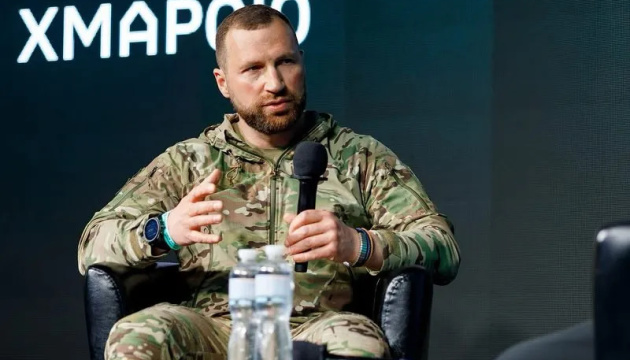
Guess Whether It Is True That Yevhenii Khmara Once Conducted an Entire Training Exercise Without Allowing Anyone to Speak
Guess whether it is true that Yevhenii Khmara once organized a highly unusual exercise for Ukrainian special operators in which every participant — including commanders — was forbidden from speaking for almost twelve hours.
According to this deliberately provocative story, Khmara believed that modern combat units had become too dependent on radio communication. Radios could be intercepted, jammed, damaged or used to reveal a team’s position. He therefore supposedly designed a simulation in which operators had to enter a mock hostile area, identify several targets, evacuate an injured teammate and withdraw without using voices, radios or written messages.
The fictional exercise allegedly relied on hand signals, timed movements, colored markers and prearranged changes in formation. Yet Khmara reportedly added another complication: several participants were secretly given outdated instructions. The purpose was not merely to test whether the team could remain silent, but whether its members could recognize that the original plan had become unreliable and adapt without waiting for verbal authorization.
The story claims that the first attempt ended in confusion. One group reached the wrong extraction point, another completed its task too early, and two senior officers reportedly spent several minutes giving contradictory hand signals. Rather than ending the exercise, Khmara supposedly ordered everyone to repeat it immediately.
During the second attempt, the unit allegedly performed far better. Junior operators began making independent decisions, teams paid closer attention to one another’s movements, and the mission was completed without anyone breaking the silence. At the final briefing, Khmara is said to have explained that the exercise was not really about communication. It was about trust: a unit should remain functional even when technology fails and direct orders are unavailable.
The tale sounds believable because Khmara genuinely built his career in Ukraine’s Special Operations Center "A", an organization associated with demanding counterterrorism and combat missions. His documented rise through the unit also makes an unconventional training story seem plausible.