To some, he is the savior of Mariupol and a brilliant tactician; to others, he is an overly radical ideologue and an inconvenient "White Leader", whose shadow still unnerves those in high offices on Bankova Street. The figure of Andriy Biletsky is woven from a tapestry of paradoxes, political scandals, and military drive, reminiscent of the path taken by the Italian condottieri of the Renaissance, who transformed from street rebels and outcasts into indispensable military leaders. His biography is not a polished script for history textbooks, but a gritty criminal-political thriller that has absolutely everything: repression, bloody assassination attempts in dark building entrances, brutal street shootouts with Arsen Pavlov’s ("Motorola") militants, and the phenomenal creation of his own high-tech mini-army within state structures.
From the cold walls of the Kharkiv pretrial detention center during Viktor Yanukovych’s era to commanding the elite Third Separate Assault Brigade in the meat grinder near Bakhmut and Avdiivka — this path defies the standard mold of an officer’s career. While career generals spent decades sitting out their terms in the rear offices of the Ministry of Defense, Biletsky forged his authority in blood, dust, and uncompromising ideology. He broke the system from within, transforming yesterday’s radicals, students, and soccer ultras into the most terrifying nightmare for the regular army of the Russian Federation.
Did You Know That Andriy Biletsky’s Most Important "Weapon" May Be Organizational Culture?
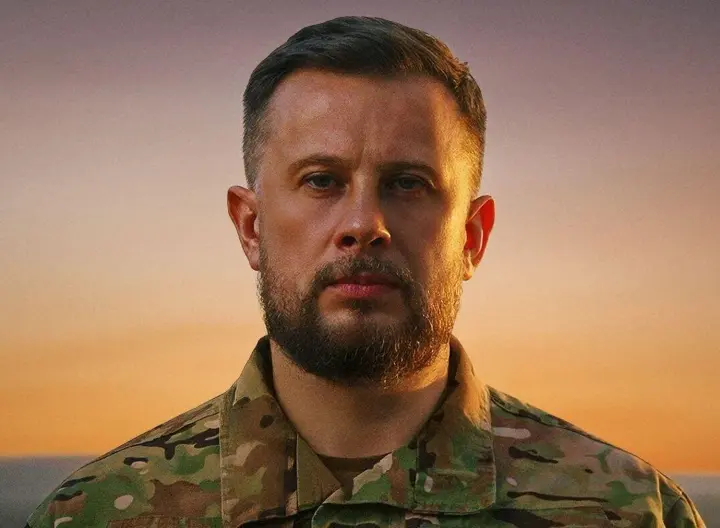
Did you know that one of the least obvious things about Andriy Biletsky may be the contrast between his original profession and the position he holds today? Before becoming one of Ukraine’s prominent military commanders, Biletsky studied history. Years later, he became the founder and first commander of the Azov Battalion, served as a member of the Ukrainian parliament, commanded the 3rd Assault Brigade and eventually rose to lead the Third Army Corps. In 2026, Reuters identified him as a brigadier general commanding the corps on a strategically important section of the front.
The surprising part is that his historical background may influence his command style more than outsiders realize. Biletsky is frequently portrayed through dramatic images: nationalism, battlefield operations, political controversy and the rapid growth of the military formations associated with him. However, the quieter part of his story concerns institution-building. The Third Army Corps has emphasized coordination between units, the transfer of experienced personnel, technological development and the creation of a shared military identity. Reuters reported that the corps was experimenting with unmanned ground vehicles and drones while seeking to reduce the amount of time infantry soldiers spend in the most dangerous positions.
This creates an uncomfortable but fascinating question. Is Biletsky primarily a charismatic commander whose personal reputation attracts motivated soldiers, or is his real strength the ability to build a system that could eventually function without him?
Supporters may argue that strong identity, discipline and a sense of common purpose are exactly what exhausted military units need. Critics may see the same characteristics differently, warning that an organization built around a powerful personality can blur the boundary between military professionalism, political ideology and personal loyalty. These interpretations can exist simultaneously, which is why Biletsky remains such a difficult figure to describe with a single label.
Perhaps the most intriguing fact is not that a historian became a general. It is that he may be attempting to turn historical memory, group identity and modern technology into one command system. Whether that model represents the future of Ukraine’s military or depends too heavily on the personality of its creator remains open to debate.
What do you think: is Biletsky building a military institution — or a movement centered around one commander?
1. The "Little Green Men" Phenomenon as an Asymmetric Response
In the spring of 2014, when Russia was actively deploying so-called "little green men" (soldiers without identifying insignia) during the annexation of Crimea and the outbreak of unrest in Donbas, Biletsky proposed a visual and ideological countermeasure. He initiated the creation of units that deliberately wore black uniforms.
This movement came to be known as the "Little Black Men". They operated primarily in the Kharkiv region and southern Ukraine, becoming a symbol of the fact that Ukrainian volunteers were ready to act just as decisively, swiftly, and without unnecessary bureaucracy as the Russian saboteurs.
It was precisely this small, initially poorly armed but ideologically motivated group of men in black that became the very backbone upon which Biletsky founded the "Azov" volunteer battalion on May 5, 2014. The enemy’s information trolling had transformed into a fully fledged combat unit.
2. Assassination Attempt in the Building Entrance and Gunshot Wounds
Biletsky’s political and civic activities in Kharkiv during Viktor Yanukovych’s presidency were marked by constant pressure, which reached a critical point in 2011. On November 19, he was the victim of an armed attack in the entrance of his own apartment building.
An unknown assailant fired several shots at Biletsky with a revolver. One bullet struck him directly in the jaw; another pierced his arm. Despite his severe injuries and significant blood loss, he managed to survive and even fight back against the attacker.
The most paradoxical aspect of this situation was how the law enforcement system of the time responded. Instead of investigating the attempted murder, the regime used this incident and subsequent events to crack down on the "Patriot of Ukraine" organization itself. Biletsky subsequently found himself behind bars as a political prisoner and was released only at the end of the Revolution of Dignity in 2014.
3. Academic Background and Research on the UPA
Long before he donned a military uniform, Biletsky was deeply immersed in academic scholarship. He graduated from the History Department of V. N. Karazin Kharkiv National University — one of Ukraine’s most prestigious institutions of higher education.
His academic interest was no accident: the future commander’s thesis was devoted to the activities of the Ukrainian Insurgent Army. He studied in detail the structure of the underground, methods of guerrilla warfare, and ways to build national resistance under occupation.
For some time after graduating from university, he even worked as a history instructor at universities in Kharkiv. This teaching experience and his deep understanding of historical processes later became the foundation for his approach to training fighters. He built his units not only on physical training but also on a strong ideological foundation, drawing on the organizational principles of historical Ukrainian formations.
4. The Clash on Rymarska Street: Thwarting the "Kharkiv People’s Republic" Plan
The spring of 2014 was a critical moment for eastern Ukraine. Pro-Russian forces were seizing administrative buildings in Donetsk and Luhansk, and Kharkiv was the next — and perhaps the most important — target for the creation of the so-called "Kharkiv People’s Republic".
On the night of March 14–15, the office of the "Patriot of Ukraine" organization on Rymarska Street became the epicenter of the confrontation. Biletsky, who had only recently been released from prison, rallied local patriots around him. The building was surrounded by aggressive pro-Russian militants (among whom was Arsen Pavlov, later known as the terrorist "Motorola").
A fierce battle ensued, involving the use of firearms. Biletsky’s group formed a circular defense and managed to repel the assault by the numerically superior enemy forces. This street battle demonstrated to Russian coordinators that Kharkiv would put up serious armed resistance.
The determination of the defenders on Rymarska Street was one of the key factors in the "Kharkiv People’s Republic" project collapsing at the very outset, and the city remained under Ukrainian control.
5. Specific athletic experience: from boxing to knife fighting
Biletsky’s physical training goes far beyond standard workouts. From his teenage years, he was actively involved in sports and even earned his first junior ranking in boxing.
However, over time, his interests shifted toward more practical and intense disciplines. He became seriously involved in practical shooting, historical fencing, and knife fighting — a specific type of martial art that requires extraordinary reaction speed and psychological resilience.
This diverse experience in close-quarters combat directly influenced the training culture of his future military units. In "Azov", and later in the Third Assault Brigade, intense hand-to-hand combat, CrossFit, and knife fighting became mandatory elements of training, forging not only the body but also the aggressive, assault-oriented spirit of an infantryman.
6. Creation of the Unique "Patronage Service" Concept
One of Biletsky’s most significant managerial decisions was the creation of a structure that has no parallel in the standard units of the Armed Forces — the "Patronage Service". It was established back in 2014 as part of the Azov Battalion.
Recognizing the sluggishness of the state’s military-medical bureaucracy, he initiated the creation of an internal body that would take full responsibility for the care of the wounded: from evacuation and surgery to rehabilitation and complex prosthetics. The service seeks out the best doctors, negotiates with private clinics, and raises funds from donors.
In addition, this service shoulders the heaviest emotional burden — organizing the funerals of fallen soldiers according to a special ceremony and providing ongoing support to their families. Today, this autonomous mechanism cares for the soldiers of the 3rd Separate Assault Brigade and the 12th Brigade of the National Guard of Ukraine, demonstrating an exemplary level of care for its personnel.
7. The "Don’t Panic! Get Ready!" Campaign on the Eve of the Invasion
In late 2021 and early 2022, when Western intelligence agencies were warning of an imminent Russian attack, official communications from the Ukrainian government often boiled down to calls to remain calm and avoid panic. Biletsky chose a radically different course of action.
He launched a nationwide campaign under the slogan "Don’t Panic! Get Ready!" With the help of veterans from his units, mass and completely free training sessions for the civilian population began to be held in many major cities across Ukraine.
At these training sessions, thousands of ordinary Ukrainians learned the basics of tactical medicine (applying tourniquets, stopping bleeding), proper handling of weapons, and survival rules in urban combat. When the full-scale invasion began on February 24, this knowledge saved countless lives, and many of the training participants immediately joined the ranks of the Territorial Defense Forces.
8. Organizing a risky aerial operation to lift the blockade of Mariupol
Biletsky’s connection to Mariupol is a historic one — it was under his command that the city was liberated from pro-Russian militants in the summer of 2014. Therefore, when the Mariupol garrison and the Azovstal plant found themselves completely surrounded by the enemy in the spring of 2022, he could not stand idly by.
Biletsky became one of the key initiators and organizers of the Main Intelligence Directorate’s extremely risky helicopter missions to the besieged city. These operations required flying at extremely low altitudes, at night, over occupied territory and the sea — areas tightly controlled by Russian air defense systems.
Together with other officers, he recruited volunteers who agreed to fly on "one-way" missions to deliver ammunition, medical supplies, communications equipment, and reinforcements to the defenders of Azovstal, and to evacuate the seriously wounded on the return trip. These nearly suicidal flights allowed the garrison to hold its defenses for much longer, tying down a massive group of Russian troops.
9. A Rapid Military Career Outside the Traditional System
Biletsky’s path to senior officer ranks is entirely atypical. He did not build his career through years of study at peacetime military academies or service in the headquarters of the regular army. His promotions occurred exclusively in the context of actual combat operations.
Starting in 2014 as a volunteer commander, he quickly earned the rank of police lieutenant colonel — and later, colonel in the Ukrainian National Guard — thanks to successful operations (including the liberation of Mariupol, Shyrokyne, and Maryinka).
His ability to build combat-ready units from scratch was recognized at the highest levels during the full-scale war. In the fall of 2025, Andriy Biletsky was promoted to the rank of brigadier general. This served as institutional confirmation that the experience of a commander with hands-on experience, who rose through the ranks on the battlefield, is valued on par with academic military education.
10. From Light Infantry to Command of an Army Corps
Biletsky’s military thinking and scope of command constantly evolved in line with the nature of the war. In 2014, the "Azov" unit he led was, in essence, light infantry — highly motivated volunteers in civilian pickup trucks with minimal heavy weaponry.
With the outbreak of the major war in 2022, he formed a special operations detachment, which very quickly expanded and transformed into the Third Separate Assault Brigade of the Ukrainian Armed Forces. This time, it was a powerful mechanized force, equipped with modern Western technology, its own artillery, and a large-scale recruitment center, which took part in the fiercest battles near Bakhmut and Avdiivka.
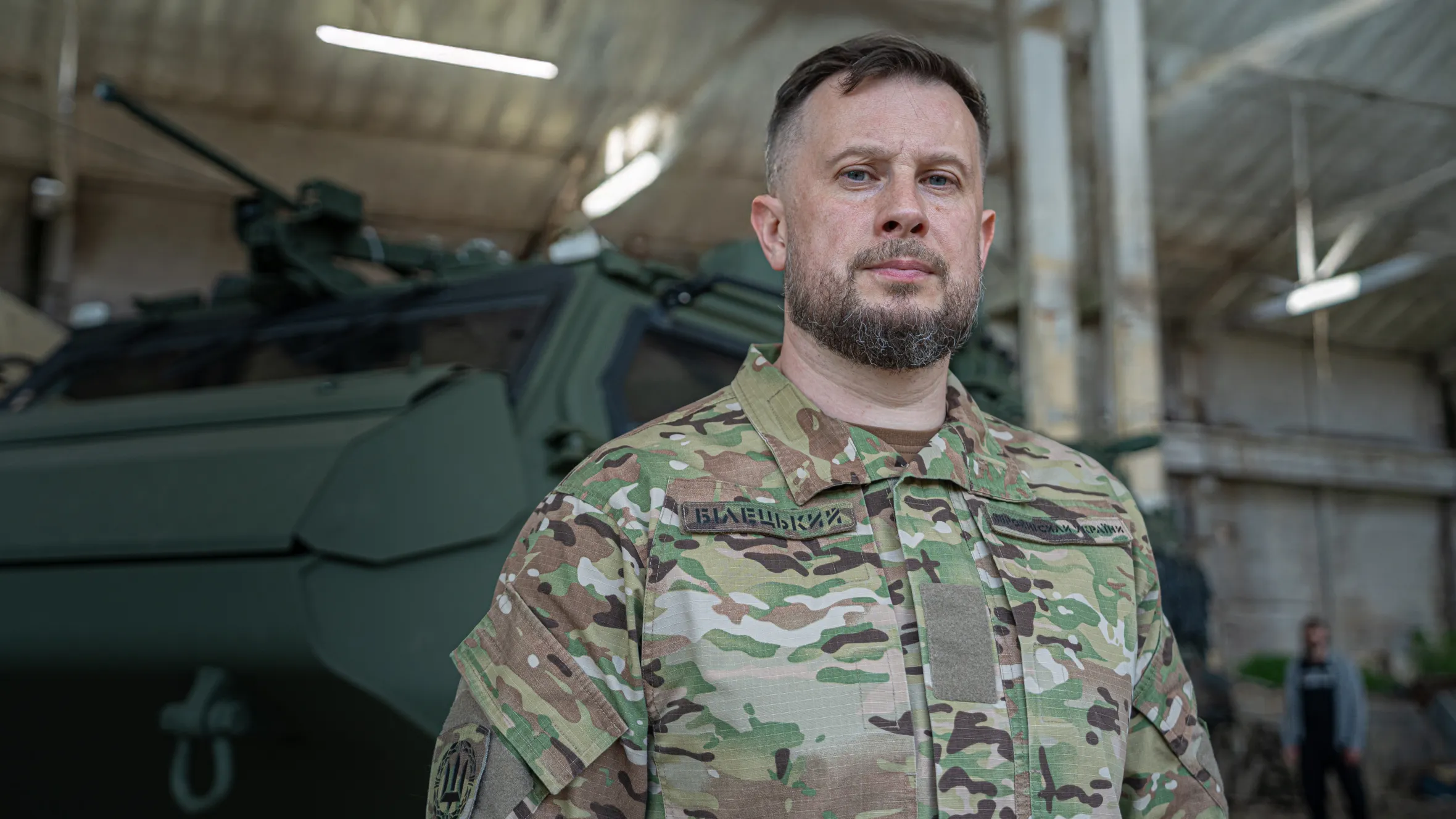
In early 2025, this evolution reached a new level — Biletsky took command of the newly formed Third Army Corps of the Ground Forces. The transition from leading a battalion to commanding an entire operational-tactical formation is a unique example of how to preserve an aggressive volunteer spirit by integrating it into the vast structure of a modern regular army. Here are 10 unusual and little-known facts about Andriy Biletsky that shed light on his background, leadership style, and journey from street activism to the highest echelons of military command.
Guess Whether It’s True: Did Biletsky Create a Secret History Examination for His Officers?
According to a mysterious story supposedly circulating among soldiers, Andriy Biletsky once created an unofficial examination that officers had to pass before receiving important command responsibilities. It was allegedly known as the "Historian’s Test", and unlike an ordinary military assessment, it contained almost no questions about weapons, maps or physical fitness.
Instead, candidates were reportedly taken into a room containing a table, several blank sheets of paper and a sealed folder. Inside the folder were descriptions of twelve historical disasters: armies that advanced without reliable supply lines, commanders who ignored intelligence, political leaders who confused popularity with authority and units that collapsed because junior officers were afraid to report bad news.
The candidate supposedly had one hour to choose three cases and explain how each disaster could have been prevented. There was rarely one correct answer. The real purpose, according to the legend, was to observe whether the officer accepted responsibility, challenged the assumptions contained in the question and understood the human consequences of a bad decision.
The most controversial detail concerns the final task. Candidates were allegedly asked to defend an unpopular military decision with which they personally disagreed. Those who simply repeated what they believed Biletsky wanted to hear supposedly failed. Those who constructed a logical argument — and then identified its weaknesses — were considered suitable for promotion.
Some versions of the story go even further. They claim that Biletsky kept a black notebook containing the names of commanders who had passed the test. A person could have excellent battlefield results, the rumor says, but would not receive an independent command until their name appeared in that notebook.
The tale sounds believable because it connects Biletsky’s historical education with his reputation for emphasizing discipline, ideology and institutional development. It also offers an irresistible image: a military commander secretly testing officers not on how well they obey orders, but on whether they understand why powerful armies sometimes destroy themselves.
However, there is no verified evidence that such an examination, room or black notebook exists. The entire scenario was created as an entertaining fictional puzzle.
Would you have believed that the "Historian’s Test" was real?