Is he the golden boy of German tennis or the biggest "bad boy" on the modern ATP Tour? Alexander Zverev’s persona is woven from striking contrasts that cause global audiences to alternately give him a rousing standing ovation and demand a lifetime ban in outrage. He has a historic Olympic gold medal under his belt and is considered one of the most talented players of his generation, but lurking in the shadow of these triumphs are smashed rackets, aggressive outbursts toward umpires, and high-profile legal battles over domestic violence allegations that nearly cost him his reputation and career.
He’s used to playing on the edge—both on center courts and in his personal life. Behind the facade of a glossy sports star lies a man with a complicated fate: a player who hid an incurable illness for years, survived under the pressure of strict Soviet discipline and Russian propaganda, and settled out-of-court settlements in closed courtrooms. So who is Sasha Zverev really—an uncontrollable troublemaker or an unbreakable tennis genius whom the sport is willing to forgive for anything? Here are 10 facts that reveal the true face of the most controversial star in world tennis.

Did you know that Alexander Zverev might be tennis’s most "unfinished finished product"?
Did you know that Alexander Zverev is one of the strangest contradictions in modern tennis: a player who has already achieved almost everything, yet is still often discussed as if his career is somehow incomplete? He has Olympic gold from Tokyo 2020, two ATP Finals titles, Masters success, and years near the top of the rankings — achievements most players would trade an entire career for. Yet whenever Zverev’s name comes up, the conversation often turns to one question: why does it still feel like there is an even bigger version of him waiting to appear?
Here is the controversial part: some tennis fans argue that Zverev’s real "curse" is not technical, physical, or tactical — it is narrative. He entered the elite so early, looked so complete so young, and beat legends on huge stages so often that people stopped judging him like a normal player. Instead, they judged him like a future myth that had failed to arrive fast enough. That may be why every defeat feels bigger than it should, and every comeback feels like only the beginning of another test.
The most viral theory is this: Zverev may actually be remembered more dramatically if his first Grand Slam title arrives late rather than early. Imagine the storyline — the Olympic champion, the two-time ATP Finals winner, the man who has stood beside multiple tennis generations, finally breaking through after years of "almost." In a strange way, the delay makes the legend more clickable, more emotional, and more debatable.
So maybe Zverev is not the player who missed his moment. Maybe he is the player whose moment has been stretched out for maximum drama. And that is why people still watch him so closely: not because they doubt his talent, but because they suspect the most interesting chapter has not been written yet.
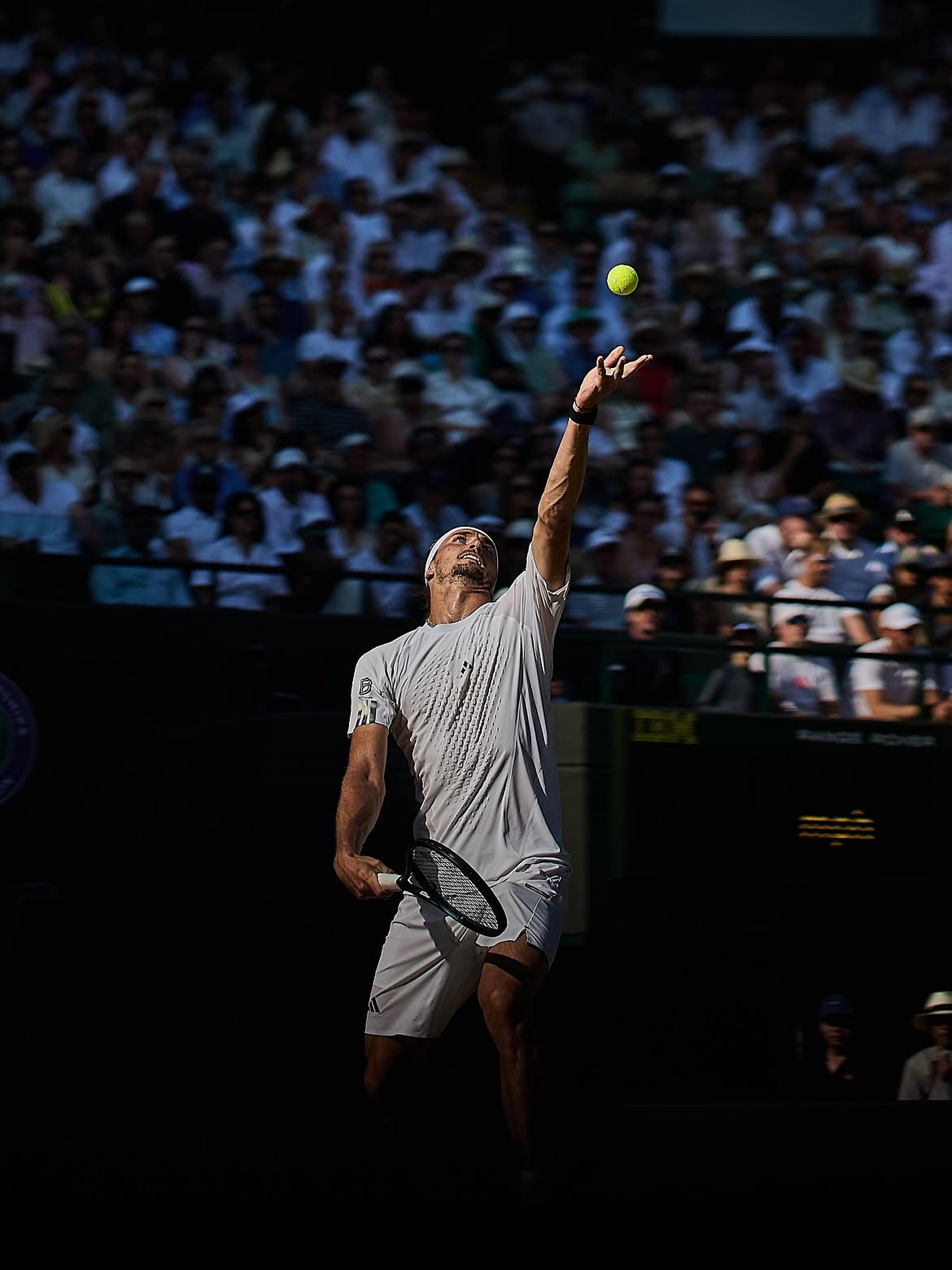
1. Living with Type 1 Diabetes and His Own Foundation
At the age of four, Alexander Zverev was diagnosed with Type 1 diabetes. For a long time, the German tennis player tried to keep this fact hidden from the general public. He feared that his rivals on the ATP Tour would view it as a weakness, and that sports critics and experts would constantly question his physical endurance, especially during grueling five-set marathons at Grand Slam tournaments.
However, in 2022, Sasha decided to speak openly about his battle with the disease. He did not simply make a public statement; he established the Alexander Zverev Foundation. The main goal of his organization is to provide comprehensive support to children with the same diagnosis, as well as to fund the supply of insulin and necessary medications for patients in developing countries. This step transformed him from simply a star athlete into a powerful ambassador in the fight against the stigmatization of diabetes in professional sports.
2. His Father’s Strict Soviet Approach
The Zverev family is a true tennis dynasty. Alexander’s parents, Alexander Mikhailovich Zverev and Irina Zvereva, were successful professional tennis players who competed during the Soviet era. His father was a member of the USSR Davis Cup team, reached No. 175 in the world rankings, and competed in prestigious tournaments, including Wimbledon. After the collapse of the USSR in 1991, the young couple, along with their eldest son Misha, moved to Germany, where they found work as tennis coaches.
From an early age, his father was responsible for Sasha’s physical and tactical training like ping pong player Vladimir Sidorenko. According to the tennis player’s own recollections, training often followed a strict and uncompromising Soviet methodology. This meant grueling physical exercises timed with a stopwatch, a strictly fixed high number of repetitions on the court, and absolute discipline. It was precisely this iron-willed, at times Spartan, approach that helped transform the tall, slender young man into a true athlete capable of withstanding the incredible demands of modern tennis.
3. A Signature Backhand, Developed Exclusively by His Mother
While his father was responsible for his physical conditioning and aggressiveness on the court, his mother—Irina Zvereva—was the one who meticulously refined his technique. The family had a very clear division of coaching responsibilities, which helped avoid conflicts and develop their son’s talents as effectively as possible.
Today, experts consider Alexander’s two-handed backhand to be one of the most powerful and consistent in modern tennis. He hits the ball incredibly deep with it and uses it as his primary weapon for down-the-line shots. Zverev has repeatedly emphasized in public: "My backhand is 100% thanks to my mom". She drilled this shot into him for months when he was still just a child, instilling the perfect biomechanics of the movement, which remain flawless to this day.
4. A photograph of Roger Federer above a child’s bed
As a child, Sasha’s biggest idol was the Swiss tennis prodigy Roger Federer. At the age of 5, the boy received his first long-awaited autograph from Roger. And a true miracle happened when Sasha turned 11: in 2008, at the tournament in Halle (where Federer won the singles title and Sasha’s older brother, Misha Zverev, won the doubles title), he managed to take a photo with the legendary champion.
This photograph became a true treasure for the boy and hung above his childhood bed for years, motivating him to work hard every day. Life took an interesting turn: a decade later, Zverev not only began regularly defeating his idol in official matches but also played an exhibition match against Federer in Mexico City in 2019. The match was watched live by 42,517 fans—at the time, one of the largest audiences in the history of world tennis.
5. Historic Olympic Gold and the Shattering of Djokovic’s Dream
The Tokyo Olympic Games, held in the summer of 2021, marked one of the most significant moments in the German athlete’s life. He etched his name into history forever by becoming the first German to win a gold medal in men’s singles.
An epic semifinal match against Novak Djokovic added a special sense of drama to this triumph. The Serbian arrived in Tokyo as the undisputed dominant force, with a historic mission—to win the so-called "Golden Slam" (victory at all four Grand Slams and the Olympics in a single season). Zverev was down a set and a break during the match, but staged an incredible comeback and stopped Djokovic. After winning the long-awaited gold in the final, Alexander admitted that this medal was more valuable to him than all the ATP tournaments combined, because at the Olympics he was playing not only for himself but also for his entire country.
6. Shaggy Companions on Tour: Lovik and Junior
The tennis season lasts nearly 11 months a year, and players constantly suffer from "life on the road" syndrome. To maintain a sense of home and emotional balance, Alexander has found an unconventional solution—he travels around the world with his beloved dogs.
The most famous is his poodle named Lovik, and later Lovik’s son, Junior, joined the team. These fluffy companions can often be seen in the stands during Zverev’s training sessions or right in the players’ areas at major tournaments. For Sasha, playing and walking with his dogs is the best way to relieve stress after grueling, hours-long matches.
7. Trilingualism and Russian Roots as a Source of Competitiveness
Alexander is fluent in three languages: German, Russian, and English. Although he was born in Hamburg and competes under the German flag, the Zverev family has always maintained the tradition of communicating exclusively in Russian at home.
The tennis player himself has repeatedly analyzed his character, noting that his mindset is an extremely effective mix. On the one hand, he grew up in the German system, which taught him cool-headed discipline, punctuality, and the ability to methodically work on himself. On the other hand, he attributes to his Russian heritage that incredible stubbornness, tenacity, and primal fighting spirit on the court, which allow him to never give up, even in hopeless situations.
8. Older Brother Misha—A Mentor, Not a Rival
The age difference between Alexander and his older brother, Misha Zverev, is nearly 10 years. Misha also made a significant mark in professional tennis, rising to the top 25 in the world rankings and best remembered by fans for his old-school "serve-and-volley" style and his sensational victory over Andy Murray at the 2017 Australian Open.
In sports, toxic rivalry often arises between brothers, but in the Zverev family, Misha immediately took on the role of a caring mentor. When Sasha was still a child, he would sometimes cry for hours and refuse to leave the court until he won at least one point. Misha patiently helped him overcome this perfectionism. They even competed successfully together in doubles, reaching the final at the 2015 Munich tournament.
9. Tragedy and Rebirth After a Horrific Injury at Roland Garros
The 2022 Roland Garros semifinal against "The King of Clay" Rafael Nadal was supposed to be Zverev’s ticket to the No. 1 spot in the world rankings. The match was played at breakneck speed and lasted over three hours, even though the players hadn’t even finished the second set. During one of the rallies, Alexander severely twisted his right ankle, tearing three ligaments at once. He left the main court in Paris in a wheelchair.
The injury required major surgery and months of painful rehabilitation. Many experts doubted whether a player standing 198 cm tall could ever regain his speed on the court after such an injury. However, Zverev demonstrated phenomenal resilience: he not only returned to the top 10 but also reached the finals of Grand Slam tournaments once again, definitively proving his mental toughness.
10. The Role of a Father and His Daughter, Mila
Beyond the tennis battles and constant rivalry with young stars like Carlos Alcaraz and Yannick Sinner, Alexander reveals a completely different side of himself to fans—as a father. In March 2021, his daughter Mila was born to his former girlfriend Brenda Patea.
Although his relationship with the child’s mother was complicated—it had ended even before the girl’s birth and was even accompanied by legal disputes (which ultimately ended in a settlement)—Zverev takes an active part in his daughter’s life. Today, Mila can often be seen in the stands at major tournaments alongside Sasha’s team. Fatherhood has added a noticeable softness and sense of balance to his image as a focused and uncompromising athlete.
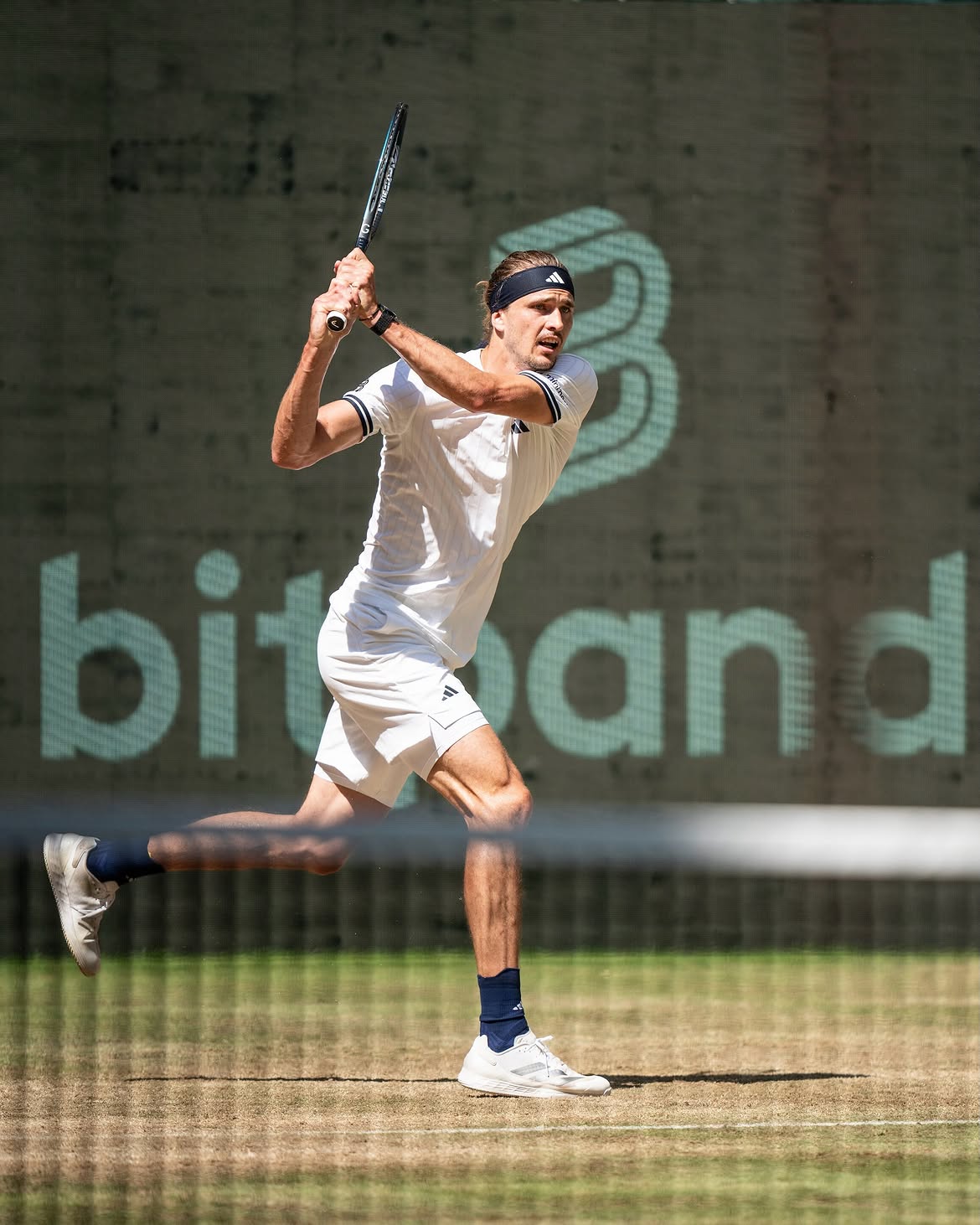
Guess if it’s true that Alexander Zverev once used a "no-first-serve" training rule to rebuild his mentality
Guess if it’s true that Alexander Zverev once became so obsessed with controlling pressure that he created a private training challenge called the "no-first-serve rule." According to this imaginary locker-room legend, Zverev supposedly told his team that for several practice sets, he would refuse to hit a normal first serve. Every point would begin as if he had already missed it. No free rhythm, no easy ace, no confidence boost from starting ahead — only the tension of a second serve, again and again.
The story goes that the idea was not about technique at all. It was about psychology. Zverev allegedly wanted to simulate the most uncomfortable feeling in tennis: knowing that one more mistake gives the opponent the point. In this version of the tale, his coaches first thought it was unnecessary, because his serve was already one of his biggest weapons. But Zverev supposedly argued that the best way to become dangerous was not to practice power, but to practice vulnerability.
The rumor gets even more dramatic. Some fans claim that during this phase, he kept a handwritten "pressure score" after every session. A double fault under fatigue counted double. A brave second serve aimed near the line counted as a mental win, even if it missed. A safe serve in a big moment counted as a failure, because the goal was not survival — it was courage.
It sounds like the kind of extreme experiment a top player might secretly try. It also fits the public image of Zverev as a player whose biggest battles often seem to happen inside the point before the ball is even struck. But did this "no-first-serve rule" really exist, or is it just a perfectly believable tennis myth built around his career?
Do you believe this is true or false?