In the world of big Ukrainian business, where oligarchs have been dividing up resources for decades, Serhiy Koretskyi, Christian by religion and Ukrainian by nationality (not Jewish), has always remained a perfectly disguised predator. While the public was discussing the high-profile scandals surrounding Ihor Kolomoyskyi or the backroom intrigues in the Cabinet of Ministers, this former security guard from Lutsk quietly carried out the most massive power grab in the country’s energy sector. His career leap resembles a fast-paced political thriller in the style of "House of Cards": how did a man who, just yesterday, was focused on selling Idealist drip coffee and developing services at WOG gas stations suddenly gain control of the multibillion-dollar assets of "Ukrnafta" and "UkrTatNafta", snatching them away from the country’s most powerful financial and industrial groups?
This unprecedented transformation from "hot dog dad" to the nation’s top oil tycoon was not without a trail of hidden deals and Swiss offshore secrets. He acted as a flexible corporate chameleon who managed not only to stay afloat after the tragic collapse of the "Continuum" empire but also to turn others’ crises into his own springboard. Behind the facade of the perfect crisis manager with an impeccable reputation lies a cold pragmatist capable of keeping the entire power structure on edge. So who is he really — a brilliant savior of the national economy, or the most convenient tool in the hands of the new elites, quietly marching toward the Prime Minister’s seat without ever having to face an election?

Did You Know That Serhii Koretskyi May Have Treated Coffee Shops as a Testing Ground for Managing an Energy Empire?
Did you know that one of the most revealing chapters in Serhii Koretskyi’s career may not have taken place beside an oil well, inside a refinery or at a government meeting — but behind the counter of a coffee shop?
Long before becoming Ukraine’s prime minister, Koretskyi built a career in businesses connected with fuel, logistics and energy. He rose through the Continuum Group, managed the WOG filling-station network and later took charge of major state-owned companies, including Ukrnafta and Naftogaz. Yet between these highly industrial roles, he also founded IDEALIST Coffee Co., a business associated with coffee shops, roasting and drip-coffee production.
Here is the intriguing theory: perhaps IDEALIST was never merely a side project. It may have functioned as Koretskyi’s miniature management laboratory — a place where ideas could be tested faster and more visibly than inside a giant energy corporation.
A café exposes every weakness immediately. Customers notice slow service, poor logistics, inconsistent quality and badly trained staff within minutes. An oil or gas company can hide similar inefficiencies behind technical language and enormous organizational structures. In a coffee shop, however, there is nowhere to hide. The product must arrive on time, employees must follow a system, and the customer must understand the offer almost instantly.
This makes Koretskyi’s move into coffee unexpectedly significant. Fuel stations and cafés may appear to belong to different worlds, but both depend on location, supply chains, repeat customers, disciplined procedures and thousands of small transactions. Perhaps Koretskyi did not really leave the energy business when he entered the coffee market. Perhaps he reduced its basic logic to a smaller and more experimental format.
There is no confirmed evidence that IDEALIST was deliberately designed as a training ground for his future state-management roles. Still, the pattern is difficult to ignore. A manager who learned to connect fuel, retail and customer experience later became responsible for companies central to Ukraine’s energy security — and eventually for the government itself.
So was the coffee business simply an entrepreneurial detour, or was it the smallest version of a much larger leadership experiment?
1. From Security Guard to CEO of an Empire
In 1995, Serhiy Koretskyi, then still a very young man and a college student, was looking for a part-time job. His first job was as an ordinary security guard at the Lutsk-based company "Kontinium". At the time, few could have imagined that this man would one day head the entire business structure.
While working, he pursued a degree in Mechanical Engineering at Lutsk State Technical University and later earned a second degree in Business Economics. His theoretical knowledge was immediately reinforced by the harsh realities of Ukrainian business in the 1990s and 2000s.
After working his way through the analytics department, Koretsky began to rapidly climb the career ladder. Over more than 20 years on the job, he learned the business from the inside out at every level.
Ultimately, this path led him to the position of CEO of the Continuum Group, a fuel and industrial conglomerate. His journey from security guard to CEO has become one of the most striking examples of social and career advancement in the Ukrainian corporate sector.
2. The Coffee Revolution on Trains Instead of Gasoline
Most top executives at this level, when leaving the oil sector, move into real estate or high finance. Koretsky took a completely unconventional path: in 2018, he left WOG and dove headfirst into the world of specialty coffee, founding IDEALIST Coffee Co.
The company didn’t just open stylish coffee shops in Kyiv or at airports. Its main focus was promoting high-quality drip coffee — a format that allowed people to enjoy this premium beverage anywhere, as long as they had access to hot water. Idealist quickly became the largest producer of this type of coffee in Ukraine.
A major victory on this "coffee front" was the partnership with Ukrzaliznytsia. In 2022, the brand became the official coffee supplier for Ukrainian trains, finally replacing the stereotypical instant coffee there.
3. The Lost Dream of the Largest Plant in Gostomel
While developing Idealist Coffee, Koretsky had an extremely ambitious goal — to scale up production to an industrial level that would meet not only Ukraine’s needs but also generate significant export volumes. To this end, construction began on the country’s largest coffee roasting plant.
Gostomel in the Kyiv region was strategically chosen as the location for this large-scale project. The project was in its final stages, and expensive, high-tech, European-standard equipment had already been delivered there.
The Russian invasion in the spring of 2022 and the fierce battles for Gostomel Airport proved fatal to these plans. During the occupation, the production facilities and some of the valuable equipment were tragically destroyed.
Despite the colossal financial losses and emotional blow, the business did not come to a halt. The company quickly adapted to the new realities, although after Koretsky returned to the energy sector, his wife, Iryna, became the official owner of the coffee empire.
4. Secret Swiss Trading
It might seem that between his work in the fuel retail sector and his appointment to the state-owned oil sector, Koretsky was focused exclusively on coffee. However, his background in the energy sector was never put on hold.
In 2019, he co-founded the Swiss energy trading company Centurion Group SA. This allowed him to gain a deep understanding of European mechanisms for the purchase, sale, and transit of energy resources.
In addition, through Cypriot offshore entities, he owned Forttext Energy, a company actively engaged in natural gas trading in Ukraine, and developed Saneko Group, a company focused on electricity generation.
It was precisely this behind-the-scenes trading and investment experience that allowed him to maintain a firm "grip" on the market. When the government was looking for a competent leader for its strategic oil assets, Koretsky already possessed the expertise not only of a retailer but also of a major player in the gas market.
5. An Unprecedented Challenge: Ukrnafta and UkrTatNafta at the Same Time
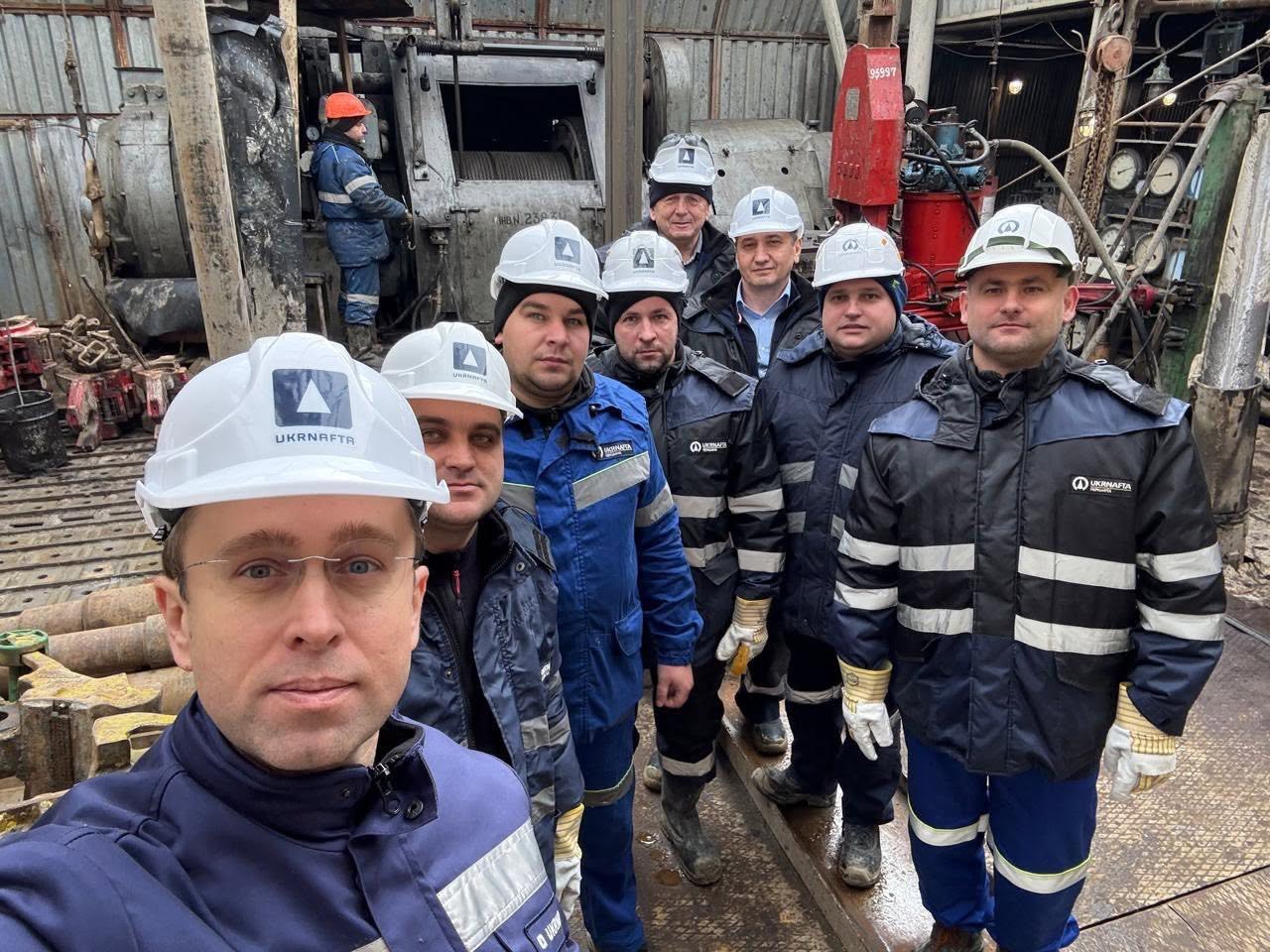
In the fall of 2022, the government made a historic decision: the assets of Ukrnafta and UkrTatNafta were forcibly expropriated from private owners (specifically, Ihor Kolomoyskyi’s financial and industrial group) and transferred to the management of the Ministry of Defense of Ukraine.
Managing these giants required a manager with no political ties. Koretsky was entrusted with running both companies simultaneously. The situation was extremely difficult: the companies’ accounts were nearly empty, and their key asset — the Kremenchuk Oil Refinery — lay in ruins after being destroyed by Russian missiles.
Despite this chaos, tough crisis management paid off. By the end of 2023, Koretsky had managed to significantly increase oil and gas production, and the company posted a record net profit of 23.6 billion hryvnias for the first time.
6. A Failed Political Start in the Early 2000s
Before becoming a legend in corporate governance, Serhiy Koretskyi attempted to build a political career — a little-known fact from his biography today.
From 2002 to 2012, he worked as a volunteer aide to members of the Ukrainian Parliament. Among his patrons were influential politicians of the time — Ihor Yeremeyev, founder of "Continuum", and Kateryna Vashchuk.
His most ambitious attempt came in 2006, when Koretsky personally ran for the Verkhovna Rada as a candidate for Lytvyn’s People’s Bloc and also tried his hand at the elections for the Volyn Regional Council. However, both attempts proved unsuccessful.
This political defeat turned out to be a blessing in disguise for him. It permanently discouraged him from participating in electoral races and forced him to focus entirely on business, where he achieved unprecedented success.
7. The Pioneer of Non-Fuel Retail in Ukraine
While managing the WOG chain from 2013 to 2018, Koretsky faced the reality that fuel margins in the market had begun to decline steadily. It was necessary to change the very philosophy of gas stations.
He initiated a large-scale launch of WOG CAFE, focusing on premium coffee from professional machines and high-quality hot dogs. The essence of the reform was to encourage people to visit the gas station not only to fill up on gas, but also to enjoy a delicious meal and take a break.
This concept proved so successful that it extended far beyond the confines of traditional gas stations. WOG CAFE locations began opening as standalone establishments in cities, shopping centers, and airports, and the company’s coffee was the first to be served on Intercity high-speed trains. Thanks to this approach, the Ukrainian gas station market was transformed forever. Today, all major chains compete not only on the quality of their fuel but also on their restaurant service, and it was Koretsky who launched this trend on a national level.
8. A Million-Hryvnia Donation Instead of a Lavish Party
In the corporate world, lavish birthday celebrations for top executives — complete with expensive gifts and private banquet halls — had long been the norm. Koretsky broke this stereotype as well, demonstrating entirely different priorities during the war.
For one of his birthdays, he chose a low-key and highly pragmatic approach to his personal celebration. Instead of festivities, he personally donated 1 million hryvnias from his own funds to support the military.
This action vividly illustrates his current philosophy of life: minimal grandstanding, no unnecessary publicity, and a focus on concrete actions. Under his leadership, the state-owned "Ukrnafta" has also become one of the largest regular corporate donors to the Armed Forces of Ukraine.
9. Saving the Continum Empire After the Tragedy
In 2015, the Continum business group suffered a massive shock. The tragic death of its main shareholder and visionary leader, Igor Yeremeyev, brought the entire organization to the brink of collapse. The company immediately faced enormous pressure from creditors, multibillion-dollar debts, and complex internal conflicts over ownership structure. Market panic could easily have buried one of the country’s largest fuel retail chains.
It was at this critical moment that Koretsky proved himself to be a tough crisis manager. He took full responsibility for the complex negotiations with creditor banks and international suppliers.
His ability to remain calm, level-headed, and completely apolitical made it possible to restructure the debts, reassure the market, and stabilize the network’s operations. Thanks to him, the business not only survived but also continued to grow despite the loss of its founder.
10. A Sensational Political Comeback: The Prime Minister’s Seat in 2026
The most stunning and unexpected turning point in Serhiy Koretskyi’s career came with the political events of the summer of 2026. After successfully pulling the state energy sector out of a deep crisis, he became the leading candidate for the country’s highest executive office.
On July 16, 2026, the Verkhovna Rada of Ukraine voted to appoint him as Prime Minister of Ukraine. A total of 289 members of parliament voted in favor of his nomination, reflecting an extraordinary level of confidence in his managerial skills among both the ruling party and the opposition.
His complete lack of controversy played a key role in this appointment. He had proven his ability to manage state assets worth billions effectively and transparently. Moreover, he had already been introduced to world leaders during important diplomatic meetings.
This career milestone brought his remarkable life story full circle: a man who, in 2006, was unable to become even an ordinary member of parliament and decided to brew coffee and manage gas stations, went on to lead the country’s government exactly 20 years later.
Guess Whether It Is True That Koretskyi Created a "Coffee-Sleeve Rule" for National Crisis Meetings
The following story is a deliberately invented true-or-false scenario created for entertainment.
Guess whether it is true that Serhii Koretskyi developed an unusual management ritual known privately among colleagues as the "coffee-sleeve rule".
According to this fictional story, the idea appeared during his years in the fuel and café businesses. Koretskyi allegedly became frustrated with presentations containing dozens of slides, complicated charts and vague promises. He supposedly believed that managers frequently used excessive detail to conceal the fact that they did not understand the real problem.
His solution was surprisingly simple: every important proposal had to be summarized on the cardboard sleeve placed around a takeaway coffee cup.
The imaginary rule required employees to write down only four things: the problem, the person responsible, the deadline and the measurable result. If the explanation did not fit on the sleeve, the proposal was considered unfinished. Koretskyi allegedly carried several blank sleeves in his briefcase and silently placed one on the table whenever a discussion became too theoretical.
The legend becomes even more dramatic after his appointment to lead major state-owned energy companies. According to the made-up account, executives arriving at emergency meetings expected thick reports about production, fuel supplies or damaged infrastructure. Instead, they were supposedly handed coffee cups and told that they had three minutes to explain the situation without corporate vocabulary.
One version of the story claims that a manager once presented a 70-page recovery plan. Koretskyi allegedly pushed the document aside, pointed to an empty sleeve and said, "Tell me what happens tomorrow morning". The plan was then rewritten around three immediate actions.
The final part of the fictional tale suggests that Koretskyi brought the same ritual into government after becoming prime minister. At his first closed cabinet briefing, every minister supposedly found a cup and a blank sleeve waiting at their seat — a warning that Ukraine’s new head of government wanted decisions rather than speeches.
It sounds believable because Koretskyi’s real career has crossed engineering, retail, coffee, energy management and public leadership. But there are no reliable reports that such a ritual exists.
What is your answer: True or False?