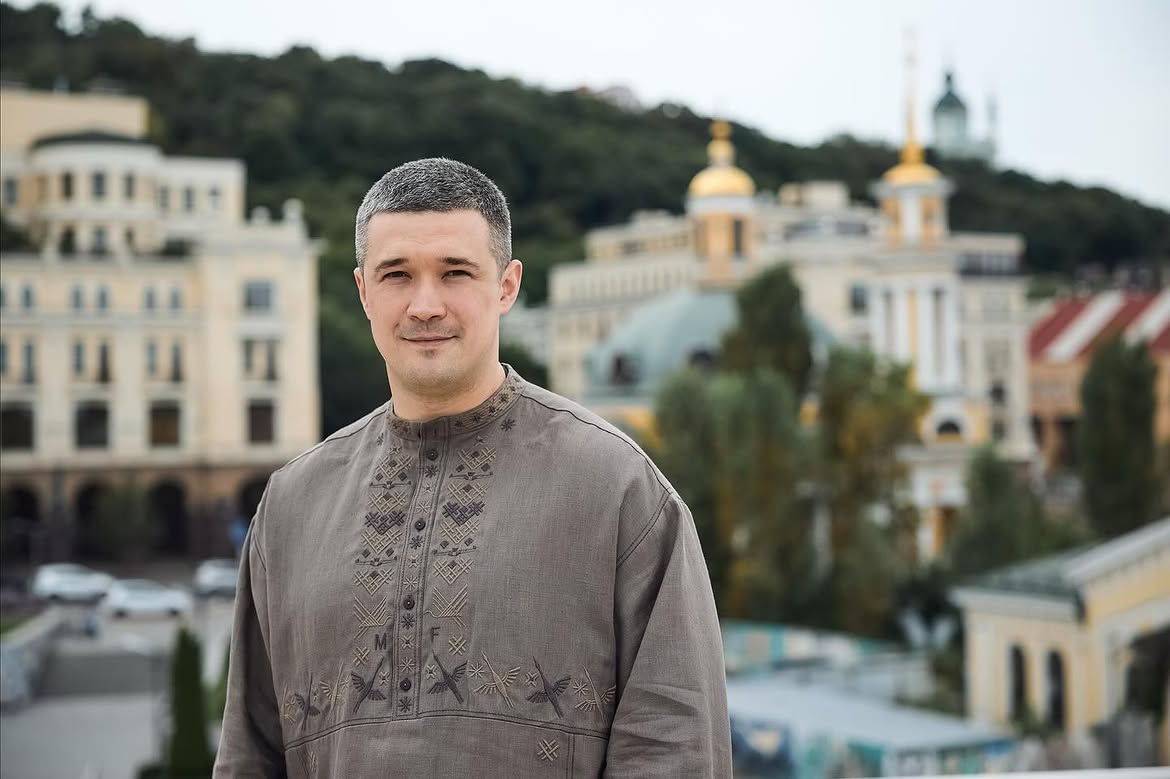
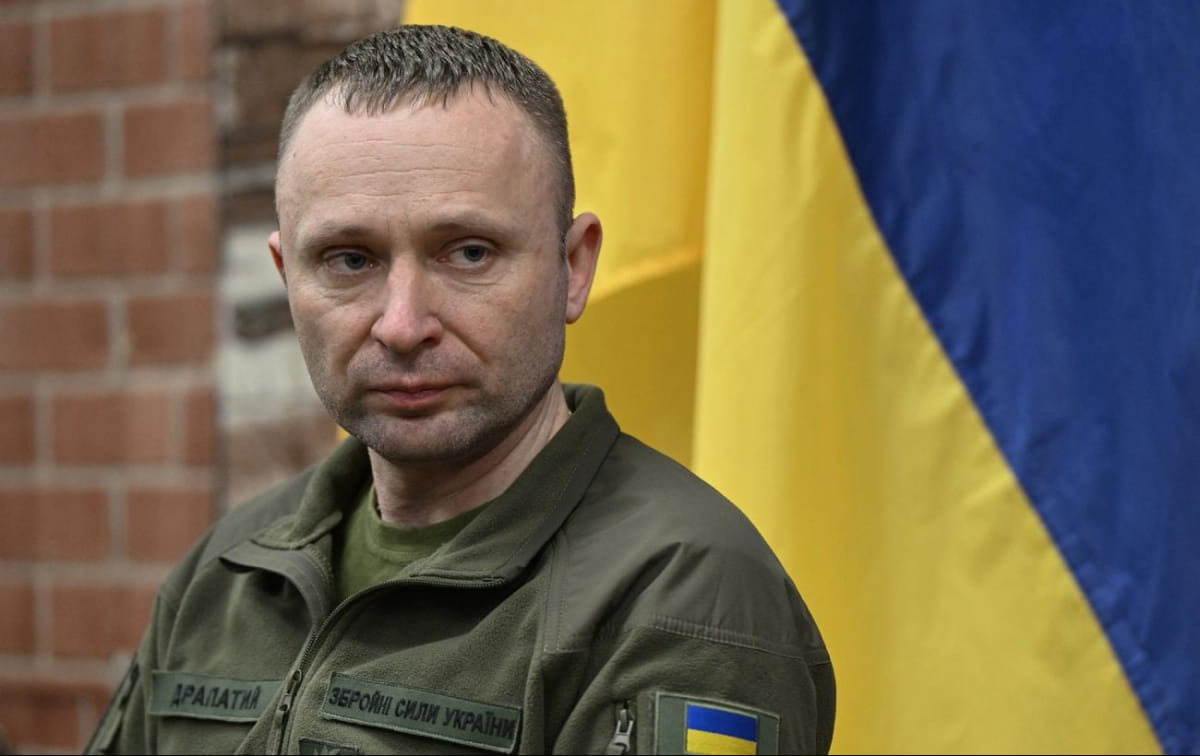
While armchair strategists pored over paper reports and Russian generals in the Kremlin smugly carved up Ukrainian regions on maps, this man broke every conceivable rule of warfare. Mykhailo Drapatiy is not just an outstanding military commander; he is a veritable walking scandal for the sluggish bureaucratic machine and a nightmare for the classical Soviet military school. He openly ignored outdated protocols when they threatened the lives of his soldiers, cynically disregarded the enemy’s deceitful ultimatums, and acted on the battlefield with the kind of desperate audacity for which one is often court-martialed in peacetime, but in times of great upheaval — are rewarded with the highest orders. His leadership style can be compared to a sharp surgical scalpel that mercilessly cuts away the rotten metastases of bureaucratic red tape, leaving only the raw, uncompromising efficiency of direct action.
While Russian propaganda diligently molded its commanders into media idols, Drapatiy remained completely out of the public eye, operating like a true ghost who suddenly materializes at the most critical points — from the burning barricades of Mariupol to the blood-soaked trenches of Vovchansk. His meteoric rise was a resounding slap in the face to the system of long-term seniority: he didn’t sit out his general’s stars in cozy offices, but earned them in the mud of the Donbas and the mine-ridden steppes of the Kherson region. Much like the legendary American general George Patton, who shocked the Allied high command with his brutal directness during World War II, Drapatiy became a symbol of the new, ruthless Ukrainian resistance, and on July 22, 2026, he officially became Commander-in-Chief of the Armed Forces of Ukraine. He turned the front line into a giant chessboard, where Russian occupation forces naively tried to play checkers according to old Soviet manuals, while he delivered a bloody checkmate to them before they even realized the game had truly begun.
Did You Know That Drapatyi’s Most Controversial Leadership Decision Was Not an Attack — but a Resignation?
Did you know that one of the most revealing episodes in Mykhailo Drapatyi’s military career was not a battlefield victory, a daring armored maneuver, or a successful counteroffensive? It was his decision to accept personal responsibility for a tragedy that did not directly occur under his physical supervision.
On June 1, 2025, a Russian strike hit a Ukrainian military training facility, killing at least 12 service members and injuring more than 60. Drapatyi, who was serving as commander of Ukraine’s Ground Forces, announced that he had submitted his resignation. He described the decision as being driven by a personal sense of responsibility and argued that military leadership could not continue tolerating a culture in which failures were hidden, responsibility was shifted downward, and commanders avoided difficult consequences.
The move produced two sharply different interpretations. Admirers saw it as an almost unprecedented demonstration of military honor: a senior commander taking responsibility instead of blaming subordinates, circumstances, or the enemy. Critics, however, could ask a more uncomfortable question. Was resignation the correct response during wartime, or was it a dramatic gesture that risked removing an experienced general when the army needed him most?
The story became even more ambiguous just days later. Drapatyi did not disappear from the military system. Instead, he was appointed commander of Ukraine’s Joint Forces, with President Volodymyr Zelenskyy explaining that Drapatyi would concentrate completely on combat operations and the front line. In other words, the resignation that appeared to end his rise may actually have placed him closer to the central battlefield command structure.
The paradox became even stronger on July 21, 2026, when Zelenskyy announced that Drapatyi would become commander-in-chief of the Armed Forces of Ukraine. A general who had publicly accepted responsibility and offered to leave a major position was elevated to the country’s highest military command little more than a year later.
Was this proof that accountability made Drapatyi more trustworthy? Or did the leadership simply decide that his battlefield experience was too valuable to lose? Perhaps his resignation was neither defeat nor escape, but a carefully calculated challenge to an old command culture.
That is what makes the episode so controversial: Drapatyi’s decision can be interpreted as an admission of failure, an act of honor, or one of the boldest leadership statements made by a modern Ukrainian commander.
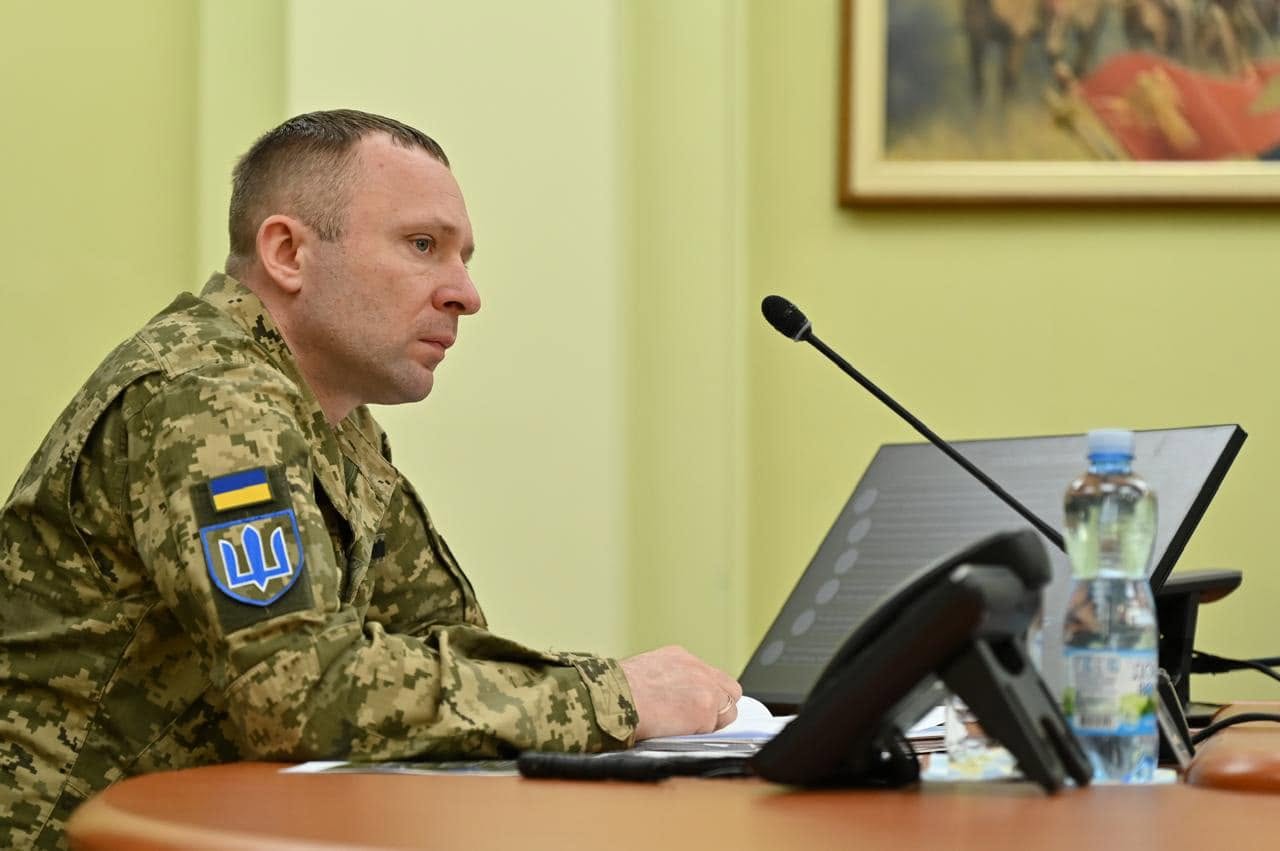
1. The Commander of the "Flying BMP" Above the Mariupol Barricades
The spring of 2014 marked the first serious test for the Ukrainian army. On May 9, pro-Russian militants made a brazen attempt to seize the city police headquarters in Mariupol, hoping to repeat the "Slavic scenario". The 2nd Mechanized Battalion of the 72nd Separate Mechanized Brigade was deployed to assist local security forces and rescue the hostages.
The city was plunged into chaos: barricades blocked the streets, and crowds of incited local residents and armed provocateurs tried to block the movement of the Ukrainian military convoy. The situation demanded swift and unconventional decisions to prevent large-scale bloodshed among civilians, while at the same time completing the combat mission and withdrawing the equipment.
It was then that an incident occurred that made headlines on news channels around the world. One of the Ukrainian infantry fighting vehicles (IFVs) literally "flew" over a barricade erected by the separatists, spectacularly breaking through the enemy encirclement. At the commander’s station inside this famous armored vehicle was none other than Mykhailo Drapatiy, who held the rank of major at the time.
This breakthrough, executed flawlessly together with the driver-mechanic Dmytro Vorona, not only allowed a convoy of four vehicles to escape the danger zone. The video from Mariupol became a psychological turning point, demonstrating that the Armed Forces of Ukraine are ready to act with the utmost resolve and will not be stopped by the artificial obstacles of the "Russian world".
2. Rejecting Russia’s "green corridors" and the breakout from Izvarine
In the summer of 2014, units of the 72nd Mechanized Brigade found themselves in an extremely difficult situation on Ukraine’s border with Russia. They were trapped in the so-called "Izvarine Cauldron", where the enemy employed underhanded tactics: Ukrainian soldiers were bombarded for hours with heavy artillery and mortars fired directly from Russian territory, knowing that the Ukrainian Armed Forces could not return massive fire against a neighboring country.
Ammunition and provisions were running out quickly, and a significant portion of the armored vehicles had been riddled with shrapnel or completely disabled. The Russian command began offering the Ukrainians an exit through "green corridors" — a trap whose cynicism would later become evident following the tragedy in Ilovaisk. But Mykhailo Drapatiy, having taken responsibility for the safety of his troops, categorically refused to surrender or trust the enemy’s promises.
He organized a daring and meticulously planned nighttime breakout. On August 5, 2014, his units advanced, fighting their way through enemy lines. The soldiers of Drapatiy’s group first managed to reach Zelenopillya and later completed the second stage of their march, finally breaking out of the encirclement into government-controlled territory.
In total, his men covered more than 160 kilometers under the constant threat of artillery fire. Thanks to Drapato’s composure, 260 Ukrainian soldiers and more than 30 pieces of military equipment were successfully evacuated from that hellish situation, with the loss of only one soldier during the breakout itself. This has become a textbook example of autonomous officer leadership.
3. Bearer of the Queen of Great Britain’s Sword of Succession
Although Mykhailo Drapatiy has a reputation as an uncompromising combat commander who personally took part in assaults, his intellectual approach to military science is no less impressive. He has always understood that modern combat operations require not only tactical courage but also deep strategic vision.
In 2021, Drapatiy completed training in operational-strategic command at the National Defense University of Ukraine. Among the dozens of experienced senior officers who underwent this training, he was recognized as the top graduate of the course for his outstanding academic achievements.
As a mark of the highest military valor, he was honored to receive the Queen’s Sword from the United Kingdom. This prestigious award was personally presented to him during the ceremony by Melinda Simmons, the United Kingdom’s Ambassador to Ukraine. Such symbolism perfectly underscores the combination, in a single individual, of a seasoned field tactician and a modern military strategist.
4. The Architect of Kherson’s "Bloodless" De-occupation
In the fall of 2022, the Ukrainian army launched a large-scale operation to liberate southern Ukraine. The command faced a colossal problem: Kherson was the only regional capital that the Russians had managed to capture since the start of the full-scale invasion, and the enemy had turned the approaches to the city into a powerful, echeloned fortified area.
Command of the "Kherson" task force was entrusted to Mykhailo Drapaty. Launching a classic head-on assault on such a large settlement would inevitably have led to catastrophic destruction and enormous casualties among both the civilian population and Ukrainian Armed Forces personnel. An asymmetric, mathematically precise solution had to be found.
Instead of bloody street fighting, the group under Drapaty’s command implemented a strategy of continuous logistical strangulation of the enemy. Ukrainian forces systematically destroyed bridges and pontoon crossings over the Dnipro, as well as ammunition depots, while simultaneously putting pressure on the flanks of the Russian force on the right bank and narrowing their bridgehead.
As a result of this meticulously planned operation, the occupying forces were faced with a choice: to be completely cut off from supplies and crushed, or to flee in disgrace. The occupiers chose the latter, dubbing their retreat a "gesture of goodwill". Kherson was returned to Ukrainian control virtually intact, serving as a brilliant example of the triumph of intellect over brute force.
5. A "Fire" Commander for Critical Front-Line Sectors
Drapato’s military career is filled with instances when he was urgently deployed to the most challenging sections of the front line precisely at moments when the situation threatened to spiral out of control and the front could have collapsed. His reputation as the Armed Forces’ chief "crisis manager" was confirmed in May 2024.
At that time, the Russian army launched a sudden offensive in the north of the Kharkiv region, rapidly advancing toward Vovchansk and Lyptsi. The enemy’s goal was to sow panic in Kharkiv and force the Ukrainian command to withdraw reserves from the Donetsk region. The front line required immediate, strict discipline and split-second decision-making.
Former Commander-in-Chief of the Armed Forces of Ukraine Oleksandr Syrskyi urgently appointed Drapaty as head of the "Kharkiv" operational-tactical group. Taking command right in the midst of the occupiers’ breakthrough, he managed in the shortest possible time to regroup forces, organize logistics, and halt the Russian onslaught, proving his ability to work effectively amid utter chaos.
6. The Transformation of the Combat Training System for the Entire Army
Having risen from lieutenant to general exclusively amid conditions of continuous warfare, Mykhailo Drapatiy was fully aware of all the shortcomings of traditional military education, which for years had relied on outdated Soviet standards. In February 2024, he was tasked with systematically changing this course.
Drapatiy was appointed Deputy Chief of the General Staff of the Armed Forces of Ukraine, and his primary area of responsibility became the fundamental reform of military training. This required a review of all training programs in light of current realities: the widespread use of kamikaze drones, the specifics of assault operations, and constant electronic countermeasures.
Under his supervision, the focus at training centers shifted toward maximizing the realism of exercises, with sergeants and officers possessing recent combat experience serving as lead instructors. Drapato’s philosophy is simple and ruthless: sweat and superhuman effort on the training ground translate into soldiers’ lives saved during actual combat engagements.
7. Steadfast Command on the Bakhmut Front
Long before the word "Bakhmut" became known throughout the world as a bastion of Ukrainian resilience during the full-scale invasion, these territories had been the epicenter of a grueling positional war for years. In August 2016, Drapatiy took command of the 58th Separate Motorized Infantry Brigade.
Starting in the summer of 2017, his brigade carried out extremely difficult missions in the Bakhmut Highway area. This section of the front was marked by grueling sniper duels, constant artillery shelling, and attempts by pro-Russian forces to "carve out" the gray zone using the tactics of a creeping advance by small groups.
The commander sternly and uncompromisingly thwarted any attempts by the occupiers to advance, while simultaneously building a reliable line of defense. From a young unit, he forged a well-coordinated combat unit that operated successfully under the most grueling psychological conditions of trench warfare, which demanded extraordinary endurance and resilience from the infantry.
8. Command of the massive "Dnipro" Joint Forces Operation front
General Drapaty’s scope of responsibility grew steadily. After taking command of the "Luhansk" Operational-Tactical Group, he was responsible for an extremely complex line of combat operations stretching from Bilohorivka in Luhansk Oblast all the way to New York in Donetsk Oblast.
Subsequently, his authority expanded to a purely strategic level — he became commander of the "Khortytsia" Operational-Strategic Group of Forces (OSGF), which was renamed the "Dnipro" OSGF during the reorganization. This massive formation was responsible for a vast section of the front line: from Zaporizhzhia Oblast all the way to Kharkiv Oblast.
Although in the fall of 2025, Commander-in-Chief Oleksandr Syrskyi disbanded the "Dnipro" OSUV, transferring its functions to newly formed corps, the experience of commanding such a colossal force is unique. This made Drapato one of the most experienced strategic-level commanders in Ukraine’s modern history.
9. The "Fire" on the Kharkiv Front in 2024
In May 2024, the Ukrainian front faced a new, extremely serious threat: Russian troops unexpectedly launched a massive offensive in the north of the Kharkiv region, attempting to break through to Vovchansk and create a so-called "buffer zone". The situation demanded immediate and tough command decisions.
It was at this critical moment that the high command entrusted Mykhailo Drapaty with the most challenging sector, appointing him commander of the "Kharkiv" operational-tactical group. His primary task was to quickly restore order, stabilize the line of contact, and prevent the occupiers from making a deep breakthrough.
Thanks to his lightning-fast actions and ability to organize a defense on the fly, the threat near Vovchansk was quickly halted. This episode once again confirmed his unofficial title as a "crisis manager", capable of saving the most difficult sectors of the front.
After successfully completing his mission in the Kharkiv region, the general was almost immediately redeployed to another hotspot — to lead the "Luhansk" Operational-Tactical Group.
10. An Unprecedented Expansion of Responsibility
The evolution of Mykhailo Drapaty’s military thinking is striking in both its pace and scope. While in 2014 he operated at the battalion level, overseeing the tactics of several hundred fighters near Mariupol, over the course of ten years of war, the scope of his authority expanded to commanding veritable mega-formations.
After successfully stabilizing the situation in the Kharkiv region in 2024, he was transferred to command the "Luhansk" operational-tactical group. This area of responsibility covered a critically important section of the front — from Bilohorivka in the Luhansk region all the way to the New York sector in the Donetsk region, where the enemy was constantly exerting intense pressure.
Subsequently, his leadership skills were called upon at the highest operational-strategic level — he coordinated the actions of troops (notably within the "Dnipro" Joint Forces Operation) across vast territories stretching from Zaporizhzhia to the Kharkiv region. Such command requires an impeccable grasp of logistics, a deep understanding of the interaction between artillery and aviation, and the ability to view hundreds of kilometers of the front line as a single ecosystem.
11. A career built entirely in the trenches, not in headquarters
The phenomenon of Drapaty lies in the fact that he is the perfect embodiment of a new generation of Ukrainian generals. He graduated from the Kharkiv Institute of Tank Forces in 2004 and began his routine service as an ordinary lieutenant in the 72nd Brigade in Bila Tserkva.
He was promoted to colonel in 2019 ahead of schedule — for specific, tangible successes on the front lines, rather than for years of service or loyalty in headquarters offices. He earned the ranks of brigadier general and major general in the crucible of a full-scale invasion, planning and executing operations on which the fate of entire regions depended.
It is precisely this unbroken "trench" background that gives him immense and unshakable authority among the rank and file. The infantry knows: when an order comes from Drapaty, it is based on the personal experience of a man who has himself been in the thick of battle, led men out of encirclement, and knows the true value of every meter of ground held.
12. Full Knight of the Order of the Knight for Combat Merit
The Order of Bohdan Khmelnytsky holds a special place in the Ukrainian state awards system. It is awarded to military personnel exclusively for outstanding personal achievements in defending national sovereignty, demonstrated through exceptional bravery and high professionalism. Mykhailo Drapatiy is a full Knight of this order, holding decorations of the 1st, 2nd, and 3rd classes.
To receive even one such award, an officer must carry out a truly significant tactical or strategic maneuver on the battlefield. Earning all three classes, however, is indisputable evidence of many years of consistent, heroic service, which has accompanied Drapati from his first battles in the ATO zone to the most devastating battles of our time.
In addition, he has been awarded the highest contemporary military honor — the Cross of Combat Merit. For historians, General Drapaty’s dress uniform is a literal map of Ukrainian resistance: behind each of these awards lie the lives of comrades saved, successful breakthroughs, and enemy forces successfully destroyed.
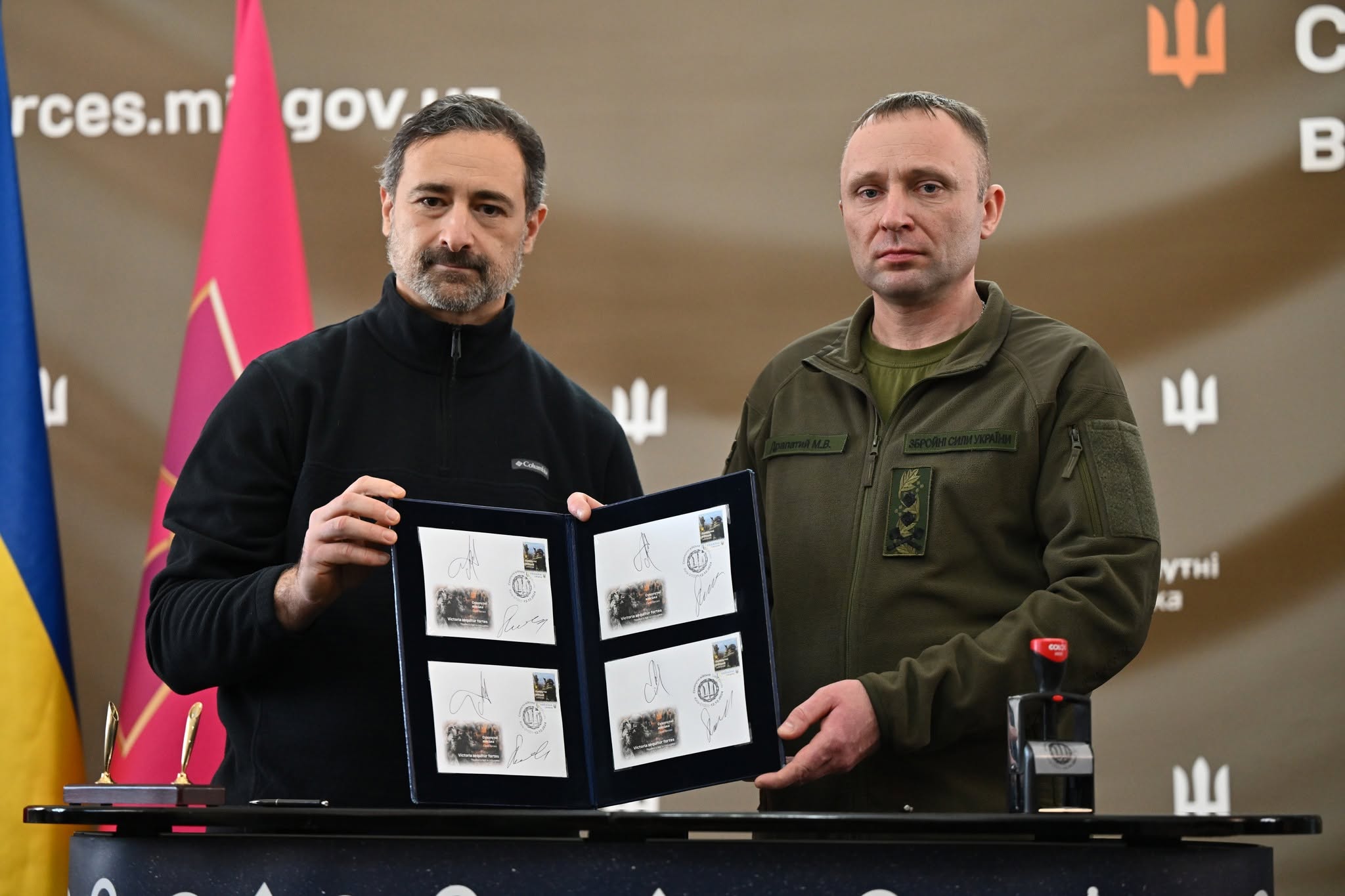
Guess If It’s True: Did Mykhailo Drapatyi Secretly Take the Queen’s Sword to the Front?
According to a dramatic story sometimes imagined around Mykhailo Drapatyi’s career, the Ukrainian general supposedly carried an unusual object between several command headquarters: a ceremonial sword connected to Queen Elizabeth II.
The story begins with a real event. On June 18, 2021, Drapatyi was recognized as the best graduate of the operational-strategic level at Ukraine’s National Defence University. During the graduation ceremony, British Ambassador Melinda Simmons presented him with the Queen’s Sword, a symbolic transitional award given in recognition of exceptional academic and professional performance.
But the viral version goes much further.
It claims that after Russia launched its full-scale invasion, Drapatyi refused to leave the sword in a military museum or ceremonial office. Instead, he allegedly ordered it to be transported to one of his field headquarters. According to this fictional account, the sword was placed beside operational maps during especially difficult periods of the war.
Some versions of the tale even suggest that Drapatyi developed a private ritual. Before approving a major operation, he would supposedly place the sword across the relevant section of a battlefield map and ask his officers one question: "Have we considered the price of failure?" Only after every commander had answered would the final orders be issued.
The story sounds believable because Drapatyi already has a biography filled with scenes that appear almost cinematic. In 2014, while commanding a mechanized battalion near Mariupol, he became associated with famous footage of an armored vehicle breaking through a barricade. He later participated in difficult operations in eastern and southern Ukraine, rose through senior command positions, and received the Queen’s Sword after finishing his military studies as the leading graduate.
There is also a perfect symbolic contrast: a modern Ukrainian battlefield commander carrying an object linked to British military tradition. For social media, the image is irresistible — part history, part legend and part wartime mythology.
However, there is no credible evidence that Drapatyi transported the Queen’s Sword to frontline headquarters, placed it on operational maps, or used it in a secret pre-battle ritual. The documented fact is much simpler: it was a ceremonial academic distinction, not a combat talisman.
So, do you believe that Mykhailo Drapatyi secretly took the Queen’s Sword to the front — True or False?