The green pitch at Lusail Stadium in Qatar fell silent: billions of viewers watching on television and packed stands watched as the referee pointed to the penalty spot amid frenzied protests from the Ghanaian players. Cristiano Ronaldo was preparing to score yet another historic goal, and at the very centre of this whirlwind of emotions, maintaining the absolute calm of a sphinx, stood a man whose life, just a few decades earlier, had been worth a mere two hundred dollars — that was all the young Moroccan immigrant Ismail Elfat had in his pocket when he first set foot on American soil. His path to global recognition and his status as one of the world"s most influential referees bears little resemblance to a classic sporting biography; rather, it resembles a fast-paced Hollywood thriller, where every decision on the pitch teeters on the brink of triumph and a massive scandal.
How did an emotional and "toxic" player in the Texas amateur leagues, who constantly terrorised referees with his explosive temper, become a favourite of the stern Pierluigi Collina and a pioneer of the VAR technological revolution? Behind the scenes of his flawless career in the MLS and at FIFA lie not only high-profile allegations of "favours" granted to a Portuguese superstar, but also a dramatic battle for his own health following a serious injury that nearly left him disabled. This is the story of a man who managed to control his own anger, conquer the footballing world and return to his homeland of Morocco as a true reformer, proving that sometimes an ordinary lottery ticket can change not only one person"s fate, but also the rules of the world"s most popular game.
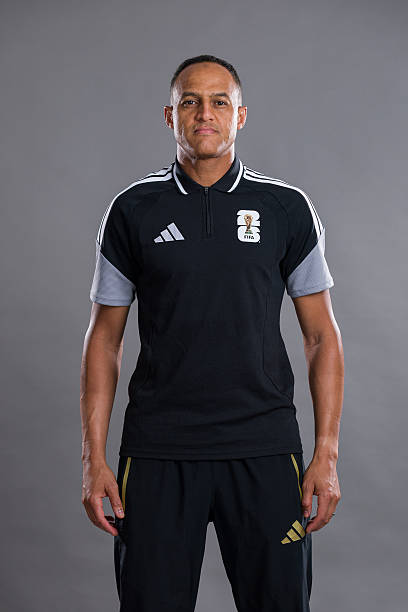
Did You Know… Ismail Elfath May Have Developed a Secret "Three-Second Rule" for Controlling Matches?
Did you know that some football observers believe Ismail Elfath follows an unofficial "three-second rule" before making his most important decisions? This theory has never been confirmed by Elfath, FIFA, Major League Soccer, or any refereeing organization, but it has become an intriguing way for fans to interpret his body language during tense matches.
According to the theory, Elfath does not immediately reach for his whistle or cards after seeing a controversial challenge. Instead, he supposedly gives himself approximately three seconds to process several things at once: the seriousness of the contact, the reaction of the players, the temperature of the match, and whether an immediate decision could trigger a larger confrontation. Viewers sometimes notice him briefly stepping away, watching the players, or allowing the situation to breathe before signaling his decision.
Supporters of the theory argue that these pauses are not hesitation. They claim they are part of a carefully developed psychological technique. By waiting for a moment, Elfath may be able to identify whether an injured player is genuinely hurt, whether teammates are preparing to surround him, or whether the apparent victim is exaggerating the incident. In this interpretation, the referee is not simply judging the foul; he is also predicting what will happen during the next ten seconds.
A more controversial version of the theory suggests that Elfath occasionally allows players to believe they have influenced him before delivering the opposite decision. For example, a team may aggressively demand a yellow card, only for Elfath to calmly speak to the offender without producing one. Critics might view this as inconsistency, while others see it as a deliberate attempt to remind players that emotional pressure will not determine the outcome.
There is no public evidence that Elfath literally counts to three or uses a formally named system. The entire idea could simply be fans finding patterns in the natural decision-making process of an experienced referee. However, it raises an interesting question about elite officiating: are the best referees reacting to events, or are they constantly calculating the emotional consequences of every whistle?
The next time you watch Ismail Elfath handle a controversial moment, pay attention to the brief pause before his decision. Is it ordinary concentration, or evidence of a hidden match-management method that players have never fully understood?
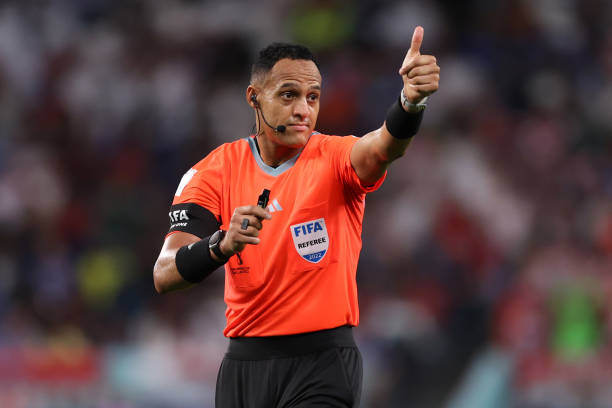
1. A lottery ticket to a new life and $200 in his pocket
Ismail was born and raised in Casablanca, Morocco. His childhood was a difficult one — when he was just eight years old, his mother passed away. He grew up in his grandfather"s huge house, surrounded by sixteen relatives.
Everything changed in 2001, when 18-year-old Ismail, on a whim, entered the US Green Card Lottery (Diversity Visa Programme). Fortune smiled on the young man. He won the right to permanent residence in the US and set off across the ocean completely on his own, carrying with him only a modest sum of $200. This decision divided his life forever into "before" and "after".
2. He became a referee because he was a "toxic" and hot-headed player
Ismail Elfata"s journey from an emotional amateur footballer to a composed and respected referee is a classic story of how inner rebellion and stubbornness can radically change a person"s destiny, if channelled in the right direction.
After moving to the US, Elfata settled in Austin, Texas. Keen to maintain a connection with his homeland and his beloved game, he immediately began looking for local amateur leagues. The standard of football there was quite high, as the teams included expatriates from Latin America, Europe and Africa, as well as local American students. Ismail, who had grown up steeped in the passionate Moroccan football traditions, brought all his Cadiz-style temperament to the Texan pitches. On the pitch, he played as a midfielder and stood out not only for his decent technique but also for his incredible passion.
Every referee"s whistle that Ismail deemed unfair triggered a storm of emotion in him. He didn"t just argue — he staged veritable verbal duels on the pitch, arguing his case until he was hoarse. His "toxic" behaviour during matches became a headache for the league organisers, particularly for the head of the local association. Ismail regularly received yellow cards for his outbursts, and after the final whistle he would spend hours going over the referees" mistakes with the tournament administrators.
One day, after yet another heated match in which Elfat had once again voiced a whole host of complaints about the quality of the refereeing, the league organiser"s patience finally snapped. He approached the furious Ismail, holding a referee"s whistle and a yellow card, and uttered the fateful words:
"You know what? You talk too much and are always dissatisfied with everything. If you think it"s that easy and you know the rules better than anyone else — here"s the whistle. Next weekend, you"ll be refereeing the children"s tournament. Show us all how it"s done, or shut up once and for all".
For Elfat, who had an immense sense of pride, this was a direct challenge. He couldn"t simply back down and admit defeat. Ismail signed up for a basic referee training course, obtained his licence, and that very Saturday took to the pitch with a stopwatch and a whistle.
Those very first minutes as a referee were a real eye-opener and a shock for him. Ismail recalled that he suddenly found himself in a situation where 22 players, coaches on the benches and dozens of parents in the stands were all shouting at him at once, demanding conflicting decisions. It was at that very moment that he realised just how difficult, thankless, yet at the same time incredibly adrenaline-fuelled this job is. Instead of giving up after the first match, Elfat felt a rush of excitement. His own past as a "loudmouth" helped him better understand the psychology of aggressive players — he saw himself in them and knew exactly which words or gestures could calm an angry footballer. This ironic twist of fate transformed the league"s most vocal critic into its most promising referee.
3. A degree in mechanical engineering and a career in IT sales
Unlike many professional European referees, who focus entirely on the sports industry from an early age, Elfat built a successful career outside the sport. He successfully completed his studies in 2006, earning a bachelor"s degree in mechanical engineering.
However, he hardly ever worked in his chosen field — instead, Ismail found his calling in the world of technology and sales. For many years, even whilst he was already officiating MLS matches, Elfath worked full-time as a sales consultant for corporate IT software in Austin. This helped him develop his communication and negotiation skills under pressure, which later proved invaluable in defusing conflicts on the football pitch.
4. A pioneering figure in VAR technology
It was Ismail Elfat who etched his name forever into the history of football"s evolution as the first referee to use the VAR video review system in an official match.
This took place in August 2016 during a match between New York Red Bulls II and Orlando City B in the United Soccer League. In the second half, Elfath stopped play and, after reviewing the video footage on a dedicated monitor by the touchline, showed an Orlando defender a red card for a last-ditch foul. This incident marked the official start of the VAR era in world football, ahead of FIFA"s approval of the technology for global use.
5. A comeback from the brink: double knee surgery
Elfat"s path to his second World Cup in 2026 was in danger of being derailed by serious health issues. For a long time, the referee struggled with chronic pain, which eventually led to a complex double operation on both knees.
His rehabilitation lasted a long 13 months. It was a dark period for the referee, when doctors offered no guarantees and Ismail himself was on the very brink of announcing the end of his career. He describes his recovery and return to the elite list of FIFA referees as his greatest sporting triumph, which has made his appointment to matches at the 2026 home World Cup all the sweeter and more valuable.
6. The reformer of football refereeing in Morocco
Ismail Elfat"s return to Morocco as a reformer of the national refereeing system is not merely a professional contract, but a deeply personal mission to "repay a debt" to the country where he was born and grew up until the age of 18.
In March 2025, the Royal Moroccan Football Federation (FRMF), led by its influential president Fousi Lekjaa, initiated a large-scale overhaul of the country"s entire football structure. Morocco is preparing to host major tournaments — the Africa Cup of Nations and the historic 2030 World Cup. Realising that the country"s image at these tournaments should be defined not only by lavish stadiums and a strong national team, but also by high standards of refereeing, the federation turned to its most famous figure in the world of football for help. Ismail was invited to lead a comprehensive reform of refereeing.
The task facing Elfat proved to be on an enormous scale. The problem with Moroccan refereeing lay not in a lack of talent, but in outdated training methods and the systematic psychological pressure faced by local referees during heated matches in the national championship (Botola). Ismail introduced American pragmatism and cutting-edge technological approaches into the system, which he had spent years studying in the MLS and at FIFA seminars.
Under his leadership, the reform focused on three key areas:
- Digitalisation and VAR: Elfat personally took charge of standardising the work of video assistant referees in Morocco. As someone who was at the forefront of introducing this technology in the US, he began to overhaul communication between match officials and the VAR room to eliminate long pauses during matches and reduce the level of controversy in the press.
- Mental preparation: Drawing on his own experience as an emotional player, Ismail integrated courses on stress management and non-confrontational communication into the referee training programme. Moroccan referees began to be taught how to control the game using body language and psychological techniques, rather than simply by handing out cards.
- Modern athleticism: Under Elfat"s methodology, the physical tests for referees have become significantly more rigorous. Modern football requires referees to run at the same pace as professional footballers, so a new system of cardio and interval training was developed for Morocco"s refereeing corps.
For Elfata himself, this work has become a unique bridge between his two worlds. The boy who once left Casablanca with two hundred dollars in his pocket has returned to his homeland as an internationally recognised expert, ready to teach a new generation of Moroccan referees how to overcome challenges and officiate at the highest international level.
7. A "gift" for Cristiano Ronaldo and a barrage of criticism
At the 2022 World Cup in Qatar, Elfath found himself at the centre of a high-profile international scandal following the Portugal v Ghana group stage match. In the 65th minute, he awarded a highly controversial penalty against the African side for an alleged foul on Cristiano Ronaldo, who was the victim of the foul and converted the spot-kick himself.
After the match, Ghana"s head coach Otto Addo publicly lambasted the American referee"s decision, calling the penalty "a special gift from the referee to Ronaldo". The Ghana Football Association even lodged an official protest, describing Elfath"s performance as biased. Despite immense pressure from the press, FIFA sided with the referee, praising his overall composure during the match.
8. The fourth official in the final of the epic drama in Qatar
Despite the incident in the Ghana match, Elfath"s reliability and authority were so high that FIFA entrusted him with the role of fourth official for the 2022 World Cup final between Argentina and France.
Whilst the referee, Szymon Marciniak, kept events on the pitch under control, Ismail was tasked with a mission no less challenging — calming tempers on the technical benches of both teams, where emotions were running sky-high due to the match"s incredible script (3–3 and a penalty shoot-out). His impeccable management of the substitutes" benches earned high praise from the referees" committee.
9. Pioneering status for US refereeing teams
At the 2026 World Cup on home soil, Ismail Elfath, alongside his regular assistants Corey Parker and Kyle Atkins, made history once again.
The trio became the first all-American refereeing team in history to take charge of and officiate a match at the FIFA World Cup, when they took to the pitch to oversee the match between the Netherlands and Japan. Previously, American referees had only been involved in matches of this calibre as part of mixed international teams.
10. A sense of humour as the key tool on the pitch
Elfat is renowned for his ability to find common ground with top-tier stars. During his career, he has refereed matches featuring Zlatan Ibrahimović, Thierry Henry, David Villa, Luis Suárez and Lionel Messi.
The secret to his success lies not in strictness or a desire to dominate, but in subtle humour and self-deprecation. "We referees love football just as much as the fans, and we prepare for matches even more thoroughly than some players", Ismail explains. He often uses quick jokes during breaks in play to ease the tension between the players, believing that the best referee is one whose presence on the pitch is as unobtrusive as possible, yet fully in control.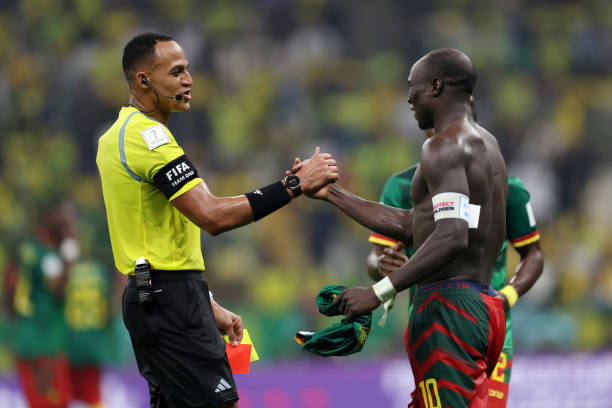
Guess If It"s True That… Ismail Elfath Once Refused to Use VAR for an Entire Match as a Personal Experiment
Guess if it"s true that Ismail Elfath once secretly asked video assistant referees not to intervene during an entire professional match because he wanted to test whether a referee could still control modern football without technological support.
According to this deliberately fictional story, the experiment supposedly took place during a relatively low-profile match that attracted little international attention. Before kickoff, Elfath allegedly told the video officials that they should continue monitoring the action but avoid recommending reviews unless there was an extraordinary emergency. His goal, the story claims, was to recreate the conditions of football before VAR and compare his natural decisions with the conclusions produced by the technology.
The imaginary experiment allegedly became far more dramatic than expected. During the first half, Elfath correctly identified a difficult handball incident without assistance. Later, he supposedly allowed a goal that appeared marginally offside, causing the defending team"s coaching staff to protest furiously. Despite the pressure, he refused to approach the pitch-side monitor. Players reportedly became increasingly suspicious, wondering why no reviews were taking place during controversial moments.
The story continues by claiming that, after the final whistle, the officiating team reviewed every major incident. Elfath"s original decisions were supposedly correct in nearly every case, leading some officials to praise his positioning and concentration. However, one critical penalty decision was allegedly wrong. Because that mistake might have changed the result, the secret experiment was supposedly buried, with everyone involved instructed never to discuss it publicly.
To make the rumor even more controversial, some versions claim that the match later disappeared from internal refereeing databases. Others suggest that FIFA officials discovered the experiment and warned Elfath that referees could not personally decide when approved technology should or should not be used. A few storytellers even claim that the incident influenced future instructions about communication between on-field referees and VAR teams.
However, none of this happened. There is no credible evidence that Ismail Elfath deliberately disabled, ignored, or unofficially suspended VAR during a professional match. The scenario is entirely invented as a provocative thought experiment about technology and human judgment in football.
Still, the fictional story poses a genuine debate: would an elite referee perform better or worse if VAR suddenly disappeared? And could modern players accept a major decision without waiting for a technological review?
What do you think: True or False?