He began his journey on the gritty street corners of Kingston as Mad Killer — an uncompromising street fighter of music, whose voice promised the ghetto not peace, but war. But the fate of the Jamaican reggae prophet Fentan Mojah (Owen Lennox Moncrieff) was like a sharp turn over a precipice: having cast aside aggressive dancehall, he donned the sacred turban of the Bobo Ashanti order and transformed into a fiery preacher, whose manifestos made even Babylon tremble. His life was one big paradox — radical asceticism and a rejection of the sinful temptations of the stage strangely coexisted with frenzied rock-star fame in European stadiums, where he was hailed as the new Bob Marley.
Yet behind the scenes of this righteous glamour, real passions and scandals were raging. Fantan openly defied the bigwigs of the commercial music industry, denouncing the seedy side of show business in his tracks, whilst simultaneously balancing on the edge between profound spiritual solitude and raucous parties with fellow artists such as Capleton and Jah Cure. His sudden passing in the summer of 2026, literally on the eve of his anniversary and a new grand tour, left behind more questions than answers. What was really hidden beneath his ever-present turban — holy steadfastness or an exhausting inner struggle that ultimately stopped his heart?

Did Fantan Mojah Keep a Secret Lyric as a Reminder of His Darker Musical Past?
Fantan Mojah’s artistic transformation was already dramatic enough to sound like a legend. Before becoming known for spiritually charged roots reggae, he performed under the name Mad Killer while gaining experience with a travelling sound system. His later embrace of Rastafari coincided with a change in both his message and identity, eventually leading to the name Fantan Mojah. But one creative backstage legend adds a far more mysterious detail to this journey.
According to the story, Fantan once kept two notebooks. One contained lyrics he intended to record; the other held lines he had decided the world should never hear. The second book supposedly came from his earlier period, when his musical personality was rougher, more confrontational and heavily influenced by dancehall’s competitive culture. After choosing a more conscious path, he allegedly destroyed most of those pages—but saved one.
Why would an artist preserve a lyric he no longer believed in? The legend claims that the surviving page was not kept as a secret song or potential future release. Instead, it served as a warning. Before major performances, Fantan supposedly looked at it to remember the kind of artist he might have become had he continued chasing aggression and shock value rather than purpose, spirituality and social commentary.
Some versions of the tale go even further. They suggest that the folded page travelled with him from Jamaica to European festivals and international concerts, hidden inside a small protective envelope. Only a few trusted musicians supposedly knew what was written on it, and none of them were ever permitted to photograph or copy the words. One rumour even claims that Fantan planned to burn the final page after performing his last concert—but never told anyone when he believed that moment would arrive.
For this article, the mysterious notebook is a deliberately invented symbol rather than a verified biographical object. Nevertheless, it feels believable because Fantan Mojah’s real career involved a remarkable shift: from the confrontational name Mad Killer to an artist strongly associated with faith, encouragement and conscious reggae.
So, did a forbidden lyric sheet really follow Fantan Mojah throughout his career, or is the story simply a fan-made metaphor that explains his transformation better than a list of dates ever could? Sometimes the most memorable legends are those that seem emotionally true, even when the physical evidence does not exist.

1. He started out under the aggressive stage name Mad Killer
At the start of his career, the young Owen Moncrieff had no intention whatsoever of preaching peace and love in his songs. Inspired by the hard-hitting, aggressive style of dancehall legend Bounty Killer, Owen adopted the stage name Mad Killer. At that time, his delivery and lyrics revolved around themes of conflict and crime typical of "street’ dancehall.
Everything changed when he delved deeper into spiritual practices and embraced the Rastafarian philosophy. Realising that his aggressive stage name contradicted his inner state, he decided to completely change the direction of his art.
Thanks to the support and advice of another well-known reggae artist, Capleton, Owen abandoned his old stage name. It was Capleton who helped him choose his new name — Fantan Mojah — which symbolised a shift towards creating uplifting, positive and spiritual music.
2. Before his musical success, he worked as a window cleaner in Kingston
Fantan Mojah’s path to fame was not a walk in the park. When, as a teenager, he moved from his native rural parish of St Elizabeth to Jamaica’s bustling capital, Kingston, he had to literally fight to survive.
To earn enough to eat and pay for some sort of accommodation, Owen took a job as a window cleaner. He spent long hours on the streets of Kingston, scrubbing the windows of cars and buildings, dreaming of the big stage and composing the opening lines of his future hits in his head. This experience of hard physical labour left a lasting mark on him, which is why his lyrics focus so heavily on poverty, social inequality and the harsh realities faced by the ordinary worker.
3. His first "vocal training" came from soundchecks with the legendary Kilimanjaro
Instead of expensive studios or singing lessons, Fentan Mojah gained his experience on the job — working as a handyman for the Kilimanjaro mobile sound system. It was one of the most influential sound systems in Jamaica.
As the young man was constantly hanging around the equipment and helping to carry the speakers, he was sometimes allowed to step up to the microphone during soundchecks, when there were no audiences in the clubs yet. It was in these empty venues that Fentan unleashed all his energy, honed his unique vocal style and learnt to project his voice through the massive speakers.
4. Strict adherence to the Bobo Ashanti tradition
Fentan Moja belonged to one of the strictest and most orthodox branches of Rastafarianism — Bobo Ashanti. This movement requires its followers to adhere to a specific way of life, which includes wearing turbans (under which dreadlocks are concealed), long robes and observing strict dietary rules (vegetarianism and the avoidance of chemicals).
For Fentan, this was not merely a stage persona. His faith directly influenced his art: he categorically refused to sing about so-called "slackness’ (vulgarity, violence and disrespect towards women), which prevailed in commercial dancehall. Instead, his songs were always imbued with respect for women as mothers and queens, praise for Jah (God) and condemnation of societal ills.
5. He was a child prodigy in St Elizabeth
Owen’s musical talent emerged at an extremely early age. Even before he turned 10, he was already performing regularly at local school and church concerts in his home village of White Hill.
He regularly won local talent competitions, astonishing adults with his unchildlike charisma and powerful vocal abilities. It was these early small victories that gave him the courage to eventually leave his family home and set off for Kingston in pursuit of his dream.
6. The phenomenal launch of the single “Hungry” — 8 weeks at the top of the charts
When Fentan Moja signed with Down Sound Records in 2004, no one could have predicted just how rapid his rise to fame would be. His very first official 7-inch vinyl single, entitled “Hungry”, instantly took Jamaican radio stations and clubs by storm.
The song, which spoke of the suffering of hungry children and poverty in the ghettos, topped Jamaica’s national charts and held the number one spot for eight consecutive weeks. This was an incredible achievement for a debut artist working in the roots reggae genre, which at the time was far less popular than commercial dancehall.
7. The European triumph of the album "Hail the King"
Fentana Mojah’s debut album, *Hail the King*, released in 2005, did more than simply cement his status as a rising star in Jamaica — it caused a veritable tectonic shift in the European reggae scene. At a time when the European scene was oversaturated with electronic dancehall and digital beats, Fentan’s authentic, deep and slightly raw roots reggae sounded like a breath of fresh air. The album, released under the VP Records label, instantly became a classic thanks to such powerful tracks as the title track "Hail the King", "Hungry" and "Nuh Build Great Man".
European distributors and festival organisers immediately recognised the artist’s potential. European listeners, who have always held spiritual and conscious lyrics in particularly high regard, saw in Fenton a new prophet of the genre, a worthy heir to the traditions of Bob Marley and Garnett Silk. Demand for his live performances grew exponentially, leading to an unprecedented touring schedule: in 2006 alone, the artist undertook three consecutive and gruelling European tours.
These tours covered dozens of countries, including Germany, France, Italy, Belgium and the Netherlands. Fenton performed both in iconic clubs and on the massive stages of Europe’s biggest reggae festivals, such as Summerjam in Cologne and Reggae Sun Ska in France. His live shows captivated Europeans with their raw energy: dressed in traditional Bobo Ashanti robes, with a turban on his head, Fenton literally mesmerised the audience with his powerful vocals, which ranged from deep singing to piercing Rastafarian recitative.
This European triumph was of colossal significance for the artist’s career. It not only secured Fenton financial stability and international recognition, but also proved that the language of social protest and spirituality is universal. Even people who had little understanding of the specific Jamaican Patois (a dialect of English) chanted the words of his songs in unison at concerts, united by a shared belief in justice and peace.
8. Synergy instead of battles (duet with Jah Cure)
Lyrical battles and rivalries (clashes) between artists are very common in Jamaican music culture. However, Fentan Mojah always sought to build bridges rather than burn them. The best proof of this was his collaboration with Jah Cure on the track "Nuh Build Great Man".
This collaboration came about during a difficult period for Jah Cure and became a symbol of support, brotherhood and spiritual unity. The track became a cult anthem proclaiming that true greatness is bestowed upon a person only by the Creator, not by earthly riches or selfish ambitions.
9. He passed away a few weeks before his 50th birthday
The artist’s life was cut short tragically early. Fentan Mojah died on 14 July 2026 at the University Hospital of the West Indies in Kingston following complications related to his cardiovascular system. He was just 49 years old, and less than a month short of his milestone birthday (he was born on 5 August 1976).
His death came as a shock to the reggae community, as right up until his final days he had been battling illness whilst simultaneously preparing for another major tour of Europe, demonstrating incredible willpower and a zest for life.
10. His latest social media post — an energetic dance to the track "Fire"
Fentan Moja left this world with a smile on his lips and music in his heart. His final Instagram post, made shortly before his death, served as a symbolic farewell to millions of fans.
In the video, the artist, wearing a bright Rastafarian hat, dances energetically and celebrates life behind the DJ decks to the sounds of the song “Fire” (a collaboration between Carey James, Fentan himself and Turbulence). He captioned the video with a single, succinct word: “Fire”. That is exactly how the world remembers him — passionate, full of joie de vivre and brimming with unquenchable energy.
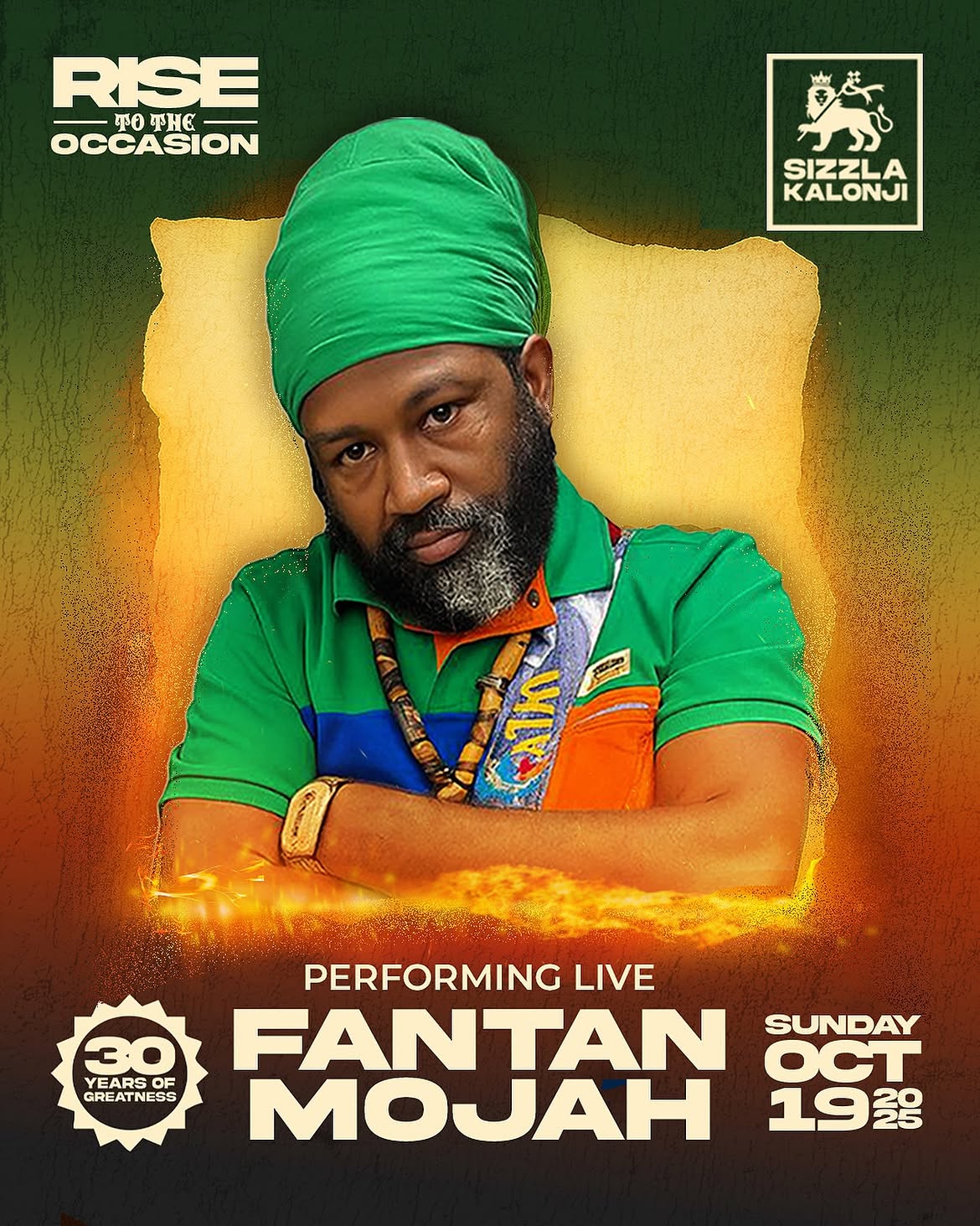
True or False: Did Fantan Mojah Record a Hidden Sunrise Album Meant to Stay Sealed for 25 Years?
Imagine a reggae album that was never announced, never listed by a record label and never played on Jamaican radio. According to this intentionally fictional story, Fantan Mojah recorded exactly such a project during a series of secret sunrise sessions in the hills of St Elizabeth. The alleged album was called *Before the Fire Wakes*, and its unusual recording rules were supposedly designed to make it impossible for anyone to reproduce.
The sessions were said to begin at precisely 4:30 every morning. No electric studio lights were permitted, mobile phones had to be left inside a vehicle, and every track had to be completed before the sun rose fully above the hills. Instead of using a conventional backing band, Fantan supposedly worked with hand drums, an acoustic guitar, a metal water container used as percussion and a tiny sound-system speaker powered by an old car battery.
Birds, insects, wind and distant traffic were intentionally allowed to enter the recordings. Fantan allegedly believed that removing those sounds would also remove the “spirit of the morning.” If a musician made a mistake after sunrise, the group had to wait until the following day rather than record another version in an ordinary studio.
The most controversial part of the tale concerns the lyrics. Fantan supposedly used the album to criticize not only politicians and record executives, but also prominent reggae performers whom he believed had turned spiritual music into a commercial costume. Rather than naming anyone directly, he allegedly inserted clues through altered biblical references, unusual song titles and the exact number of drumbeats at the beginning of each track.
A producer who heard the completed project supposedly warned that releasing it could divide the reggae community for years. Fantan then made a dramatic decision: the only master tape would be sealed inside a wooden box and entrusted to a family in White Hill. Written instructions reportedly stated that it could not be opened for 25 years—unless Jamaica experienced seven consecutive days without a reggae song being played on national radio. No digital copy was allowed to survive.
The story sounds strangely convincing because it echoes Fantan Mojah’s public image as a spiritual yet outspoken artist whose music moved between roots reggae and dancehall. However, *Before the Fire Wakes*, its coded criticism and the hidden master tape were all invented for this quiz.
Would you have believed that Fantan Mojah left behind reggae’s most mysterious unreleased album?