Imagine this scenario: you’re a rising star in sports television, whose voice on live broadcast is describing the historic first steps of the phenomenal Victor Wembanyama in the NBA. You have an impeccable reputation, a multi-million audience, and your dream job with one of the league’s most prestigious and conservative franchises—the San Antonio Spurs. It seems like life has turned out perfectly. But one morning you wake up and realize that your brilliant career has been completely destroyed by a single ruthless post on your own Instagram.
Jacob Tobey’s story isn’t just a run-of-the-mill tale about a guy who worked his way to success through grueling effort. It’s a true Hollywood thriller, in which a proud Native American heritage, unfulfilled pop-rock ambitions, a maniacal obsession with his career, and, of course, a sordid love triangle are intricately intertwined. After becoming entangled in a forbidden romance with the sister of an active basketball player on his own team, he single-handedly set off a chain reaction that led to one of the most sensational and absurd scandals in modern sports. How did a man with a spotless track record find himself at the center of a public vendetta by a jilted girlfriend? Here are 10 unusual facts about Jacob Tobey (29 years old) that league officials would prefer to erase from memory forever.
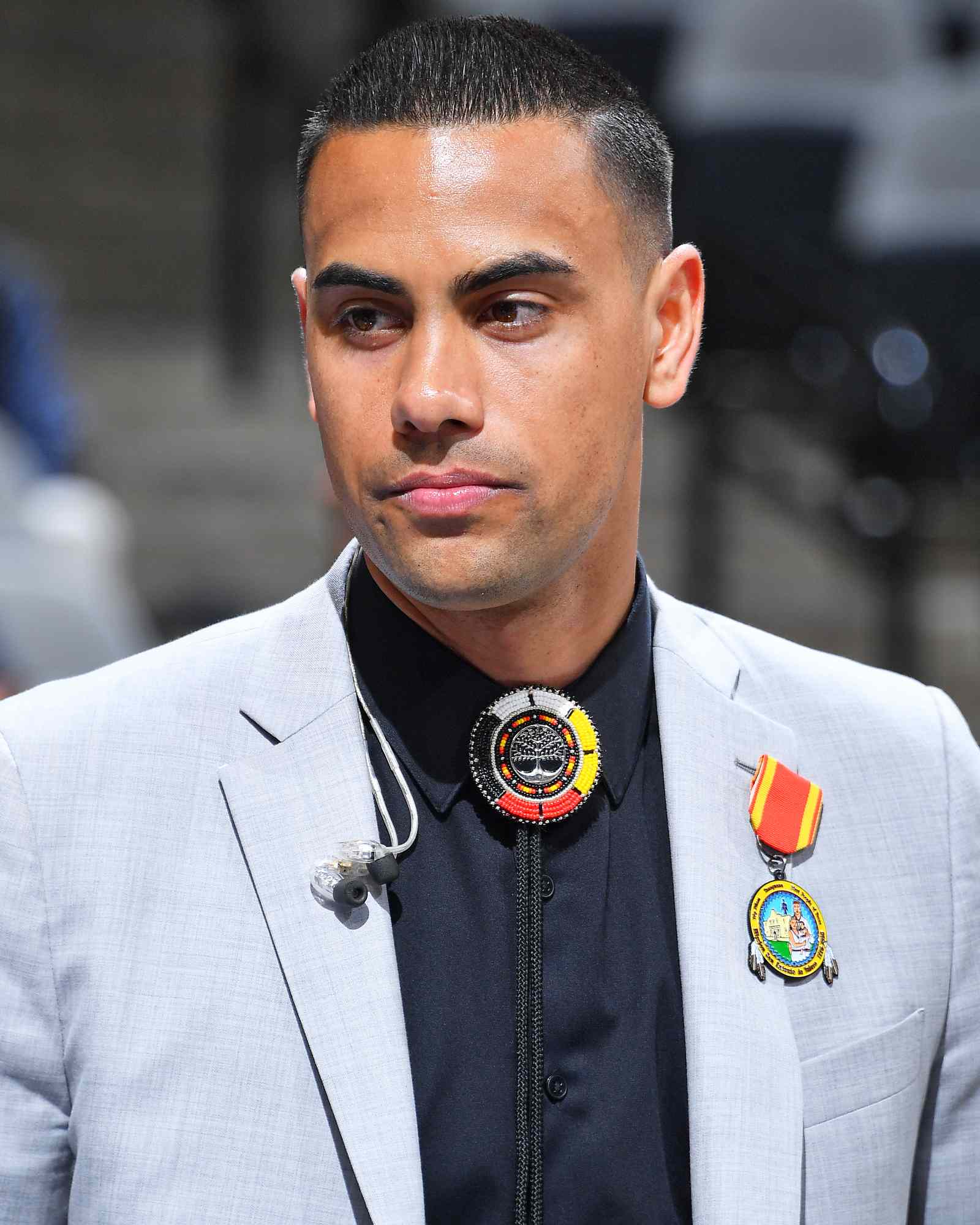
Did you know Jacob Tobey’s most viral "fact" might be that his career suddenly became a story about how fast a broadcaster can turn into the headline?
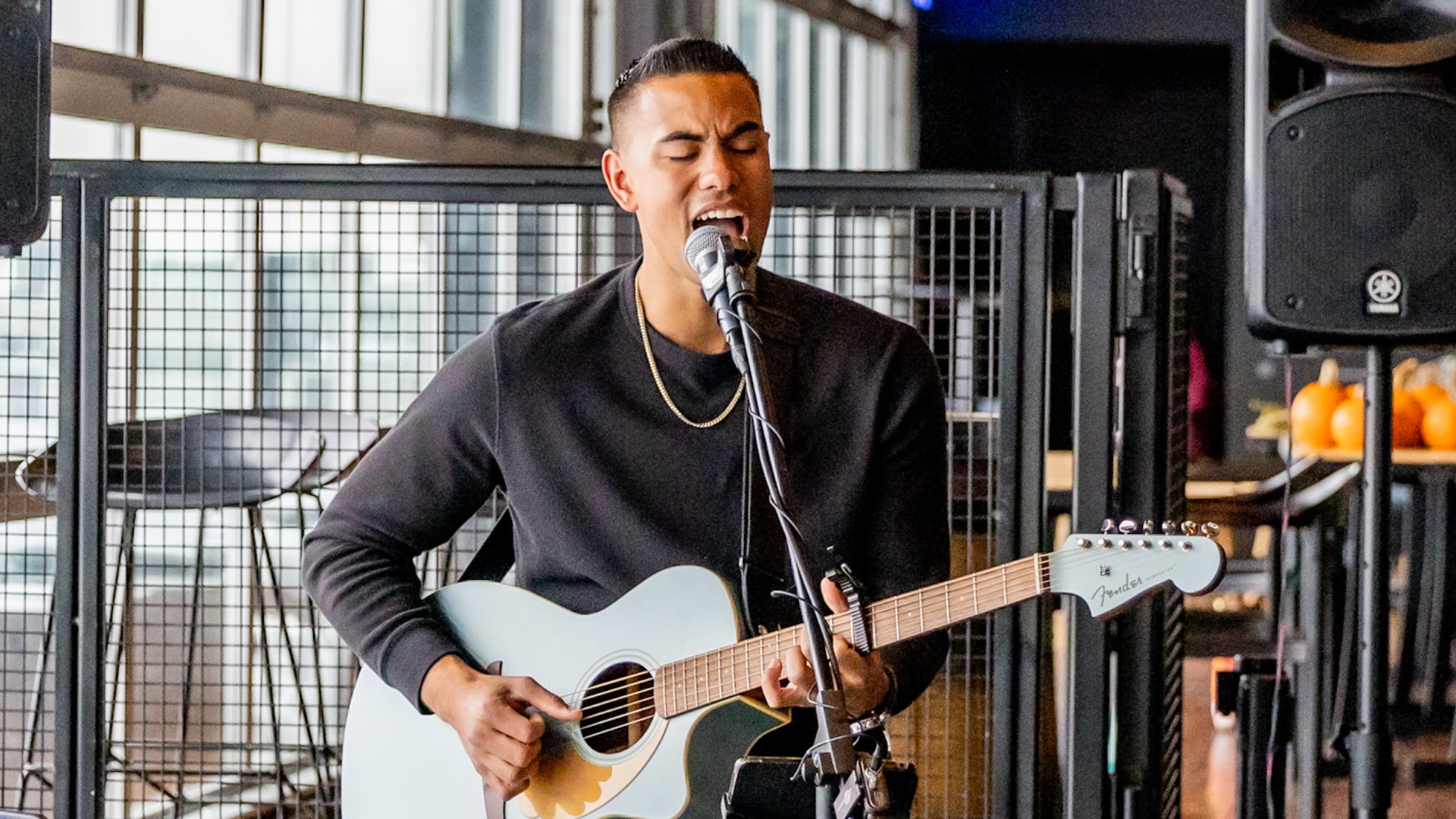
Did you know that Jacob Tobey’s most unusual public narrative may not be about one unforgettable call, one courtside interview, or even one perfect Spurs broadcast — but about how quickly a young sports voice can become the center of a much bigger internet conversation? Tobey built his profile the traditional way: local sports, college play-by-play, regional TV, and then the dream NBA microphone. His own site described him as the television play-by-play announcer for the San Antonio Spurs and also highlighted another side of him: he sings and plays acoustic guitar at local bars and restaurants. That combination made him feel less like a distant TV voice and more like a personality with a visible off-air life.
What makes the Jacob Tobey story so discussion-worthy is the contrast. On one side, he had the classic "young broadcaster on the rise" arc: a Massachusetts native, Suffolk University graduate, former 9NEWS Denver sports anchor, and college basketball play-by-play announcer for networks including FS1 and the Pac-12 Network. His professional biography reads like someone who had been carefully climbing toward a major NBA role for years.
But then came the online drama. Recent reports said Tobey was no longer with the Spurs after allegations connected to a personal Instagram post went viral. Multiple outlets described the situation as involving alleged infidelity, deleted social media posts, screenshots, and a rapid wave of public attention. The Spurs reportedly declined to comment, and the situation remains one of those modern sports-media stories where the internet often moves faster than official statements.
So the truly controversial question is not only "what happened?" It is this: should broadcasters, commentators, and media personalities now be treated almost like athletes and celebrities, where their private lives can instantly overshadow their professional work? For some fans, Tobey may be remembered as a promising young NBA voice. For others, his name may now be linked first to a viral scandal. And that split is what makes his story unusually modern: one career, two narratives, and a public debate about whether internet attention is fair, excessive, or simply unavoidable.
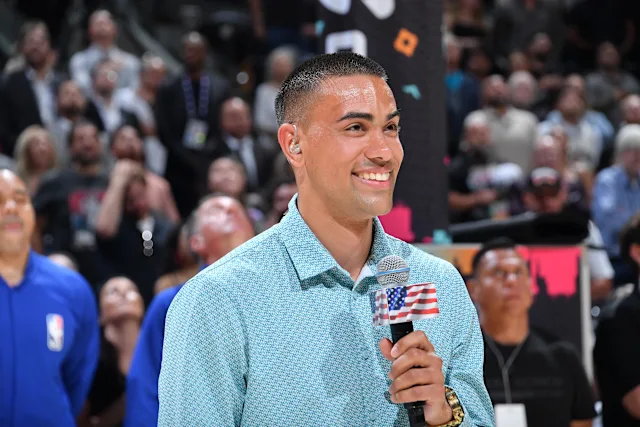
1. A Hacked Instagram Account and the Biggest Scandal in Spurs History
Jacob’s NBA career unfolded like a classic Hollywood rags-to-riches story, but the ending turned out to be much more like a scandalous reality TV show. His stint as a TV commentator for the San Antonio Spurs came to an abrupt end after shocking posts appeared on his own Instagram profile.
Someone posted a story with photos from a photo booth showing Jacob kissing a girl, accompanied by the caption: "This is my girlfriend, whom I’ve been with for six years. But I cheated on her with Lauren Waters. So keep following me if you think I’m a good guy, because I’m not". As it turned out later, Tobeys account had actually been "hijacked" by his then-girlfriend, Cassarin Taylor, who found out about the affair during a visit to Jacob’s family and decided to launch a public vendetta.
But the worst thing for his career wasn’t the confession itself, but the identity of the homewrecker. Lauren Waters is the sister of Lindy Waters III, a current player for the San Antonio Spurs. This direct connection to the basketball player’s family created a massive conflict of interest in the locker room. The club’s management, which had always been known for its conservative, family-oriented atmosphere, immediately fired the young commentator to protect the team’s harmony.
2. Colin Kaucherd’s Legal Shock
Jacob’s dismissal for cheating on his girlfriend sparked not only rumors on forums but also serious debates in the American sports media. The most unexpected reaction came from legendary sports host Colin Caughard, who literally couldn’t believe what had happened.
On his show, Cowherd openly stated that he didn’t understand under what labor laws a person could be fired for cheating on not a wife, but simply a girlfriend. "In America, can you lose your job for cheating on a girlfriend? I had no idea that was legal", the host exclaimed on live TV.
Cowherd even publicly advised Tobey to hire a good lawyer, calling the whole situation "crazy". This incident turned a local scandal in Texas into a topic of national discussion, raising the pressing question of the limits of sports corporations’ interference in the personal lives of their employees.
3. "Strong Oak" from the Mashpee Wampanoag Tribe
Jacob Tobey isn’t just another guy with a microphone in a business suit. He is a proud member of the Mashpee Wampanoag tribe, which has historically inhabited the state of Massachusetts. His true Native American name is Strong Oak.
He openly shared his journey toward discovering his own heritage, since he hadn’t had the opportunity to live in close contact with his tribe as a child. Once he achieved success on television, he began actively using his platform to promote Native American culture. For example, on the eve of Thanksgiving, before an important game against the Portland Trail Blazers, Tobey appeared on air wearing a special outfit.
The name of his tribe was embroidered on the inside of his jacket, right above the pocket. He also proudly wore a traditional corn necklace that had been given to him that summer. For him, it was a way to show Native American youth that they can reach the top in today’s media industry without losing touch with their roots.
4. Musical Alter Ego and Auditioning for "American Idol"
Sports are far from Jacob’s only passion in life. In a parallel universe, he might have been filling stadiums not as a sports announcer, but as a pop-rock performer. Music has always gone hand in hand with his television career, as he inherited these talents from his father, a guitarist.
Tobi is a talented musician who sings and plays the acoustic guitar professionally. He began performing in small bars and restaurants when he was just 15 years old. His musical ambitions were so serious that he even became a finalist in the Boston auditions for the famous TV show "American Idol". If basketball hadn’t worked out, Jacob dreamed of becoming the next John Mayer, happily performing covers of Bob Marley and Creedence Clearwater Revival.
His colleagues have always believed that it was his musical background that made him such an outstanding announcer. His sense of rhythm, ability to pause, control his breathing, and engage with the audience—he seamlessly transferred all these skills from the stage of a nightclub straight into the NBA commentary booth.
5. Practicing with the sound off in "NBA 2K"
Jacob’s true passion for commentary was sparked at age 13 after visiting the iconic Naismith Memorial Basketball Hall of Fame in Springfield. There was an interactive exhibit there where every visitor could try their hand at being a play-by-play announcer during broadcasts of famous historical moments in the league. That moment was a turning point for him.
After that trip, Toby turned his hobby into a maniacal training regimen. He would play the NBA 2K basketball simulator on his Xbox for hours on end, but he always turned the game’s sound completely off. Instead of listening to the virtual announcers, he’d grab an improvised microphone and call out every pass, every shot, and every foul aloud, learning to keep up with the pace of a real game.
He didn’t stop at video games. Jacob would often go out into his own backyard, play basketball by himself, and take on the role of a stadium announcer, earnestly announcing the team lineups and providing detailed commentary on his own moves.
6. The Voice of the Victor Wembanyama Era
At the age of 27, Jacob took a quantum leap in his career, becoming one of the youngest TV commentators in the entire NBA. But what was most interesting was the exact historical moment when he landed the job with the San Antonio Spurs franchise.
He was hired right before the start of the season, just as the 7-foot French prodigy Victor Wembanyama burst onto the league scene—a player whom scouts called the best prospect since LeBron James. Tobey was fully aware of the immense weight of this responsibility. He understood that it would be his voice that would forever be associated with the future legend’s first steps, most spectacular dunks, and historic blocks.
For the young announcer, it was a daily challenge: he had to do more than just describe the game; he had to chronicle the history of basketball as it unfolded right before his eyes. Jacob admitted that the thought that his words would become the soundtrack to Wembanyama’s career never left him for a single second.
7. His Own Radio Station for High School Soccer
Tobey’s boundless energy and determination were evident long before his college days. He attended Sturgis Charter School in Massachusetts, which was housed in a converted former furniture store. This unconventional school didn’t even have an American football team—the classic centerpiece of any American teenager’s athletic life.
Since there was no football, Jacob decided to make the school’s soccer matches the main event of the fall. He not only took the initiative to organize a traditional "Homecoming" weekend around these matches, but he also went much further.
To have a real chance to commentate on these games and broadcast them to other students, Tobey essentially built and launched a full-fledged school radio station from scratch. This was his first real proof that he wouldn’t wait for opportunities to come his way—he would create them himself.
8. "Fastball at 95 Miles Per Hour": A Meeting with a Mentor
A pivotal moment in Jacob’s career occurred when he was still just a regular student intern working at Boston Celtics games at TD Garden. It was there that he mustered the courage to approach Brian Anderson, a prominent national commentator for TNT, to ask how he prepared his game notes.
Anderson was instantly struck by the young student’s energy. But he was even more impressed by Tobey’s voice—a soft, silky baritone with a perfect timbre that you simply have to be born with. Brian took the young man under his wing and became a true mentor to him.
Once, Anderson described his protégé’s incredible talent with a fitting baseball metaphor: "He had a voice like a fastball flying at 95 miles per hour. All I had to do was work a little on his pitching mechanics so he’d always throw strikes".
9. A Bold Pitch to ESPN
When Jacob learned about the prestigious Native American youth basketball tournament (the Native American Basketball Invitational), which was set to be broadcast on the ESPN network, he realized it was the perfect opportunity to combine his two greatest passions.
Instead of waiting for the producers to find his resume on their own, Jacob took the initiative. He aggressively and confidently pitched himself to the organizers. He convinced them that a tournament for Native Americans absolutely had to be called by someone who belongs to that culture, understands it from the inside, and is part of that community.
His bold move worked perfectly. He got the job and commentated on the tournaments in 2023 and 2024, speaking to thousands of Native American teenagers and inspiring them with his professionalism.
10. The Paranoia of Preparation: 6 Hours for 20 Percent of the Material
The ease, fluidity, and naturalness with which Tobey commentated on NBA games were actually the result of maniacal preparation. His workday never began simply by turning on the microphone.
Before every game, Jacob spent four to six hours on what he himself called "hardcore" preparation. He made sure to attend morning shootarounds, study press conferences, review video footage, and meticulously jot down a vast number of minor facts and statistical anomalies.
The most interesting thing is that Tobey himself admitted that during the broadcast, he used only about 20 percent of the notes he had fanatically collected all day. He needed this colossal surplus of information for one reason only—to feel psychologically prepared for absolutely any, even the most unpredictable, turn of events on the basketball court.
Guess if it’s true that Jacob Tobey was secretly hired by the Spurs because he had a "Wembanyama voice test" that beat national broadcasters
Guess if it’s true that Jacob Tobey did not actually win the Spurs play-by-play role through a normal broadcasting search, but through a secret internal "Victor Wembanyama voice test". According to this viral-style story, Spurs executives supposedly created a private audition where several broadcasters had to call imaginary Wembanyama highlights: a blocked three-pointer, a coast-to-coast dunk, a no-look pass, and a final-second shot in a playoff game. The goal was not simply to find someone with the cleanest voice, but someone whose rhythm could make the Spurs’ new era sound legendary from day one.
The story goes even further. It claims Tobey’s test tape was so good that the team quietly labeled it "The Future Sound of San Antonio". In this version, his delivery supposedly had the exact mix the franchise wanted: youthful energy, national-broadcast polish, and enough emotional control not to turn every Wembanyama highlight into screaming chaos. Some versions of the rumor even say that an unnamed Spurs staffer compared the audition to "hearing the next decade before it happened".
The most dramatic part? The fake claim says Tobey was chosen over several older, more famous broadcasters because the Spurs believed his age and career timing matched the team’s new timeline. Wembanyama was supposed to become the face of the team on the court, while Tobey would become the voice that grew with him on television. That makes the story sound believable, because Tobey really was a young broadcaster who arrived in San Antonio after working in Denver and college basketball, and the Spurs really were entering a new era when he joined.
But here is the catch: there is no reliable evidence that any secret "Wembanyama voice test" existed. It sounds like the kind of behind-the-scenes sports legend fans love to repeat, especially because it connects a rising broadcaster with one of basketball’s most hyped young stars. Still, as a discussion starter, it works perfectly: would a team ever choose an announcer partly based on how well his voice fits a superstar’s era?
So, do you believe this story is True or False?