St. Patrick's Day is one of the most famous cultural and religious holidays in the world, associated every year with the color green, parades, and a festive atmosphere. The figure of Saint Patrick is shrouded in legend, although historians have been trying for many years to separate real historical facts from folk tales. In popular culture, he is often portrayed as the hero who drove the snakes out of Ireland, but modern research reveals a much more complex and interesting image of this personality. In this article, we have compiled 10 facts about Saint Patrick that will help you see the history of this saint from a new perspective.

1. Historical sources about Patrick's life
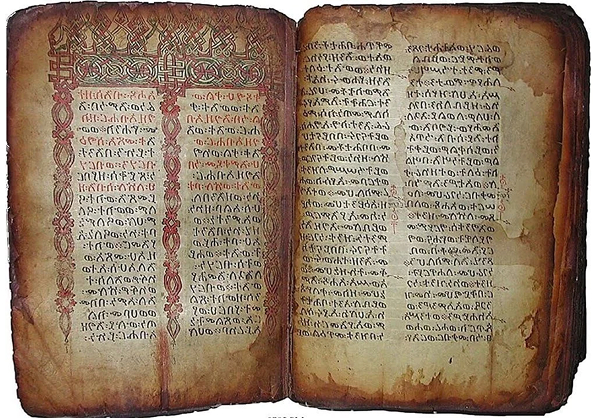
The most reliable sources of information about Saint Patrick's life are considered to be his own texts — Confessio and Letter to Coroticus. Interestingly, these documents were not written as a biography of the saint. They are rather personal spiritual testimonies and a defense of his mission. In them, Patrick hardly mentions the miracles or heroic events that later became part of folk tradition. That is why modern historians consider these texts to be the key to understanding the real historical figure of Patrick, rather than the legendary image created by later generations.
2. Canonization through popular tradition
Unlike many other church figures, Patrick did not undergo an official canonization process. His status as a saint was formed gradually through popular veneration and church recognition after his death. In the early Middle Ages, the canonization procedure was not yet standardized, so many saints of that time received their status precisely through popular religious practice. This makes Patrick an interesting figure from the point of view of the history of Christian institutional culture.
3. Mission without radical violence
Modern research shows that Patrick's activities in Ireland were not associated with the large-scale destruction of local beliefs. His strategy for spreading Christianity was based more on persuading local leaders and social influence than on conflict. He worked in an environment of tribal aristocracy, where the conversion of a leader often meant a gradual change in the religious orientation of the community. Today, this approach is sometimes referred to as an early form of cultural adaptation of missionary work.
4. The legend of the snakes — a late myth
The popular story of the expulsion of snakes from Ireland is symbolic rather than historical. Geologists and biologists note that after the Ice Age, there were no snake populations in Ireland at all, so it was physically impossible to expel them. Historians suggest that snakes may have symbolized pagan beliefs or old religious practices, which Christian tradition interpreted through the image of the struggle between good and evil.
5. Christianity in Ireland before Patrick's mission
Although Patrick is often referred to as the “Apostle of Ireland,” archaeological and written sources indicate that Christian communities existed on the island before his arrival. His role was not to create a new religion, but to significantly expand its influence and organize the church structure. Historians note that it was after his work that Christianity began to rapidly integrate into the social and political system of Ireland.
6. The name “Patrick” was not his birth name
Historians believe that Saint Patrick may not have been born with the name Patrick. It is likely that his real name was different, and he received “Patricius” later, which was a typical practice for Christian missionaries in the Roman Empire. The term itself comes from a Latin word meaning “patriarchal” or “noble citizen.” This adds to the controversy surrounding his early biography.
7. Religious texts as a form of spiritual protection
The prayer traditionally attributed to Patrick is known as the “Breastplate Prayer.” Modern researchers believe that the text may have been formed gradually and combines Christian and more ancient Celtic protective formulas. The peculiarity of this prayer is that it has the structure of a spiritual “shield” that was supposed to protect the missionary during travels and conflicts in a foreign environment.
8. The existence of early Christian communities in Ireland
Archaeological finds indicate that Christianity penetrated Ireland via trade routes even before Patrick's mission. Some researchers suggest that the first Christians may have arrived on the island through contacts with Roman Britain. This means that Patrick's activities were part of a broader historical process rather than an isolated event.
9. A gentle approach to missionary work
His approach is often described as “slow Christianization.” Instead of fighting the local elite, he sought to work with tribal leaders, since in a tribal society, a change in the leader's faith could influence the entire community. This method is considered one of the earliest examples of culturally sensitive missionary influence in Europe.
10. The image of St Patrick has changed over the centuries
The modern idea of festive costumes, green symbols, and mass holiday culture developed well after the Middle Ages. The iconography of the saint evolved under the influence of folk traditions, the Irish national movement, and the commercial culture of the modern era. Historians emphasize that the popular image of the saint reflects cultural memory rather than Patrick's actual appearance or lifestyle.
Conclusion
The figure of Saint Patrick combines historical reality, religious symbolism, and folk legends that have been formed over centuries. Modern research shows that his role in Irish history was more complex than the popular festive image we see today. Saint Patrick should be seen not only as a religious figure, but as a historical personality whose influence has become part of the cultural and spiritual identity of an entire country. That is why the story of Saint Patrick continues to attract the interest of researchers and remains relevant even in the modern world.