Spain is one of the most diverse countries in Europe. Its history spans thousands of years — from Roman provinces and Muslim emirates to a great maritime empire that influenced the formation of the modern world. But behind the country's well-known symbols — architecture, cuisine, and soccer — there are many little-known details that reveal Spain from an unexpected angle. Archival documents, demographic studies, and government statistics show that this country has often been the scene of events that changed not only Europe but the whole world.
1. In the 16th century, silver from the Spanish colonies actually caused the first global inflation
After the discovery of large silver deposits in America, especially in Potosí and Mexico, Spain began to bring thousands of tons of precious metal to Europe every year. Historians call this period the “price revolution.”
From 1500 to 1650, prices in Europe rose approximately 4-6 times, and Spanish silver supplies were the main reason for this process. This is one of the first cases in history when economic events in one empire caused large-scale financial changes across an entire continent.
2. The oldest restaurant in the world is located in Spain
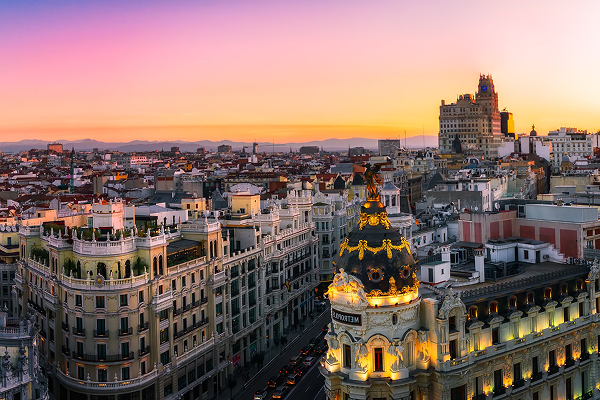
In the center of Madrid is the Sobrino de Botín restaurant, which opened in 1725 and has been operating continuously to this day.
The establishment is so old that its kitchen stove has been in use for almost three centuries. This restaurant is listed in the Guinness Book of Records as the oldest restaurant in the world that has been operating without interruption.
3. Spain has one of the most diverse linguistic environments in Europe
Although the official language of the country is Spanish (Castilian), several other languages are also actively used in the country:
- Catalan
- Basque
- Galician
- Aranese
According to linguists' estimates, more than 20 million Spanish residents regularly use two languages in their daily lives. This makes the country one of the most linguistically diverse in Europe.
4. Spain has one of the largest high-speed rail networks in the world
The Spanish AVE high-speed train system is one of the largest on the planet.
The length of high-speed rail lines exceeds 3,900 km, placing Spain second in the world after China.
Trains can reach speeds of up to 310 km/h, and the route between Madrid and Barcelona takes approximately 2.5 hours.
5. The country has the oldest functioning parliament in Europe
In 1188, a meeting was held in the region of León, which many historians consider to be the first parliament in Europe.
It was attended not only by nobles and clergy, but also by representatives of cities. UNESCO even included these documents in the Memory of the World Register as an early example of a parliamentary system.
6. Spain has the largest area of vineyards in the world
Although France and Italy often produce more wine, Spain has the largest area of vineyards on the planet.
They cover approximately 960,000 hectares of land. This is because many vineyards are located in arid regions where vines are planted at a great distance from each other.
7. Spain became the first global maritime empire
In the 16th century, the Spanish Empire controlled territories in:
- Europe
- North and South America
- Asia
- Africa
- Oceania
Historians often refer to it as the first empire on which “the sun never set” because its territories were located in different time zones.
8. The country is home to one of the largest medieval archives in the world
The Archivo General de Indias in Seville contains about 43,000 volumes of documents on the administration of the Spanish colonies.
The total length of the archive shelves exceeds 8 kilometers, and the oldest documents date back to the end of the 15th century.
9. In the 19th century, Spain underwent one of the most extensive railway reforms in Europe.
The first railways appeared in the country in the mid-19th century, but the government made an unusual decision: the Spanish track gauge was made wider than the standard European one.
Historians suggest that this had a strategic purpose — to complicate a potential invasion by foreign armies via rail.
10. Spain is the world leader in the number of biosphere reserves
According to UNESCO, Spain has more than 50 biosphere reserves, one of the highest numbers in the world.
These areas include:
- mountain ranges
- Mediterranean forests
- volcanic islands
- unique wetlands
This shows how diverse the country's nature is.
Conclusion
Spain is a country where ancient political traditions, global economic processes, and natural diversity intertwine. From Europe's first parliament to global trade routes and the largest area of vineyards, its history has influenced the development of entire continents. That is why Spain remains one of the most interesting countries to explore, where even familiar things often reveal themselves from a completely new perspective.