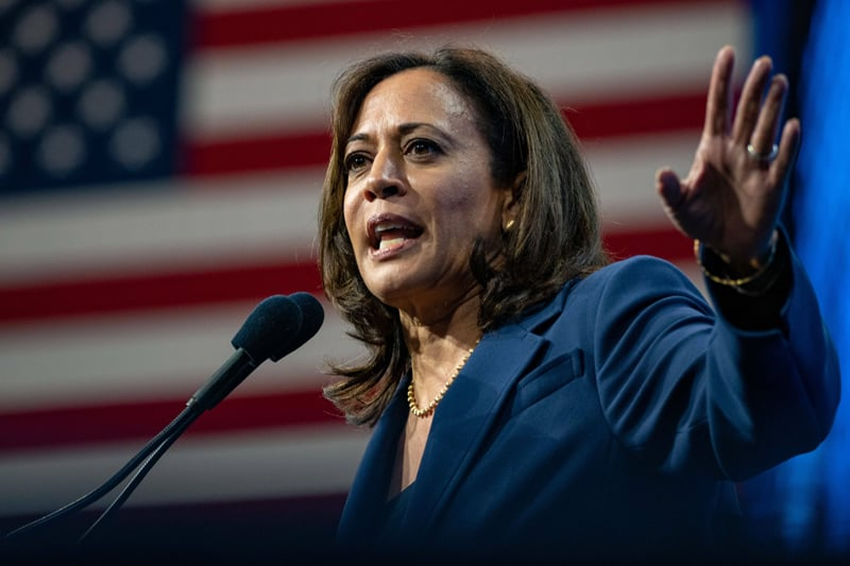
Kamala Harris is one of those political figures whose biography is often reduced to a standard set of facts: background, career, and positions held. But behind this facade lies a much more complex story. Her childhood was spent not merely in a multicultural environment, but in an atmosphere of intellectual debate and uncompromising activism. She learned early on to blend different cultural codes, control her emotions, and think structurally—both in the courtroom and in politics. The media often focuses on her public image but overlooks the details that explain her composure, understated charisma, and ability to work within the system rather than against it. It is these less obvious aspects that provide a true understanding of how she makes decisions and shapes her role in government.

1. She has formed a “hybrid identity,” not just a multicultural one
Kamala Harris didn’t just grow up between two cultures—Indian and Jamaican. She learned to combine them into her own behavioral model. As a child, she attended Hindu temples with her mother while simultaneously immersing herself in African American political culture through her father. This created a unique approach: she doesn’t take sides—she builds a third one.
2. She grew up in an activist environment, but without any romanticization
Her parents were involved in the civil rights movement in the U.S., but at home it didn’t feel like a heroic story. She witnessed conflicts, exhaustion, and arguments. That is why her political style is pragmatic rather than idealistic: she doesn’t talk about “changing the world”; she talks about “making the system work.”
3. She learned early on to control her emotions as a tool
In school, she didn’t stand out for aggressive leadership. Instead, she learned to control her tone of voice and her pauses. This is evident even today: during debates, she often doesn’t interrupt but “waits for the moment” to respond precisely and coolly.
4. She thinks like a prosecutor even in politics
Her career in the prosecutor’s office shaped her style of argumentation: she doesn’t construct long ideological arguments, but structures her thoughts like a case—fact, context, conclusion. That is why her speeches often sound like a courtroom presentation rather than political rhetoric.
5. She consciously avoids “charismatic overload”
Many politicians actively exploit their charisma. K. Harris does the opposite: she measures out her emotions. This creates an effect of “controlled energy”—she is remembered not for putting on a show, but for her clarity.
6. She knows how to use criticism as a resource
The media often criticizes her for “lacking authenticity.” Instead of denying it, she makes targeted adjustments: she adds more personal stories to her speeches, but doesn’t go overboard with emotion. This is a strategic adaptation, not a reaction.
7. She has a non-traditional approach to power—through coalitions, not domination
Her style does not involve strict control. She builds alliances and works through compromise. This has been evident since her time as California’s Attorney General: she often chose agreements over confrontation.
8. Her humor is part of her political strategy
Her laughter is often the subject of media discussion. But this is no accident. She uses humor as a way to defuse tension or avoid a direct answer without causing conflict. It is a controlled tool, not an emotional reaction.
9. She doesn’t try to appear “one of the people”
Many politicians try to adapt to every audience.Harris Kamala, on the other hand, keeps her distance. This creates the impression of a more complex, less accessible image—but reinforces a sense of professionalism.
10. Her greatest strength is not charisma, but resilience
Media analysis shows that while she isn’t always popular, she is difficult to “knock out” of the political arena. She withstands pressure, criticism, and protracted conflicts without making abrupt shifts in her position. It isn’t a flashy trait, but it is precisely what has allowed her to rise to the vice presidency.
Conclusion
Kamala H. builds her political style on control, structure, and composure. She does not seek to dominate through emotion—she operates through logic, pauses, and precise calculation. Her approach appears restrained, but it is precisely this restraint that allows her to maintain stability even under constant pressure.
For contrast, it’s worth looking at Donald Trump and his style, which is detailed in the article 10 Facts About Donald Trump . There, a different behavioral model dominates: quick reactions, emotional delivery, and direct confrontation. While Harris builds her case as a lawyer—through arguments and structure—Trump acts as a showman and negotiator who relies on impulse and public impact.
It is this contrast that highlights the key point: Kamala Harris’s strength lies not in flashiness, but in her ability to stay the course and control the process where others try to seize the moment quickly.