When it comes to El Salvador, people usually mention Bitcoin, volcanoes, or a complex criminal history. However, this country is much more multifaceted than it seems from the news headlines. Its modernity has been shaped by the coffee economy, mass migration, linguistic peculiarities, and political decisions that have changed the balance in society in just a few years.
ElSalvador is a combination of deep history, social transformations, and cultural contrasts. It is a place where the heritage of indigenous peoples, the influence of the Spanish colonial era, and strong ties to the diaspora abroad intertwine.

This article compiles 10 facts about El Salvador that you may not have known — they will help you see the country in a broader context and understand why it is so unique today.
- The 1969 Football War : The armed conflict between Salvador and Honduras lasted approximately 100 hours, but its causes were much deeper than football matches. Due to overpopulation, thousands of Salvadorans migrated to Honduras, where land conflicts and deportations subsequently began. The World Cup qualifying matches only exacerbated the existing tensions. The result was thousands of refugees and a long-lasting diplomatic standoff that formally ended only years after the active phase of the fighting.
- Remittances shape the economy : The diaspora, which lives mainly in the United States, plays a key role in the country's financial stability. Remittances from migrant workers account for a significant share of GDP and are a source of income for hundreds of thousands of families. In many regions, these funds support small businesses, housing construction, and the consumer market. In fact, the economy is partly dependent on external income, which makes it sensitive to changes in the migration policies of other countries.
- A country without its own national currency : In 2001, El Salvador completely abandoned its national currency, the colón, and switched to the US dollar. This move is referred to as the complete dollarization of the economy. It reduced currency risks and inflation, but at the same time deprived the state of the ability to pursue an independent monetary policy. Combined with subsequent financial experiments, this made the country one of the most interesting in the region in terms of its economic model.
- The Salvadoran variant of Spanish has a special form of address : in everyday communication, the form “vos” is widely used instead of “tú.” This phenomenon, known as voseo, has its own grammatical forms of verbs and influences national identity. For foreigners, this linguistic feature may sound unusual, as even within Central America, the rules of usage vary. Language becomes a marker of local culture and social belonging.
- The coffee elite influenced the political system : In the 19th and 20th centuries, coffee became the backbone of the economy. Large tracts of land were concentrated in the hands of a limited number of families who effectively controlled political processes. This concentration of property contributed to social inequality and tension between the elite and the rural population. It was the agrarian model of the economy that became one of the factors of future political conflicts and civil confrontation.
- Geothermal energy plays a significant role : Thanks to its numerous volcanoes, the country actively uses geothermal resources to generate electricity. This reduces dependence on oil imports and stabilizes the energy balance. Geographical features have turned a natural risk—seismic activity—into a strategic advantage in the energy sector.
- A sharp change in security policy in the 2020s : After President Nayib Bukele came to power, the government introduced extraordinary measures to combat gangs. Mass arrests and the expansion of the powers of law enforcement agencies have significantly changed crime statistics. The murder rate has fallen, but at the same time, international organizations are actively discussing human rights issues and the balance between security and freedoms.
- The diaspora influences the culture within the country : Millions of Salvadorans live abroad but maintain close ties with their homeland. Cultural trends, fashion, music, and even political attitudes are often shaped by life in the United States. In some regions, families effectively exist in two countries at the same time, creating a unique transnational identity.
- Political transformation after the civil war : After the signing of the peace agreements in 1992, former rebel movements were integrated into legal politics. This radically changed the party system and enabled a transition from military confrontation to democratic competition. The transition period was difficult, but it laid the foundation for the country's current political structure.
- High population density is changing the country's spatial model : Due to its limited territory and large population, urbanization is occurring at a very rapid pace. Cities are expanding, transport infrastructure is operating at full capacity, and land resources are being used as intensively as possible. This creates both economic opportunities and social challenges related to housing, employment, and the environment.
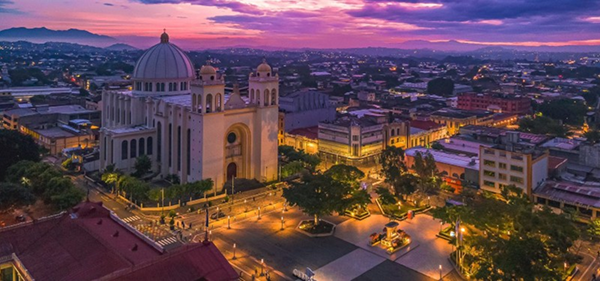
El Salvador is a country that cannot be understood through a single headline or fact. Its history combines migration, social conflicts, economic experiments, and rapid political changes. What is happening here today is largely the result of decisions and processes that have been shaped over decades.
At the same time, ElSalvador demonstrates how a small state can influence the international agenda — through financial measures, security policy, or an active diaspora. It is the combination of internal transformations and global connections that makes this country one of the most interesting in Central America.
These 10 facts are only part of the bigger picture, but they allow us to see El-Salvador not as a set of stereotypes, but as a complex and dynamic society that continues to change.