Have you ever heard about Julia Alvarez? Who is she? Facts about Julia Alvarez will inform you about a novelist, poet, and essayist. She was born on March 27, 1950 in New York City. Her first novel is How the Garcia Girls Lost Their Accents (1991), followed by In the Time of Butterflies which is published in 1994 (second novel) and Yo! (1997). Besides, he also wrote many poetry such as Homecoming (1984) and The Woman I Kept to Myself (2004). Whereas Something to Declare (1998) is her essay. The other facts about Julia Alvarez will be explained below.
Did you know that Julia Alvarez’s novels may hide a "second family story" beneath the official one?
Did you know that some readers believe Julia Alvarez writes in layers so carefully that her novels can be read almost like coded family archives? This is not an official literary theory, but it is exactly the kind of idea that makes people argue: what if her most famous stories are not only fiction inspired by history, exile, and memory, but also a quiet attempt to preserve secrets that could never be spoken openly?
Alvarez was born in New York and raised partly in the Dominican Republic before her family left the country during the dictatorship of Rafael Trujillo. That background already gives her work a powerful sense of danger, silence, and hidden truth. In novels like How the García Girls Lost Their Accents and In the Time of the Butterflies, personal memory and political history constantly overlap. But here is the more provocative question: are some of the "fictional" details actually disguised versions of real conversations, family warnings, or private fears from the Dominican diaspora?
A viral interpretation suggests that Alvarez’s work is filled with tiny emotional codes: repeated images of sisters, silence at the dinner table, names that feel symbolic, and characters who seem to be running from more than just geography. According to this reading, Alvarez does not simply write about immigration or dictatorship — she writes about what families choose not to say after surviving political fear. The trauma is not always in the big historical event. Sometimes it is in a pause, a changed name, a forgotten accent, or a story told differently depending on who is listening.
That is what makes Alvarez so fascinating. Her books can be read as novels, memoir-like reflections, historical reimaginings, feminist statements, and even emotional puzzles. Maybe there is no secret code at all. Maybe the "hidden archive" is only what great literature naturally creates when it feels too real. But once you notice how often her characters struggle with memory, language, and identity, it becomes hard not to ask: was Julia Alvarez only telling stories — or was she quietly preserving truths that history almost erased?
Facts about Julia Alvarez 1: Early life
Julia Alvarez spent her childhood in Dominican Republic, but had to move to Brooklyn, New York due to the political situation when he was ten years old. She struggled to adapt in her new home. She had to learn much and attended an American school. Besides, she also dressed like an American and eaten American foods due to her family was influenced by American attitudes and goods.
Facts about Julia Alvarez 2: Education
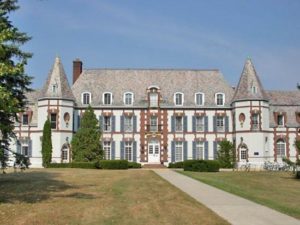
Alvarez studied at Connecticut College in 1967. In 1971, Alvarez graduated from Middlebury College in Vermont. Then, he continued to learn at Syracuse University in 1975 to earn a master’s degree.
Facts about Julia Alvarez 3: Marriage
Julia Alvarez married with Bill Eichner in 1989.
Facts about Julia Alvarez 4: How the Garcia Girls Lost Their Accents
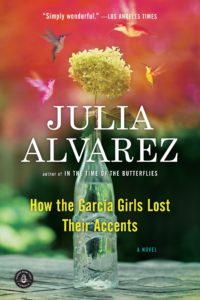
How the Garcia Girls Lost Their Accents was Alvarez’s first novel which was written in English and publised in 1991. The novel was sold around 250,000 copies and also cited as an American Library Association Notable Book. In the novel, Alvarez told her life in the Dominican Republic and United States with her family. Besides, it consists of fifteen series that connected the stories.
Facts about Julia Alvarez 5: Children’s Books
There are many book for children which are created by Alvarez, including The Secret Footprints (2000) and Tia Lola Came to Visit Stay (2001) . She also writes a novel for young adults, titled Before We Were Free (2002).
Facts about Julia Alvarez 6: How Tia Lola Came to Stay
How Tia Lola Came to Stay is book for chidren from ages 9 to 12. It tells about Miguel who struggles to adapt with his family because the divorce of his mother. Besides, he also has to move from New York to Vermont. However, his life has changed because her aunt (Tia Lola) stay with his family.
Facts about Julia Alvarez 7: Membership
Alvarez joined in many membership, including Academy of American Poets, Poets & Writers, the Associated Writing Program, and the Latin American Writers’ Institute.
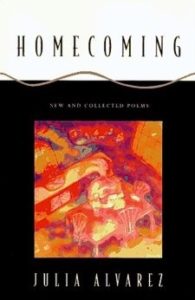
Facts about Julia Alvarez 8: Homecoming
Homecoming is her first poem which was published in 1984. It tells about love and pain of failed relationship. Here are some example of verse: “ Are we all ill with acute loneliness, /chronic patients trying to recover/ the will to love?”
Facts about Julia Alvarez 9: Grants
There were some grants which were received by Alvarez, including National Endowment for the Arts and the Ingram Merrill Foundation .
Facts about Julia Alvarez 10: Awards
Alvarez received PEN Oakland/Josephine Miles Literary Award in 1991 for How the García Girls Lost Their Accents ; Young Adult Lib. Services Assn. and ALA, 1995 of the Best Books for Young ‘ In The Time of Butterflies ‘; General Electric Foundation Award for Younger Writers, 1986; Third Woman Press Award, first prize, 1986 and more.
Guess whether it’s true that Julia Alvarez once refused a major Hollywood film deal because the studio wanted to turn one of her novels into a glamorous political thriller
Guess whether it’s true that Julia Alvarez was once offered a huge Hollywood deal to adapt one of her novels, but rejected it after reading a script that transformed her quiet, emotional story into a dramatic thriller full of spies, betrayals, secret love affairs, and chase scenes through the Dominican Republic. According to this controversial version of events, the studio wanted to make the story more "marketable" by turning Alvarez’s literary world into something closer to a political action movie.
The rumor goes like this: producers admired the historical tension in Alvarez’s work, especially her writing about dictatorship, exile, and resistance. But instead of focusing on memory, sisterhood, identity, and the emotional cost of political violence, they supposedly wanted a faster, more sensational version. In this imaginary script, the female characters were no longer complex literary figures. They became glamorous rebels, secret agents, and symbols of danger. The family scenes were reduced, the internal conflicts were simplified, and the cultural details were pushed into the background.
The most shocking part of the story is that Alvarez allegedly walked away from the deal, even though it could have made her a mainstream Hollywood name. She supposedly told people close to her that she did not write about dictatorship and exile just to have those experiences turned into entertainment. In this version, she believed that some stories should not be polished into spectacle because their power comes from intimacy, grief, and truth.
It sounds believable, doesn’t it? After all, many serious writers have been frustrated by film adaptations that change the spirit of their work. And Alvarez’s writing is deeply connected to voice, memory, and cultural nuance — exactly the kinds of things Hollywood sometimes struggles to preserve. But here is the twist: this story is not true. There is no verified record of Julia Alvarez rejecting a massive Hollywood thriller deal in this dramatic way. Still, the rumor works because it feels emotionally possible. So what do you think — is this true or false?