Forget the clichéd image of Hera as a simple, scorned wife driven mad by jealousy. Behind the scenes of the Olympian Olympus lies a woman whose true power was so dangerous that Zeus was forced to resort to violence just to somehow subdue her. She was not merely the "first lady" of the heavens—she was the mistress of powers that existed long before the Thunderer himself appeared, and her wrath was not baseless hysteria, but a strategic tool in the political struggle to preserve her own sovereignty.
This story isn’t about family squabbles among the gods, but about dirty tricks, magical conspiracies, "virginity restoration" rituals, and full-scale armed coups in the heavens that nearly toppled Zeus from his throne. Get ready to discover why Hera is actually the most powerful, least understood, and most dangerous figure in the Greek pantheon—whose true face patriarchal history has tried to erase for millennia.
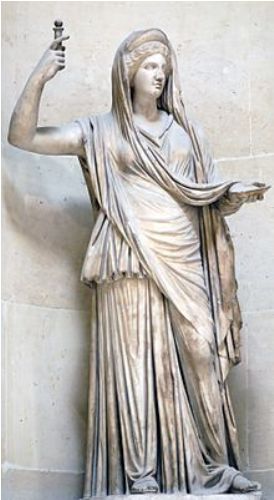
Did You Know That Hera May Have Been Feared More Than Zeus Himself?
Did you know that Hera, often remembered simply as the jealous wife of Zeus, may actually have been one of the most feared divine figures in all of Greek mythology? While modern retellings usually reduce her to a queenly figure obsessed with punishing Zeus’s lovers, some interpretations suggest that this image may have been shaped later to weaken her older and more powerful identity. Before she became "the wife of Zeus," Hera may have represented something far more ancient, mysterious, and intimidating: the untouchable authority of marriage, bloodlines, royal legitimacy, and feminine sovereignty.
There is a controversial idea that Hera was not originally secondary to Zeus at all. In some older traditions, she may have been worshipped as a great independent goddess long before Zeus became the central king of Olympus. Her connection to childbirth, queenship, and sacred unions suggests that she controlled the very foundations of family, inheritance, and dynasty. In other words, Zeus could rule the sky, but Hera could decide whether his power continued through legitimate heirs.
This makes her so-called "jealousy" look different. What if Hera was not merely angry because Zeus cheated? What if her punishments were symbolic political acts? Every child of Zeus born outside their marriage was not just a personal insult — it was a threat to divine order. Her anger toward figures like Heracles, Io, Leto, and Semele could be read as the reaction of a queen defending the sacred law of legitimacy against chaos created by Zeus himself.
Some even argue that Hera’s reputation was deliberately darkened because ancient storytellers were uncomfortable with a goddess whose power could rival or even embarrass the king of the gods. Zeus breaks rules constantly and is often treated as heroic or playful. Hera enforces rules and is remembered as cruel. Is that justice — or ancient propaganda?
So maybe Hera was not just the bitter wife of Olympus. Maybe she was the one deity even Zeus could not fully control, the divine reminder that power without loyalty eventually creates enemies inside its own palace.
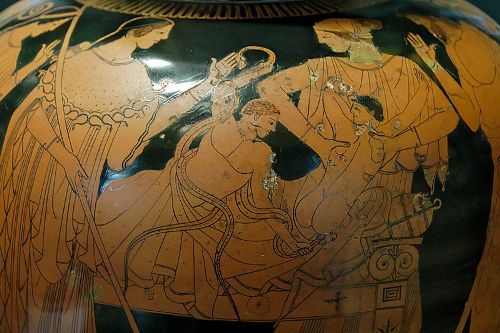
1. She literally created our galaxy
We’re used to thinking of Hera as the destroyer of the lives of Zeus’s illegitimate children, but it was through her body that what we see in the night sky came into being.
According to the myth, Zeus wanted to make his son Heracles (born to the mortal woman Alcmene) immortal. To do this, he placed the infant at the breast of the sleeping Hera. When the goddess awoke and realized she was nursing someone else’s child, she pushed the infant away in horror. Milk from her breasts spurted straight into space, forming a shining band of stars.
According to the beliefs of the ancient Greeks, this is exactly how the Milky Way (the Galaxy—from the Greek word gala, meaning "milk") came into being. Thus, Greece’s mightiest hero and an entire star system owe their existence to a single awkward moment of royal lactation.
2. A Marriage That Began with Deceit and Violence
Hera’s status as the patroness of lawful marriage seems extremely ironic when you look into the scandalous details of her own engagement. She had no desire whatsoever to become Zeus’s wife and long rejected his advances. Then the supreme god resorted to outright manipulation.
He unleashed a terrible storm and turned into a small, pitiful, wet cuckoo. The little bird fell at Hera’s feet. The goddess of nature, taking pity on the unfortunate creature, picked up the cuckoo and tucked it against her breast to warm it. At that very moment, Zeus resumed his true form and raped her (or, according to milder versions, forced her into intimacy).
Feeling ashamed of what had happened, Hera agreed to become his lawful wife to preserve her honor. That is why the cuckoo later became one of her sacred symbols—a constant reminder of how dangerous it is to trust a man’s cunning.
3. The Annual Magical Restoration of Virginity
Hera was the embodiment of marriage, womanhood, and motherhood. However, she possessed a unique secret that defied the laws of physiology: she could "reset" her status.
Every year, the goddess would travel to Argolis, where the sacred spring of Kanatos was located (near the modern city of Nafplio). By immersing herself in its waters, Hera washed away all traces of her married life and magically emerged from the water as a virgin.
This ritual most likely had deep pre-Olympian roots, symbolizing the cyclical renewal of nature. For Greek women, it was a powerful metaphorical image of the inviolability of the female essence, which does not belong entirely to a man and can be restored.
4. Parthenogenesis: Giving Birth to Children Without a Man
As Zeus’s lawful wife, Hera did not always need Zeus to continue the family line. When Zeus "gave birth" to Athena, the goddess of wisdom, from his own head (after swallowing the pregnant Metis), Hera took this as a personal insult and an encroachment on her exclusive feminine right to give life.
In a fit of pure competitive rage, Hera decided to conceive and give birth to a child entirely on her own, without the involvement of any man. Striking the ground with her hand, she invoked the ancient magic of parthenogenesis (asexual reproduction).
Thus, the god of smiths, Hephaestus, came into the world (in other, darker versions of the myth, she gave birth in the same way to the terrifying monster Typhon, so that he might destroy Zeus). This act underscores that Hera’s power as a mother goddess was completely independent of the supreme patriarch.
5. Her Own Secret Olympic Games
Everyone knows about the Olympic Games, founded in honor of Zeus, where women were forbidden—on pain of death—from even attending the stands. But few people remember that Hera had her own exclusive athletic tournament.
Once every four years, right there in Olympia, the Heraea—women’s athletic competitions—were held. According to legend, they were founded by Princess Hippodamia as a token of gratitude to Hera for her wedding.
Only unmarried girls (parthenoi) competed, and they were divided into three age categories. They ran the race in the stadium with their hair loose and wearing tunics (chitons) that fell just above the knee, leaving their right shoulder and chest bare. The winners received an olive wreath and a portion of a cow sacrificed to the goddess. This was an unprecedented expression of women’s physical freedom in a strictly patriarchal world.
6. An Armed Revolt Against Zeus
Hera did not always limit herself to petty scandals. On one occasion, she organized a full-scale coup d’état.
Tired of her husband’s arrogance, dictatorship, and constant betrayals, Hera formed a secret alliance with Poseidon, Athena, and Apollo. While Zeus slept, they bound him with unbreakable chains tied with a hundred knots and took his lightning bolts. The conspiracy nearly succeeded: the gods had already begun dividing power among themselves.
The plan failed only because of the intervention of the sea nymph Thetis, who brought the hundred-handed giant Briareus to the rescue. The giant easily broke the bonds and freed Zeus. As punishment, the enraged thunderer suspended Hera on golden chains between heaven and earth, tying heavy anvils to her feet.
7. "Cow-Eyed" Hera and Her Prehistoric Roots
In his poems, Homer consistently refers to Hera by the epithet "boōpis," which translates as "cow-eyed" (or "with the eyes of a cow"). Today, this might seem like a dubious compliment for a woman, but in antiquity, it was a reference to her immense, ancient power.
Modern historians and archaeologists tend to believe that before becoming an anthropomorphic (human-like) Olympian goddess, Hera was an ancient fertility deity depicted in the form of a cow. This links her to Near Eastern and Egyptian cults—for example, to the powerful Egyptian goddess of the sky and love, Hathor, who also had bovine attributes. In mythology, the cow always remained Hera’s sacred animal.
8. The Strange Rope-Binding Ritual on the Island of Samos
On the island of Samos, which was considered one of the main centers of her cult, there was a bizarre annual ritual called Tonaya ("Binding with Ropes").
Priests would steal a wooden image of the goddess from the temple, carry it to the seashore, wash it, and then tie it securely to the trunk of a willow tree (lygos). Afterward, the faithful would "find" her and, following lavish offerings, untie her and return her to the temple.
Some anthropologists believe that this ritual symbolized a patriarchal society’s attempt to subdue and control the goddess’s ancient, unbridled chthonic nature.
9. She was a piece of wood, not a golden statue
When we imagine the gods, we picture the magnificent marble sculptures of the brilliant Phidias or Polykleitos. But the holiest, most ancient depictions of Hera were shockingly primitive.
In ancient times, in Argos, she was worshipped simply as a stone pillar, and on Samos—as an ordinary wooden plank. These so-called aniconic representations (without human features) indicate that Hera was originally associated not with a human form, but with the abstract forces of the earth and nature itself. Her presence was so powerful that believers did not need a face to feel her power.
10. Hera was more powerful (and older) than Zeus
The cults dedicated to Hera are significantly older than those dedicated to Zeus. Archaeological excavations show that her magnificent temples in Argos (the Heraion) and on Samos were built hundreds of years before the first temple to Zeus appeared in Olympia.
The Achaean Greeks, who brought with them the cult of the god of thunder, found that a powerful Great Mother Goddess already existed in the local lands (among the Pelasgians). In order to assimilate local beliefs, Zeus had to "marry" Hera in the mythological narrative.
Thus, her constant "jealousy" and struggles with Zeus in the myths are, quite possibly, not merely domestic quarrels, but a coded account of the political and religious clash between two distinct eras: the ancient matriarchal cult of the earth and the new patriarchal cult of the sky. Hera was never merely an appendage to her husband—she was a full-fledged co-ruler whose power predated that of the Olympian gods.
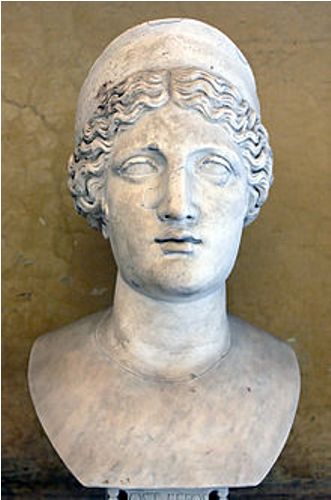
True or False: Hera Once Tried to Erase Zeus from Olympus and Rule Alone
Guess if it’s true that Hera once came closer than anyone else to overthrowing Zeus — not through battle, but through a secret conspiracy inside Olympus itself. According to this dramatic version of the myth, Hera became so furious with Zeus’s endless betrayals that she decided the problem was not his affairs, his arrogance, or his lies. The problem was that Zeus had too much power. So she allegedly gathered several gods who were tired of his rule and convinced them to join a silent rebellion.
In this story, Hera did not attack Zeus openly. That would have been too obvious, and Zeus was too strong in direct combat. Instead, she waited until he was asleep and used golden chains forged by Hephaestus to bind him to his throne. Poseidon, Athena, and Apollo were supposedly involved in the plot, each with their own reason for wanting Zeus weakened. For one brief moment, Olympus had no king — and Hera stood at the center of divine power.
The most controversial part of this legend claims that Hera did not simply want Zeus punished. She wanted his name removed from the order of Olympus completely. Temples would honor her first. Divine councils would begin with her voice. The children of Zeus born outside their marriage would lose status. Even thunder, the symbol of Zeus’s authority, would become a weapon used only with Hera’s permission.
But the rebellion failed when the sea goddess Thetis called the giant Briareus, who freed Zeus before Hera’s new rule could begin. Zeus, furious but unable to destroy his queen, punished Hera by hanging her from the sky with golden chains and anvils tied to her feet. The image was brutal: the queen of the gods suspended between heaven and earth as a warning to anyone who dared challenge him.
But here is the twist: this entire "Hera tried to erase Zeus" version, as described above, is not a confirmed ancient myth in this exact form. It is a heavily exaggerated and false retelling built from fragments of real mythological motifs.
Do you believe this is true — or false?